Types of Belt Type X-Ray Sorter
What Is a Belt-Type X-Ray Sorter?
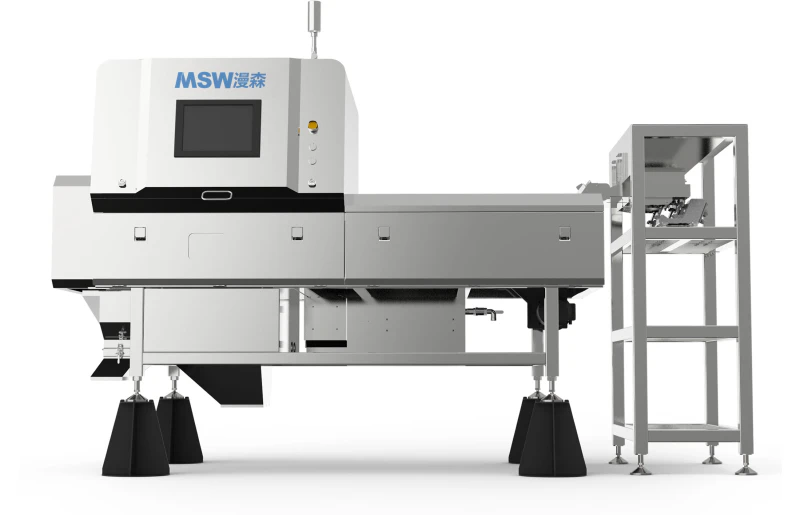
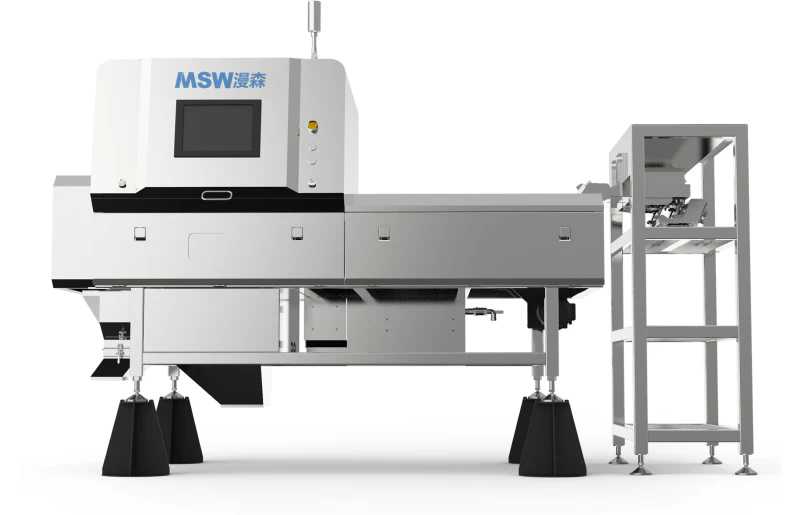
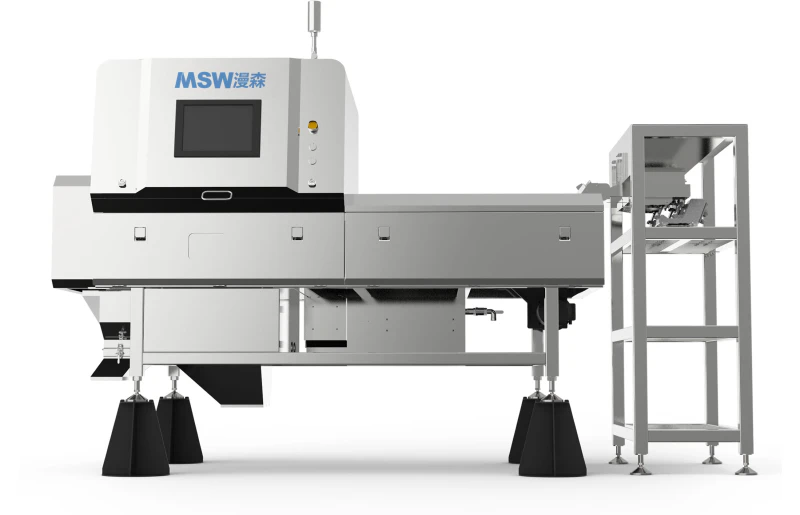
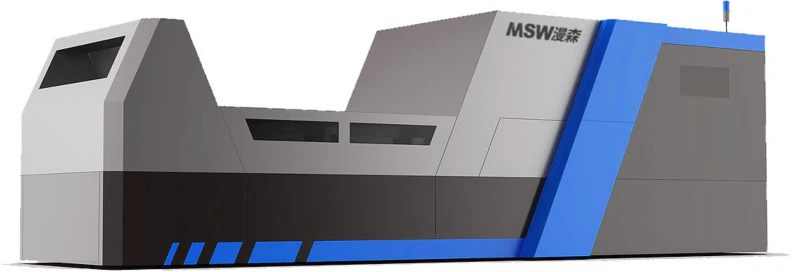
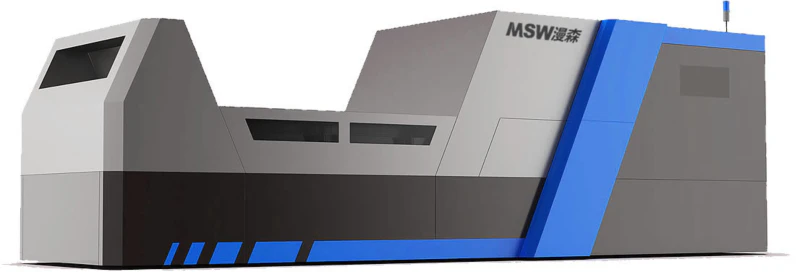
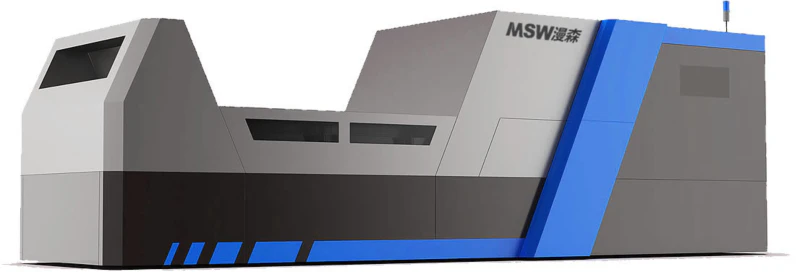
A belt-type X-ray sorter is an industrial separation machine that identifies and classifies materials based on their internal atomic density rather than their surface color or texture. As objects travel across a moving conveyor belt, a linear X-ray source scans each item and measures how much radiation passes through it. Because denser materials and those containing heavier elements absorb more radiation, the machine can build a precise density profile of every fragment and decide, in a fraction of a second, whether it belongs to the target stream or should be rejected. This capability makes the equipment invaluable in recycling and plastic processing plants where visually identical materials must still be separated by their true chemical composition.
The technology is also known as an X-ray sorting machine or an XRT sorter, where XRT stands for X-ray transmission. Unlike surface-scanning systems, an XRT sorter looks straight through the material, which allows it to reveal contaminants, coatings, and elemental markers that would otherwise remain hidden. The belt-type configuration adds mechanical stability to this scanning process, presenting each piece to the detector in a controlled, evenly spread layer. For plastic processors, this means that flakes, granules, and irregular fragments can all be evaluated with the same level of consistency, which is essential for maintaining strict purity thresholds in the final product.
In practical terms, the belt-type X-ray sorter bridges a gap that traditional optical sorters cannot fill. Where an optical machine sees only what light reflects off a surface, the X-ray transmission sorter perceives the substance of the material itself. This distinction matters enormously when a plastic processor needs to remove chlorine-bearing polymers, metal-loaded compounds, or dense mineral fillers from an otherwise clean stream. Understanding how the machine reads atomic density, and why the conveyor design supports that reading, is the foundation for appreciating everything the equipment can do on a production line.
X-Ray Transmission (XRT) and Atomic Density Explained
X-ray transmission works on a straightforward physical principle: when X-rays pass through matter, some of that energy is absorbed, and the amount absorbed depends on the atomic density of the material in the beam's path. Elements with higher atomic numbers, such as chlorine, bromine, or various metals, absorb far more radiation than light elements like carbon and hydrogen, which form the backbone of most common plastics. By comparing the strength of the X-ray beam before and after it travels through an object, the detector array translates the difference into a density value for every point along the scan line. This produces a detailed internal map rather than a simple surface image.
Atomic density is the key variable that separates X-ray sorting from every color-based method. Two plastic fragments might look identical to the human eye and to an optical camera, yet contain completely different additives or halogen content. Because those differences alter how the material absorbs radiation, the XRT sorter reads them clearly. Dual-energy detection refines this further by scanning at two distinct energy levels, allowing the system to distinguish between a thick piece of a light material and a thin piece of a dense one. This resolves a common ambiguity that would otherwise cause thickness to be mistaken for composition, and it is the reason modern XRT sorters achieve such reliable material identification.
Why the Conveyor Belt Design Matters
The conveyor belt is more than a simple transport mechanism; it is a critical part of the sorting accuracy. By carrying material at a constant, controlled speed and spreading it into a stable single layer, the belt ensures that each fragment passes the X-ray source in a predictable position and orientation. This stability lets the detector correlate every density reading with a precise physical location, which in turn allows the ejection system to target the correct piece with exceptional timing. Without a steady presentation of material, the density map would blur and the separation would lose precision.
Belt-type designs are particularly well suited to materials that are large, flat, sticky, or irregular in shape, because these items sit securely on the belt surface and do not tumble unpredictably. This contrasts with chute-type systems, where material free-falls past the sensors. A useful comparison is found in food sorting: bulky or delicate items such as whole lemons are handled far more reliably on a belt, whereas small, free-flowing products like rice grains are better suited to a chute. The same logic applies in plastics, where the belt design offers a stable platform for fragments that need careful, position-accurate scanning before ejection.
How Does a Belt-Type X-Ray Sorter Sort Plastics?
The sorting process in a belt-type X-ray sorter follows a continuous sequence that transforms a mixed, unsorted feed into cleanly separated output streams. It begins with material intake and even distribution, moves through high-resolution X-ray scanning, and concludes with rapid physical separation driven by compressed air. Each stage is engineered to work in harmony with the others, so the machine can process large volumes of plastic while still evaluating individual fragments with precision. Understanding this flow helps buyers appreciate where throughput, accuracy, and reliability come from in a real production environment.
What makes the belt-type approach powerful is that every decision the machine makes is based on data captured while the material is in stable, predictable motion. The system does not guess; it measures the atomic density of each fragment, compares that measurement against programmed thresholds, and then acts on the result within milliseconds. Because the process is fully automated, it removes the inconsistency of manual sorting and delivers repeatable purity levels shift after shift. The following stages break down exactly how raw material becomes a sorted product, from the moment it enters the feed system to the instant unwanted pieces are ejected from the stream.
From Feeding to Belt Transport
Sorting begins at the feed system, where a vibratory feeder or hopper meters the incoming material and releases it onto the conveyor at a controlled rate. This metering is essential because overloading the belt would cause fragments to overlap, hiding some pieces from the X-ray beam and reducing accuracy. The feeder spreads the material into a thin, even layer, ensuring that each fragment is presented to the scanning zone individually. A well-tuned feed stage directly determines how much clean separation the rest of the machine can achieve.
Once distributed, the material rides the conveyor belt at a constant velocity toward the detection area. The belt speed is carefully matched to the scanning and ejection systems so that the position of every fragment is known throughout its journey. This synchronization is what allows the machine to track a specific piece from the moment it is scanned to the moment it reaches the ejection point. Stable transport also protects delicate or oddly shaped items from bouncing or shifting, which preserves the integrity of the density data collected in the next stage.
Dual-Energy X-Ray Scanning and Density Mapping
As the belt carries material into the scanning zone, an X-ray source positioned above or below the belt emits a continuous fan of radiation, while a sensitive detector array on the opposite side measures how much of that radiation survives the passage through each fragment. Dual-energy scanning captures readings at two separate energy levels simultaneously, which allows the system to separate the influence of material thickness from the influence of atomic composition. The result is a high-resolution density map that reveals the true nature of each piece regardless of its size or shape.
This density map is the heart of the sorting decision. Every pixel of the map carries information about the atomic density at that exact point, so the machine can detect not only which polymer type a fragment is likely to be, but also whether it contains hidden contaminants such as embedded metal or halogen-rich additives. Because the mapping happens in real time as the belt moves, the system continuously updates its picture of the material stream. This live, position-linked data is what enables the downstream logic to make accurate, fragment-specific choices at high speed.
Signal Processing and Air-Jet Ejection
Once the density map is generated, the machine's processing unit analyzes it against programmed acceptance criteria. Sophisticated algorithms interpret the density values, classify each fragment, and calculate the precise moment and location at which an unwanted piece will arrive at the ejection zone. This computation happens in milliseconds, keeping pace with the moving belt so that no fragment is missed. The intelligence of this stage is what turns raw sensor readings into a reliable, automated sorting decision.
Physical separation is carried out by a bank of high-speed air nozzles positioned at the discharge end of the belt. When a fragment flagged for rejection reaches the correct position, the corresponding nozzle fires a short, precisely timed burst of compressed air that knocks the piece out of its normal trajectory and into a separate collection channel. Accepted material continues along its natural path, producing two distinct output streams. Because each air jet is controlled independently and triggered by exact positional data, the ejection is both selective and gentle enough to avoid disturbing the surrounding accepted fragments.
What Plastics Can a Belt-Type X-Ray Sorter Detect?
A belt-type X-ray sorter excels at detecting plastics that differ from one another in atomic density or that carry heavier elements within their structure. It is particularly effective at identifying halogenated polymers such as PVC, which contains chlorine, and flame-retardant plastics that contain bromine. It also reliably flags fragments contaminated with metal fillers, mineral loading, or embedded foreign particles. Because these characteristics all change how a material absorbs radiation, the XRT sorter can single them out even when they are visually indistinguishable from the surrounding stream, making it a powerful tool for producing high-purity recyclate.
There are, however, limits to what any X-ray transmission system can resolve. Plastics that share nearly identical atomic densities and contain no distinguishing heavy elements can be difficult to separate from one another by X-ray alone. For example, several common light polymers built primarily from carbon and hydrogen may present very similar density signatures, so distinguishing between them often calls for a complementary technology such as near-infrared detection. Understanding this boundary helps buyers set realistic expectations and design a sorting line that combines methods where necessary.
The choice between a belt-type and a chute-type configuration also shapes what the machine handles best. As with the earlier comparison, belt-type systems suit large, flat, sticky, or irregular fragments that benefit from stable presentation, much like whole lemons are better sorted on a belt, while chute-type systems handle small, free-flowing granular material more like rice. Matching the physical form of the plastic to the right transport style ensures that the detection capability of the X-ray system is fully realized rather than compromised by unstable material handling.
Detecting Chlorine, Bromine and Heavy Metal Content
The standout strength of X-ray transmission technology is its sensitivity to elements with high atomic numbers. Chlorine, which is a defining component of PVC, and bromine, which appears in many flame-retardant additives, both absorb X-rays far more strongly than the light carbon and hydrogen atoms that make up the bulk of ordinary plastics. This sharp contrast in absorption means the XRT sorter can positively identify chlorine- and bromine-bearing fragments and remove them from the stream, which is essential for meeting the strict composition limits demanded by regulated recycling markets.
Heavy metal contamination is detected through the same physical mechanism. Fragments that contain metal inserts, metal-loaded compounds, or dense mineral fillers register as high-density regions on the map, allowing the machine to reject them cleanly. This is especially valuable in electronic waste plastics and other complex feedstocks where hidden metallic components would otherwise contaminate the output. By catching these elements at the material level rather than the surface level, the belt-type X-ray sorter protects both product purity and the integrity of downstream processing equipment.
Where Optical Sorters Fall Short but XRT Succeeds
Optical and near-infrared sorters are outstanding at reading surface properties, but they are fundamentally blind to what lies inside a fragment. A piece coated with paint, covered in a dark film, or heavily printed can defeat an optical sensor because the surface no longer reflects a representative signal. In these situations the near-infrared system may misclassify or simply ignore the fragment, allowing contaminants to slip through into supposedly clean output.
X-ray transmission sidesteps these problems entirely because it does not depend on surface appearance. Coatings, printing, dirt, and color have little effect on how radiation passes through the body of the material, so the XRT sorter continues to read the true atomic composition regardless of what the fragment looks like on the outside. This is why an X-ray system succeeds precisely where optical sorting struggles, and why many advanced plants deploy both technologies in sequence so that each covers the other's blind spots and the combined line achieves the highest possible purity.
X-Ray Sorting vs. Optical (NIR) Sorting
Choosing between X-ray transmission and near-infrared sorting comes down to understanding what each technology actually measures. An XRT sorter reads atomic density and elemental composition from within the material, while a near-infrared sorter reads the way a surface reflects specific wavelengths of light to infer polymer type. Both approaches are valuable, but they answer different questions. The table below summarizes the core distinctions so buyers can quickly see which method aligns with a given separation challenge and where the two might work together rather than in competition.
| Characteristic | Belt-Type X-Ray (XRT) Sorter | Optical (NIR) Sorter |
|---|---|---|
| Primary measurement | Internal atomic density and elemental content | Surface reflection of light wavelengths |
| Best at detecting | Chlorine, bromine, metals, dense contaminants | Polymer type by surface signature |
| Effect of surface coating or printing | Largely unaffected | Can be blinded or misled |
| Effect of color | Independent of color | Can struggle with dark materials |
| Typical use | Removing PVC and hazardous elements | Separating clean polymer grades |
In many modern facilities the answer is not one technology or the other but a thoughtful combination of both. A near-infrared stage can rapidly separate the main polymer grades, while a downstream X-ray transmission stage removes the halogenated and metal-bearing fragments that optical detection cannot see. Deciding where to place the XRT sorter in the process depends on the specific contaminants present, the purity target, and the physical form of the feed material, all of which the following sections explore in more detail.
Material Composition vs. Surface Appearance
The most important conceptual difference between the two technologies is composition versus appearance. X-ray transmission answers the question of what a material is made of at the atomic level, revealing density and heavy-element content that remain constant no matter how the fragment is treated on the outside. Near-infrared answers the question of what the surface looks like to a specific band of light, which is excellent for identifying clean polymer types but vulnerable whenever the surface is obscured.
This distinction guides practical decisions on the production floor. When the sorting goal is to guarantee that no chlorine-bearing or metal-contaminated fragments remain in a stream, composition-based X-ray detection is the correct tool because it reads the substance itself. When the goal is to sort visually clean flakes into precise polymer grades, surface-reading near-infrared often provides the fastest and most cost-effective separation. Recognizing which question needs answering is the first step toward specifying the right machine.
When to Choose XRT Over Near-Infrared Detection
An X-ray transmission sorter becomes the clear choice whenever the target contaminant is defined by its internal makeup rather than its outward look. Removing PVC from a stream of otherwise similar plastics, eliminating flame-retardant fragments loaded with bromine, or clearing metal-contaminated pieces from electronic-waste plastic are all tasks where near-infrared detection is unreliable but XRT delivers consistent results. If the feed material is heavily printed, coated, or dark in color, that further tips the decision toward X-ray because those conditions degrade optical performance.
Conversely, if the material is visually clean and the separation is purely about distinguishing polymer grades that share similar densities, a near-infrared system may accomplish the job more economically. Many buyers ultimately conclude that the strongest configuration uses both technologies in sequence, letting the near-infrared unit handle grade separation and the belt-type X-ray sorter act as a final safeguard against hazardous or dense contaminants. Framing the decision around the specific contaminants and purity requirements ensures the investment matches the actual sorting challenge.
What Industries Use Belt-Type X-Ray Sorters?
Belt-type X-ray sorters have found a home across a wide range of industries where material purity and contaminant removal carry real economic and regulatory weight. In plastic recycling, the equipment is used to strip PVC and other halogenated polymers out of mixed streams, allowing processors to produce recyclate that meets demanding purity specifications. The same capability serves the electronic-waste sector, where plastics recovered from discarded devices frequently contain flame retardants and embedded metals that must be removed before the material can be safely reprocessed or resold.
Beyond recycling, the technology supports sectors that handle valuable or hazardous materials in bulk. In mining and mineral processing, X-ray transmission sorting separates ore from waste rock based on density differences, dramatically improving concentrate quality and reducing the energy spent on downstream processing. Scrap metal operations use the same principle to distinguish alloys and remove low-value fractions. Even the food and agricultural industries benefit, employing X-ray detection to identify foreign objects such as stones or bone that share no visual similarity with the product being cleaned.
What unites these varied applications is a common requirement: the need to sort materials by what they are made of rather than by how they appear. Any operation that faces hidden contaminants, safety-critical purity thresholds, or valuable fractions that cannot be told apart by eye is a strong candidate for a belt-type X-ray sorter. As one processing plant operated by a leading recycler demonstrated, integrating an XRT stage into an existing line can lift output purity to levels that manual and optical methods alone could never sustain, which is why adoption continues to grow across these sectors.
How to Choose the Right Belt-Type X-Ray Sorter
Selecting the right belt-type X-ray sorter is a matter of matching the machine's capabilities to the realities of your material and your production goals. The first consideration is the nature of the feed itself: its typical fragment size, its density range, and the specific contaminants that must be removed. A stream dominated by large, flat fragments with occasional PVC contamination calls for very different settings than a stream of fine, dense particles carrying metal inclusions. Defining the sorting objective in concrete terms of target purity and reject composition is the essential starting point for any sound purchasing decision.
The second consideration is how the machine fits into the wider process. Because X-ray transmission and near-infrared sorting complement one another, buyers should decide whether the XRT sorter will act as a standalone solution or as one stage within a multi-technology line. Placement, throughput matching with upstream and downstream equipment, and the physical footprint available on the plant floor all influence the choice. Weighing these factors against the comparison points discussed earlier ensures that the selected machine delivers its full value rather than becoming a bottleneck or a redundant investment.
Belt Width, Throughput and Detection Resolution
Belt width and throughput are directly linked and must be sized to the volume of material the plant needs to process. A wider belt carries more material per minute, raising capacity, but only if the feed system can spread that material into a stable single layer without overlap. Pushing throughput too high on a narrow belt causes fragments to pile up, hiding some from the X-ray beam and eroding sorting accuracy. The right balance keeps the belt fully utilized while still presenting every piece cleanly to the detector.
Detection resolution determines the smallest fragment and the subtlest density difference the machine can reliably distinguish. Higher resolution allows the sorter to catch small contaminants and fine composition variations, which matters greatly when purity targets are strict. However, higher resolution can interact with belt speed, since faster movement gives the detector less time to gather data on each fragment. Buyers should therefore consider resolution, belt speed, and throughput together as a single performance envelope, choosing a configuration that meets purity requirements at the required production rate rather than optimizing any one number in isolation.
Radiation Shielding and Safety Compliance
Because the technology relies on X-rays, radiation shielding and safety compliance are non-negotiable aspects of the selection process. Reputable belt-type X-ray sorters are fully enclosed with lead-lined shielding and interlocked access panels that shut off the X-ray source the moment the machine is opened. When these safeguards are correctly designed and maintained, external radiation levels remain well within the limits set by regulatory authorities, and the equipment is safe for operators to work around during normal production.
Buyers should verify that any machine under consideration carries the appropriate certifications for their region and comes with documented procedures for installation, routine inspection, and operator training. Confirming that the manufacturer provides clear guidance on shielding integrity checks and access-interlock testing protects both staff and the business from compliance risk. Treating radiation safety as a core specification rather than an afterthought ensures that the productivity gains of X-ray sorting never come at the expense of workplace safety or regulatory standing.
FAQ
Is a belt-type X-ray sorter safe to operate?
Yes, a properly built and maintained belt-type X-ray sorter is safe to operate under normal production conditions. The X-ray source is fully enclosed within a shielded cabinet, typically lined with lead, and the access doors are fitted with safety interlocks that automatically cut power to the source whenever the enclosure is opened. As a result, operators working around the machine are not exposed to harmful radiation, and external dose levels stay well within the thresholds defined by regulatory bodies.
Maintaining that safety depends on following the manufacturer's guidance. Regular inspection of shielding integrity, routine testing of the access interlocks, and proper operator training all keep the system within its safe operating envelope. When a plant treats these procedures as standard practice and holds the required certifications for its region, the equipment integrates into a normal industrial environment without introducing meaningful radiation risk to staff.
Can an X-ray sorter separate PVC from other plastics?
Yes, separating PVC from other plastics is one of the strongest and most common applications of X-ray transmission sorting. PVC contains chlorine, an element with a relatively high atomic number that absorbs X-rays far more strongly than the carbon and hydrogen that make up most other polymers. This creates a clear contrast in the density map, allowing the sorter to positively identify PVC fragments even when they look identical to surrounding materials.
This ability is especially valuable because chlorine contamination is difficult to detect by surface-reading methods and can cause serious problems in downstream recycling. By removing PVC at the composition level, the belt-type X-ray sorter helps processors meet the strict purity limits demanded by regulated markets, protecting both product quality and the equipment used in later processing stages.
What is the difference between belt-type and chute-type X-ray sorters?
The core difference is how material is presented to the sensors: a belt-type sorter carries material on a moving conveyor, while a chute-type sorter lets material free-fall past the detector. The belt design provides stable, position-controlled transport that suits large, flat, sticky, or irregular fragments, keeping each piece steady while it is scanned and ejected. This stability supports precise, position-linked sorting decisions.
Chute-type systems, by contrast, handle small, free-flowing granular material more efficiently because such particles fall in a smooth, even curtain. The same logic seen in food sorting applies, where bulky items like whole lemons favor a belt and fine products like rice favor a chute. Choosing between the two configurations comes down to matching the physical form and flow behavior of your material to the transport style that keeps detection accurate.
How accurate is X-ray transmission sorting?
X-ray transmission sorting achieves very high accuracy because it reads the true internal composition of each fragment rather than relying on surface appearance. By measuring atomic density, often with dual-energy scanning that separates thickness from composition, the system builds a detailed and reliable picture of every piece, allowing it to distinguish target material from contaminants with great consistency.
Actual performance depends on how well the machine is configured for the specific material. Proper feed distribution, a belt speed matched to the detection resolution, and throughput kept within the machine's stable operating range all contribute to accuracy. When these factors are set correctly and the sorting task involves clear density or elemental differences, an XRT sorter delivers repeatable, high-purity results shift after shift that manual or optical methods alone cannot match.