Types of Belt Type AI X-Ray Sorter
What Is a Belt-Type AI X-Ray Sorter?
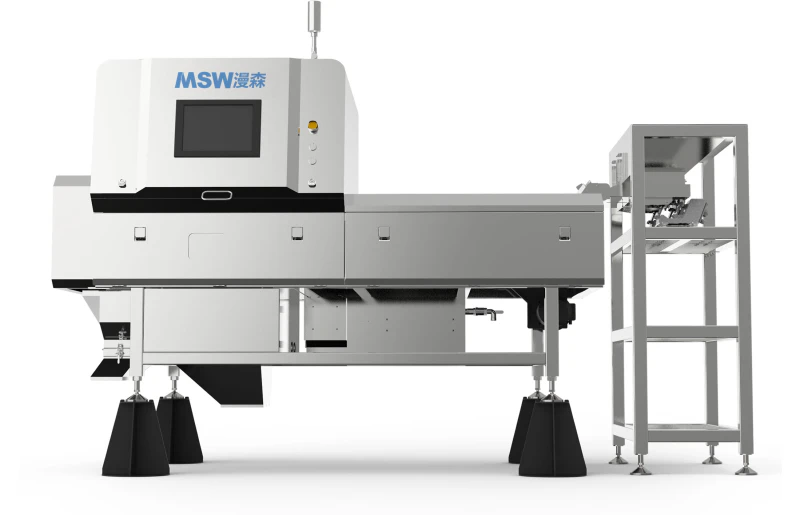
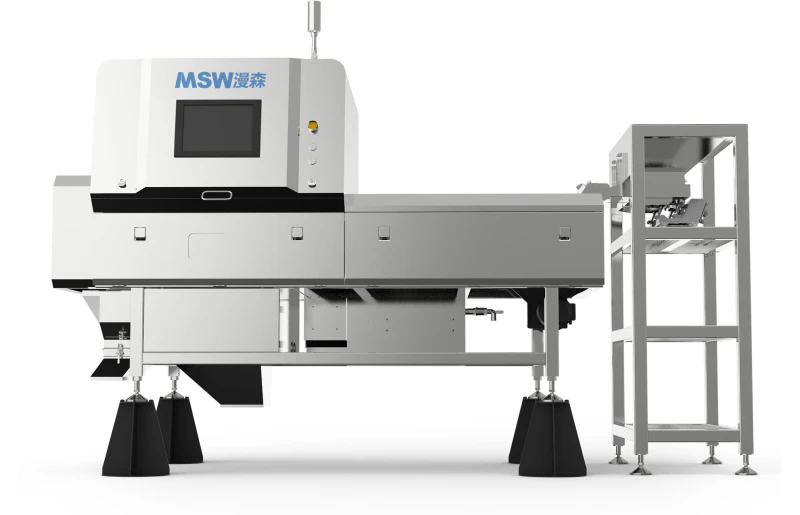
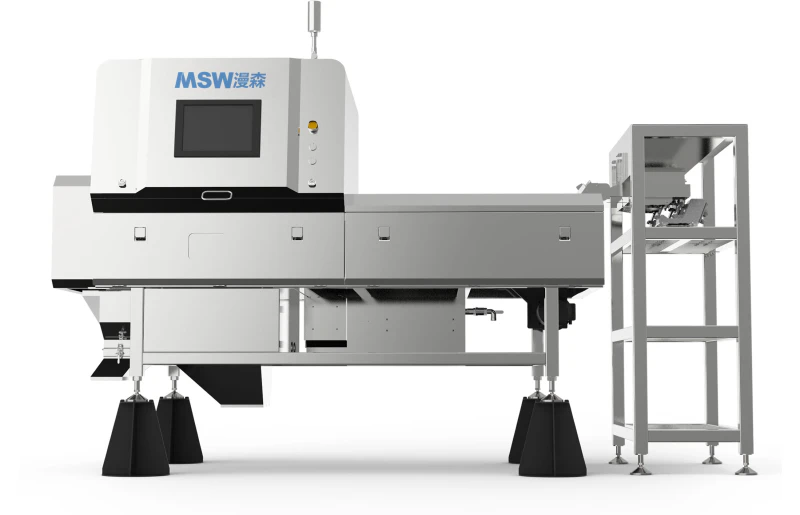
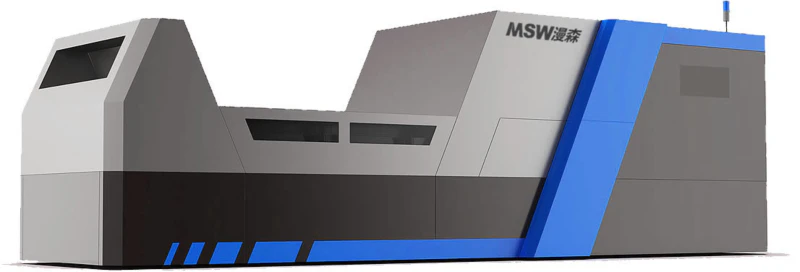
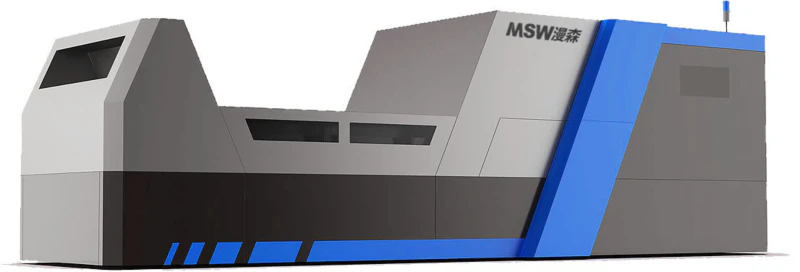
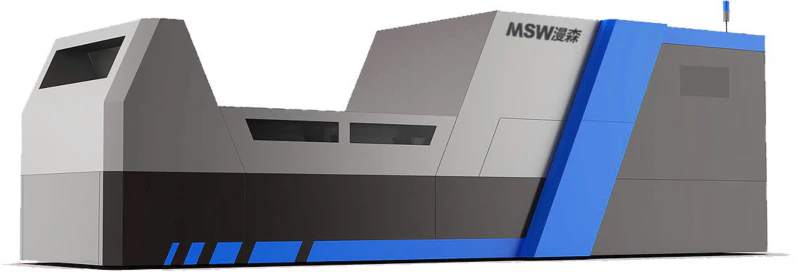
A belt-type AI X-ray sorter is an industrial separation machine that identifies and sorts plastics based on their atomic density rather than their surface color or shape. The material travels along a wide conveyor belt while a fan-shaped X-ray beam scans it from above or below, producing a detailed density map of every fragment passing through the detection zone. An onboard artificial intelligence engine then interprets that map in real time and triggers precise air jets to push target materials into separate collection channels. This machine is also known as a belt-type X-ray sorting machine or an AI X-ray plastic separator, and all three names describe the same core technology: penetrating radiation combined with intelligent recognition software.
What makes this equipment distinct from conventional optical systems is that it reads what is inside a material, not just what the human eye can see on its surface. Because X-rays pass through objects and are absorbed at different rates depending on the elements present, the machine can distinguish plastics that look identical under visible light. This capability is especially valuable in recycling and recovery operations where feedstock is dirty, mixed, dark in color, or contaminated with metal fragments. By automating a task that would otherwise require slow and inconsistent manual sorting, the belt-type X-ray sorter helps processing plants maintain steady purity levels while handling large volumes of material every hour.
How X-Ray Transmission Reveals a Plastic's Atomic Density
The heart of X-ray transmission technology lies in a physical principle: when radiation passes through a material, the amount absorbed depends on the atomic number and thickness of the elements it encounters. Denser materials and those containing heavier atoms, such as chlorine or metals, absorb more radiation, while lighter organic polymers allow more to pass through. The detector on the other side measures how much energy survives the journey, and from those readings the system builds a grayscale image where brightness corresponds directly to atomic density. This is fundamentally different from color sorting, because density does not change when a plastic is painted, printed, dyed black, or coated in grime.
Many modern machines use a technique called dual-energy X-ray, which sends radiation through the material at two different energy levels simultaneously. Comparing how each energy band is absorbed lets the system separate the effect of density from the effect of thickness, so a thin dense object can be told apart from a thick light one. This distinction matters enormously in real feedstock, where fragments arrive in random shapes and sizes. By anchoring identification to atomic density, the sorter delivers reliable results on materials that defeat optical methods, and it provides the raw data that the AI recognition engine needs to make its final classification decisions.
The Role of the AI Recognition Engine in Material Identification
Raw density images on their own are not enough to sort a chaotic stream of mixed plastic. This is where the AI recognition engine takes over, applying trained machine-learning models to interpret every pixel of the grayscale scan and decide what each fragment actually is. The software has been exposed to large libraries of labeled material samples, so it learns the density signatures that correspond to specific polymers, halogen-containing compounds, and metal contaminants. When a new object crosses the detection zone, the engine matches its pattern against these learned signatures and assigns it to the correct category within milliseconds.
What sets the AI recognition engine apart from simple threshold-based logic is its ability to handle ambiguity and overlap. Two materials may share similar density ranges yet differ in subtle texture or edge characteristics, and the neural network can weigh many features at once to reach an accurate decision. Because the models are software-based, they can be retrained and updated as new material types enter the waste stream or as customers refine their purity targets. This adaptability means a belt-type AI X-ray sorter is not frozen at the moment it leaves the factory; it can keep improving throughout its service life, which is a meaningful advantage for operators facing constantly changing feedstock.
How Does a Belt-Type AI X-Ray Sorter Sort Plastics?
The sorting process follows a continuous, tightly coordinated sequence that transforms a messy pile of mixed material into cleanly separated output streams. It begins with feeding, where a vibratory tray or hopper meters the material onto the conveyor at a controlled rate so fragments spread into an even, single layer. The belt then carries this layer forward at a steady, known speed toward the scanning zone. Consistent belt conveying is essential, because the system must know exactly where each fragment sits and when it will arrive at the ejection point downstream.
Once the material reaches the detection area, the X-ray scanning stage captures a density image of everything on the belt. That image flows immediately into the AI classification stage, where the recognition engine identifies each fragment and calculates its precise position and trajectory. The final stage is air-jet ejection: a bank of high-speed pneumatic nozzles fires short, targeted bursts of compressed air exactly as the flagged fragments cross the ejection line, knocking them off their natural path and into a dedicated collection chute. Everything else continues past the nozzles undisturbed. This whole cycle, from feeding to ejection, happens in a fraction of a second and repeats thousands of times per minute across the full width of the belt.
Why the Conveyor Belt Layout Suits Heavy and Bulky Feed
The conveyor belt layout gives this machine a distinct mechanical advantage when the incoming material is large, heavy, or irregularly shaped. Because fragments rest flat on a moving surface rather than sliding down an inclined chute, their position stays stable and predictable right up to the moment of ejection. Heavy pieces do not accelerate unpredictably under gravity, and bulky items with awkward geometry are less likely to tumble or bounce out of the detection zone. This stability translates directly into more accurate targeting, since the air jets can be timed with confidence to hit each fragment where the AI expects it to be.
A helpful way to picture this is to compare it with sorting different foods. Sorting whole lemons works best on a belt, because the fruit is large and rounded and needs a steady platform, while sorting grains of rice suits a chute, where small light particles fall in a thin, fast stream. Belt-type X-ray sorters follow the same logic: they are built for the industrial equivalent of lemons, meaning shredded plastic chunks, mixed recycling fractions, and dense contaminated material. The wide flat belt also handles higher mass loads without jamming, which is why processing lines dealing with rugged, variable feedstock tend to favor the belt configuration over lighter, chute-based designs.
From Grayscale Imaging to Real-Time Ejection Signals
The link between imaging and physical action is what makes the sorter feel almost instantaneous, and it depends on very tight synchronization between the software and the hardware. When the X-ray detector produces a grayscale frame, the AI engine assigns each identified fragment a set of coordinates and a classification label. Knowing the belt speed and the fixed distance between the scanner and the nozzle bank, the control system calculates the exact millisecond at which each target will reach the ejection line. It then schedules the corresponding air valve to open and close within that narrow window.
Precision here is measured in milliseconds and millimeters, because a jet fired even slightly too early or too late will miss its target or disturb neighboring good material. To keep the process accurate at high throughput, the machine processes many fragments in parallel and manages a queue of pending ejection signals across the full nozzle array. This real-time coordination is why the equipment can maintain both high purity and high speed at the same time. The grayscale image is essentially the machine's perception, the AI classification is its judgment, and the timed ejection signal is its physical response, all working together in a continuous loop as material streams past.
What Plastics Can a Belt-Type AI X-Ray Sorter Detect?
Because detection is driven by atomic density rather than visible color, this machine excels at recognizing materials that frustrate ordinary optical sorters. It reliably identifies dark and black plastics, halogen-containing polymers such as PVC, and stray metal fragments mixed into the plastic stream. Chlorine gives PVC a distinctive high-density signature that stands out clearly on an X-ray scan, so the sorter can pull it out of a blended feed to protect the purity of the remaining material. Metals, being far denser than any polymer, appear as bright markers on the density image and are easy targets for ejection, which makes the equipment valuable for cleaning contamination out of recycled plastic.
The physical structure of the belt-type design also shapes what kind of feedstock the machine handles best. As with the earlier comparison between sorting lemons on a belt and sorting rice on a chute, the belt layout is suited to larger, heavier, or irregular material that needs a stable platform during scanning and ejection. Shredded mixed plastics, bulky recovered fragments, and dense contaminated streams all sit comfortably on the moving belt, giving the X-ray system a clean, steady view of each piece. This combination of density-based detection and belt-based handling defines the practical detection envelope of the machine and explains why it is chosen for demanding recovery applications.
Detecting Black Plastics and PVC That Optical Sorters Miss
Black plastics are one of the most persistent challenges in the recycling industry, and they expose the fundamental limitation of color-based sorting. Many dark polymers get their color from carbon black pigment, which absorbs the light that optical and near-infrared sorters rely on to read a material's identity. The result is that these plastics appear invisible or unreadable to conventional systems, and large volumes of otherwise recyclable material end up misclassified or sent to waste. X-ray transmission sidesteps this problem entirely, because carbon black pigment has almost no effect on how radiation passes through the material. The sorter sees the underlying atomic density regardless of the surface color, so a black fragment is just as readable as a clear one.
PVC presents a different but equally important detection case. Its chlorine content makes it both easy to identify by X-ray and highly desirable to remove, since PVC contamination can degrade the quality of other recycled polymers during reprocessing and release harmful compounds when heated. The high-density chlorine signature stands out sharply against lighter plastics on the grayscale image, allowing the AI engine to flag PVC with strong confidence. By capturing both black plastics and PVC that optical machines routinely miss, the belt-type X-ray sorter closes a significant gap in the recovery chain and raises the overall value of the recovered material.
Material Types Outside the X-Ray Detection Range
No single sorting technology covers every material, and it is important to understand where the X-ray method reaches its limits. Because the machine distinguishes materials by differences in atomic density, plastics that share very similar densities and contain no heavier marker elements can be difficult to separate from one another. Several common polymers fall into overlapping density ranges, so an X-ray sorter may struggle to reliably tell them apart when the only difference between them is polymer chemistry rather than density. In those cases, other technologies such as near-infrared spectroscopy are better suited, because they read the chemical fingerprint of the material directly.
Very thin films, lightweight flakes, and extremely small particles also sit near the edge of what the belt-type configuration handles well, since they can shift or lift during scanning and provide only a faint density signal. This is again where the lemon-versus-rice principle applies: fine, light material streams are generally better matched to chute-type equipment or to complementary sorting stages. Recognizing these boundaries is not a weakness but a design consideration, and many high-performance recovery lines combine X-ray sorting with optical and mechanical stages so that each technology handles the material it identifies most accurately. Understanding what falls outside the X-ray range helps buyers plan a complete, realistic sorting solution.
Belt-Type X-Ray Sorting vs. Chute-Type X-Ray Sorting
Both belt-type and chute-type machines share the same X-ray detection principle, yet they differ significantly in how material is presented to the scanner, and that difference decides which layout fits a given operation. The comparison below summarizes the key factors that separate the two designs.
| Factor | Belt-Type X-Ray Sorter | Chute-Type X-Ray Sorter |
|---|---|---|
| Feed size | Larger, bulky, irregular fragments | Small, uniform particles |
| Throughput | High mass flow with heavy loads | High count with light, fine streams |
| Particle weight | Suited to heavy pieces | Suited to light pieces |
| Moisture | Tolerates damp, sticky material | Prefers dry, free-flowing material |
| Footprint | Larger, horizontal layout | Compact, vertical layout |
The pattern that emerges is consistent with the lemon-and-rice analogy used earlier. When material is heavy, large, moist, or irregular, the stable horizontal platform of the belt keeps every fragment in a known position through scanning and ejection, producing reliable results even under demanding conditions. When material is small, dry, and free-flowing, the chute allows a fast, thin cascade that the detector can read cleanly as particles fall. Neither approach is universally better; the right choice depends on the physical character of the feedstock and the goals of the processing line.
When to Choose a Belt Layout Over a Chute Layout
The decision to choose a belt layout usually comes down to the nature of the material and the practical realities of the facility. If the incoming stream consists of shredded plastic chunks, mixed recovered fragments, heavy contaminated material, or feedstock that carries moisture and stickiness, the belt configuration is the safer and more accurate choice. The steady platform prevents unpredictable tumbling, keeps damp material from clogging a sliding surface, and gives the air jets a stable target to hit. Operations dealing with rugged, variable input therefore lean toward the belt because it protects sorting accuracy where a chute would struggle.
There are also throughput and integration considerations that favor the belt in heavy-duty settings. A wide belt can carry substantial mass without jamming, which suits high-volume recycling and recovery lines that must process large tonnages every shift. The horizontal layout does require more floor space than a compact vertical chute, so facilities with tight footprints must weigh that tradeoff. In practice, buyers should map their specific feed size, particle weight, moisture level, throughput target, and available space against the comparison above. When most of those factors point toward large, heavy, or challenging material, the belt-type AI X-ray sorter is the configuration that will deliver consistent, dependable separation.
What Industries Use Belt-Type AI X-Ray Sorters?
Belt-type AI X-ray sorters have found a home in a range of industries where recovering value from mixed, contaminated, or difficult material streams is essential. Plastic recycling plants rely on them to purify polymer fractions and strip out unwanted PVC and metal contamination, raising the market value of the recycled output. In WEEE and e-waste recovery, where discarded electronics contain a complex blend of dark plastics, halogenated flame-retardant polymers, and embedded metals, the density-based detection method proves especially powerful because it reads through color and coatings that would blind an optical system. These facilities depend on accurate separation to meet regulatory limits and to recover materials safely.
The technology also serves automotive shredder residue processing, where the leftover fraction from vehicle recycling is a dense, heterogeneous mix of plastics, rubber, and metal fines that demands robust handling and precise identification. Construction and demolition waste operations use the machines to sort bulky, gritty, and often damp material into cleaner streams, taking advantage of the belt's ability to carry heavy irregular pieces without jamming. Dedicated metal-plastic separation lines use the sorter's strong response to metallic contaminants to protect downstream equipment and improve product purity. Across all of these sectors, the common thread is challenging feedstock that rewards the combination of X-ray penetration and belt-based stability, which is exactly what this equipment is engineered to provide.
How to Choose the Right Belt-Type AI X-Ray Sorter
Selecting the right machine is a matter of matching the equipment's capabilities to the concrete demands of your processing line rather than chasing headline specifications. The starting point is a clear understanding of your material: its size range, weight, moisture content, and the contaminants you most need to remove. From there, the most important selection factors are throughput needs, belt width, X-ray resolution, the upgradability of the AI software, and the long-term maintenance and serviceability of the system. Each of these interacts with the others, so a balanced evaluation matters more than optimizing any single number in isolation.
Drawing on the earlier comparison between belt and chute layouts, buyers dealing with large, heavy, or moist feedstock should confirm that the belt configuration genuinely fits their material before comparing individual models. Once the layout is settled, the finer choices come into focus: a wider belt and higher throughput rating for high-volume lines, a finer X-ray resolution for detecting smaller contaminants, and a software platform that can be retrained as the waste stream evolves. Equally important is the practical question of who will keep the machine running over years of hard use, since a sorter that is difficult to service will erode its own value no matter how capable it is on day one. Weighing these factors together leads to a purchase that performs reliably for the life of the line.
Matching Belt Width and Throughput to Your Line Capacity
Belt width and throughput are tightly linked to the capacity of the overall line, and getting this pairing right prevents both bottlenecks and wasted investment. A wider belt spreads material into a thinner, more even layer, which improves detection accuracy and allows the machine to handle more mass per hour without piling fragments on top of one another. If the belt is too narrow for your volume, material stacks up, the X-ray view becomes obstructed, and sorting purity falls. If it is far wider than needed, you pay for capacity and floor space you never use. The goal is to size the belt so that your peak material flow still arrives as a clean single layer.
Throughput planning should be based on realistic peak conditions rather than average figures, because processing lines rarely run at a steady rate all day. Consider the heaviest shift, seasonal surges, and any plans to expand the operation in the coming years, then choose a machine whose rated capacity comfortably covers those peaks with some margin to spare. It is also wise to look at how throughput interacts with sorting accuracy, since pushing any sorter to its absolute maximum speed can reduce purity. A well-matched belt width and throughput rating lets the machine run within its comfortable range most of the time, delivering consistent results while leaving headroom for growth.
Evaluating AI Software Updates and Long-Term Support
Because the intelligence of the machine lives in its software, the quality and continuity of AI updates deserve as much scrutiny as any mechanical component. Waste streams change over time as new products, packaging types, and materials enter the market, and a sorter that cannot learn to recognize them will slowly lose effectiveness. A strong AI platform can be retrained on new material samples and refined to meet evolving purity targets, extending the useful life of the equipment well beyond its initial deployment. When evaluating options, ask how updates are delivered, how often they are released, and whether new material recognition can be added without replacing hardware.
Long-term support extends beyond software into the everyday realities of running an industrial machine. Consider the availability of spare parts, the responsiveness of technical assistance, the clarity of maintenance documentation, and how easily routine service tasks can be performed by your own staff. A sorter that combines a continuously improving AI engine with dependable, accessible support will keep performing at a high level for many years, while one that is neglected after purchase becomes a liability regardless of its original specifications. Treating software upgradability and serviceability as core selection criteria, rather than afterthoughts, protects the value of the investment over its entire service life.
FAQ
Can a belt-type AI X-ray sorter separate black plastics?
Yes, a belt-type AI X-ray sorter reliably separates black plastics because it reads atomic density instead of surface color. The carbon black pigment that makes many plastics dark absorbs visible and near-infrared light, which is why optical sorters fail to recognize these materials and often send recyclable polymers to waste. X-ray transmission is completely unaffected by that pigment, since radiation passes through the material and is absorbed according to its density and elemental makeup rather than its appearance. As a result, a black fragment produces just as clear a signal as a transparent one, and the AI recognition engine can classify and eject it with the same confidence. This is one of the main reasons recycling operations turn to X-ray sorting when dark plastics make up a meaningful share of their feedstock.
How is an X-ray sorter different from an optical sorter?
An X-ray sorter identifies materials by their internal atomic density, while an optical sorter identifies them by their surface color and reflected light. This fundamental difference determines what each machine can and cannot detect. Optical and near-infrared sorters excel at distinguishing polymers by their chemical fingerprint and are ideal for clean, light-colored materials, but they are blinded by dark pigments, coatings, and heavy contamination. X-ray sorters see straight through color and surface condition, making them the better tool for black plastics, PVC, and metal contaminants that hide from optical systems. In many advanced recovery lines the two technologies are used together, with each handling the material it reads most accurately, because neither method covers every possible separation on its own.
Is X-ray radiation from the sorter safe for operators?
Yes, a properly designed and maintained X-ray sorter is safe for operators because the radiation is fully enclosed and shielded within the machine. The X-ray source and detector operate inside a sealed chamber built with lead-lined or equivalent shielding, and safety interlocks cut power to the source if an access panel is opened during operation. These measures keep radiation exposure at the machine's exterior at levels comparable to normal background radiation, well within the limits set by industrial safety regulations. Operators should still follow the manufacturer's safety procedures, keep interlocks functional, and schedule periodic inspections to confirm the shielding remains intact. When these standard practices are observed, working near a belt-type X-ray sorter poses no meaningful radiation risk.
What throughput can a belt-type X-ray sorter achieve?
A belt-type X-ray sorter's throughput depends on belt width, material type, and required purity, but the belt layout is built to handle high mass flows of heavy material. Because the wide belt spreads feedstock into an even single layer and supports bulky, heavy fragments without jamming, it can process substantial tonnage per hour compared with lighter configurations. The exact figure varies with the specific model and the nature of the material, since denser, more contaminated, or higher-purity applications may call for a slower belt speed to preserve accuracy. Buyers should size throughput around realistic peak conditions and leave some margin for growth, and they should remember that running any sorter at its absolute maximum speed can trade purity for volume. Matching belt width and rated capacity to the line ensures dependable performance day after day.
How often does the AI recognition system need updating?
The AI recognition system should be updated whenever the material stream changes significantly or when new contaminants and polymer types need to be identified. There is no fixed calendar for this, because the right frequency depends on how quickly the feedstock evolves in a given operation. Facilities that see steady, predictable material may need only occasional updates, while those handling shifting waste streams or tightening purity requirements benefit from more frequent retraining. A strong AI platform allows new material signatures to be added through software rather than hardware changes, so the machine keeps improving throughout its service life. When evaluating equipment, it is worth confirming how updates are delivered and how responsive the supplier is, since ongoing software support is what keeps a sorter accurate over the long term.