Types of X-ray Sorter
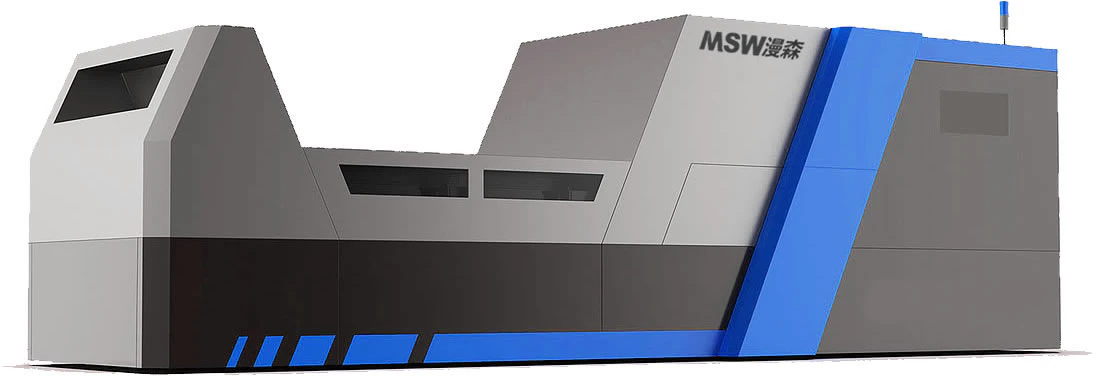
What Is an X-Ray Sorter?
An X-Ray Sorter is an advanced industrial machine that uses high-energy X-ray transmission technology to identify and separate different types of plastics based on their internal atomic density and chemical composition. Unlike optical sorters that only see surface color, an X-Ray Sorter looks through the material, allowing it to distinguish between plastics that look identical to the naked eye. This equipment is also known as an X-Ray Plastic Sorting Machine or a Density-Based Plastic Sorter. The technology has revolutionized the recycling industry because it can detect contaminants that other sorting methods miss entirely. For example, a piece of PVC (polyvinyl chloride) that is painted black to match PET (polyethylene terephthalate) flakes would be impossible to separate using a standard camera-based system, but an X-Ray sorter immediately identifies the density difference and ejects the PVC with high precision. This capability is particularly valuable in facilities that process post-consumer waste where materials are often dirty, dark-colored, or covered in labels that obscure their true composition.
The core advantage of an X-Ray Plastic Sorting Machine lies in its ability to measure the atomic number of each particle passing through the detection zone. This is fundamentally different from near-infrared (NIR) technology, which relies on reflected light wavelengths that only interact with the surface of the material. When a plastic bottle cap made from PVC is mixed with PET bottle flakes, for instance, the two materials appear very similar in color and shape. However, the chlorine atoms in PVC have a much higher atomic number than the carbon and oxygen atoms in PET, resulting in significantly more X-ray absorption. The machine's computer algorithm uses this absorption data to create a density map of the material stream, triggering air jets to remove unwanted particles. Modern X-Ray sorters can achieve sorting purities above 99.5 percent, meaning that fewer than five out of every thousand particles in the final output are contaminants. This level of purity is essential for high-end applications like food-grade PET recycling or the production of engineering plastics for automotive parts.
Principle of Operation
The machine emits a low-dose X-ray beam. As plastics pass through the beam, sensors measure how much X-ray energy is absorbed. Denser materials (like PVC or fluorine-containing plastics) absorb more X-rays, while lighter materials (like PP or PE) absorb less. A computer algorithm instantly processes this data to trigger air jets that separate the targeted plastics. The entire process happens in milliseconds, allowing the sorter to handle throughputs of several tons per hour. The X-ray source itself is carefully shielded to protect operators, and the beam intensity is regulated to minimize radiation exposure while maintaining sufficient signal-to-noise ratio for accurate detection. This balance between sensitivity and safety is achieved through sophisticated collimation and filtering systems that shape the X-ray beam to match the width and thickness of the material stream.
How Does an X-Ray Sorter Sort Plastics?
The sorting process is fully automated and can be broken down into five key steps. Understanding each stage helps operators optimize their recycling lines for maximum efficiency. The system begins with material preparation, where mixed plastic waste is processed into a consistent particle size suitable for X-ray analysis. Throughout the sorting cycle, the machine maintains a steady material flow to ensure every particle is individually analyzed. This level of automation reduces the need for manual sorting labor while improving both speed and accuracy compared to human workers who can only sort about 50 to 80 pieces per minute. An X-Ray sorter, by contrast, can evaluate tens of thousands of particles per second.
Step 1 – Material Feeding
Mixed plastic flakes or pellets are fed onto a high-speed conveyor belt via a vibrating feeder, ensuring a single-layer flow. This uniform material distribution is critical because overlapping particles would cause inaccurate X-ray readings. The vibrating feeder uses a controlled amplitude and frequency to spread the material evenly across the full width of a belt that can measure 1,200 millimeters or more. Operators can adjust the feeder settings to accommodate different material densities and particle sizes, ensuring that the belt carries an optimal layer thickness of approximately one to two particles. Too many particles piled on top of each other would absorb X-rays in a way that makes individual identification impossible, while an excessively sparse feed reduces the machine's throughput capacity.
Step 2 – X-Ray Scanning
The material passes under an X-ray source. The detector array captures the transmission image, measuring the atomic number and thickness of each particle. Modern detector arrays contain hundreds of individual sensor elements arranged in a line across the belt width, each capable of measuring X-ray intensity at a rate of thousands of samples per second. As the conveyor belt moves the material through the scanning zone, the detector captures a two-dimensional image of the entire material stream. Each pixel in this image corresponds to the X-ray absorption measurement for a small area of the belt, allowing the system to pinpoint the exact location of every particle. The X-ray source typically operates at a voltage between 80 and 160 kilovolts, with higher voltages providing better penetration for thicker or denser materials.
Step 3 – Data Processing
A proprietary AI vision system analyzes the X-ray absorption data in real time, identifying material types such as PVC, PET, or aluminum composites. This processing is performed by dedicated graphics processing units (GPUs) that can execute complex mathematical algorithms at blazing speeds. The AI system has been trained on millions of sample images covering a wide range of plastic types, colors, and contamination levels. When a new particle passes through the scanning zone, the system compares its X-ray absorption signature against this database to determine the most likely material composition. Advanced models can even differentiate between different grades of the same plastic type, such as distinguishing between virgin PET and recycled PET based on subtle density variations caused by the reprocessing history.
Step 4 – Ejection
Precise solenoid valves activate high-pressure air jets to blow the identified target material out of the material stream into a separate chute. The ejection system consists of a row of nozzles spaced across the belt width, each controlled by a high-speed solenoid valve that can open and close in less than one millisecond. When the AI system identifies a particle to be removed, it calculates the exact timing required for the air jet to intercept that particle as it falls off the end of the conveyor belt. This calculation accounts for the belt speed, the particle's size and weight, and the distance between the detection point and the ejection point. The compressed air is typically supplied at pressures between 4 and 6 bar, with the volume adjusted based on the particle size to avoid blowing adjacent acceptable material out of the stream.
Step 5 – Collection
Sorted plastics fall into dedicated collection bins, ensuring a high-purity output stream. These bins are typically equipped with level sensors that alert operators when they need to be emptied, preventing overflow and material mixing. The accept bin collects the clean plastic that passes through the sorter without being ejected, while the reject bin captures the removed contaminants. In more advanced installations, the sorter may have multiple reject bins that allow for the simultaneous separation of various materials. For example, a system could be programmed to divert PVC particles into one bin, metal-containing plastics into another, and allow all other materials to continue into the accept stream. This multi-fraction capability is particularly valuable for operations that generate multiple valuable output streams from a single mixed-input feed.
What Plastics Can an X-Ray Sorter Detect?
An X-Ray sorter's detection capabilities are determined by the atomic number differences between materials. The higher the atomic number of an element, the more X-rays it absorbs, making it easier for the machine to identify. This principle allows the sorter to reliably detect a wide range of plastics and contaminants that are problematic for other sorting technologies. The detection sensitivity can be fine-tuned through software settings, enabling operators to set threshold levels that separate materials with very similar densities. This versatility makes X-Ray sorting suitable for diverse applications ranging from bottle-to-bottle recycling to the cleanup of industrial plastic waste streams.
Detectable Materials
PVC (Polyvinyl Chloride) is one of the easiest materials for an X-Ray sorter to detect due to its high density and the presence of chlorine atoms, which have an atomic number of 17. This makes PVC stand out clearly against common packaging plastics like PET and polyolefins. PET (Polyethylene Terephthalate) has a standard density that allows it to be reliably separated from heavier contaminants. PP, PE, and PS represent the low-density group of plastics that can be effectively removed from heavy contaminant streams. Fluoropolymers such as PTFE and PVDF have very high densities because of their fluorine content, making them excellent candidates for X-Ray detection. Metal-containing plastics, including flame-retardant ABS with bromine additives, are also easily identified because the metal atoms create strong X-ray absorption signatures. In one case, a recycler processing electronic waste was able to reduce brominated flame retardant contamination from 8 percent to less than 0.1 percent using a dual-beam X-Ray sorter.
Materials That Cannot Be Reliably Sorted
Transparent PET versus transparent PP is a difficult separation for X-Ray technology because the two materials have very similar densities, often differing by less than 5 percent. In such borderline cases, additional near-infrared sensors must be integrated into the system to provide complementary molecular information. Black plastics present another challenge when they are thin and have low density, as the X-Ray absorption difference between a thin black PP film and a thin black PE film may be too small to distinguish reliably. Foamed plastics cause problems because their irregular internal structure, filled with air pockets, leads to inconsistent X-ray absorption that makes density measurement inaccurate. Operators should also be aware that highly contaminated materials, such as plastic mixed with soil or heavy pigments, can sometimes mask the underlying plastic density, requiring pre-washing before X-Ray sorting.
X-Ray Sorter Specifications
| Parameter | Standard Model | High-Throughput Model |
|---|---|---|
| Throughput | 1,500 – 3,000 kg/h | 4,000 – 6,000 kg/h |
| Sorting Width | 1,200 mm | 2,000 mm |
| Number of Channels | 64 – 128 | 128 – 256 |
| Sorting Purity | ≥ 99.5% | ≥ 99.8% |
| Power Consumption | 15 kW | 25 kW |
The specifications above demonstrate the trade-offs between standard and high-throughput models. For a facility processing 20,000 tons of mixed plastic waste annually, the standard model's throughput of 3,000 kg/h would require approximately 6,700 operating hours per year, which may be feasible with a multi-shift operation. The high-throughput model, however, can process the same volume in about 3,300 hours, allowing for single-shift operation or providing spare capacity for future growth. The sorting width dimension directly affects the maximum particle size that can be handled, with the 2,000-millimeter model accommodating larger items such as whole bottles or automotive parts. The number of channels also influences the resolution of the ejection system, with more channels allowing for finer spatial control and reducing the amount of good material that is accidentally rejected alongside contaminants.
X-Ray Sorting vs. Near-Infrared (NIR) Sorting
| Feature | X-Ray Sorter | NIR Sorter |
|---|---|---|
| Detection Principle | Atomic density (internal) | Molecular reflection (surface) |
| Black Plastic Detection | ✅ Yes, effectively | ❌ No, absorbs light |
| PVC/PET Separation | ✅ Excellent | ✅ Good, but can miss dark grades |
| Metal Detection | ✅ Detects all metals | ❌ Not designed for metals |
| Best Use Case | Extracting PVC, metals, and flame-retardant plastics from mixed streams | Color-based sorting of natural transparent plastics |
When comparing X-Ray sorting technology with near-infrared (NIR) sorting, the fundamental difference lies in the detection principle. NIR sorters work by shining infrared light onto materials and analyzing the reflected spectrum to identify polymer types based on their molecular bonds. This approach works excellently for clean, light-colored plastics but fails completely for black materials, which absorb almost all infrared light. Additionally, NIR systems can be confused by surface contamination such as dirt, labels, or printing inks that alter the reflected signal. X-Ray sorters circumvent these limitations entirely by looking through the material rather than at its surface. The X-Ray system's ability to penetrate dirt and coatings makes it particularly valuable for sorting post-consumer waste that has not been pre-washed. However, X-Ray technology cannot determine the color of materials, which means it cannot be used for applications requiring color-based sorting, such as separating clear PET bottles from green ones.
When to Choose an X-Ray Sorter
If your material stream contains black plastics, PVC contaminants, or metal foil laminates, an X-Ray Sorter is the superior choice. The technology excels in applications where material appearance is unreliable due to dark pigmentation or surface soiling. For pure PET bottle flake cleaning, NIR is more cost-effective, especially when the input stream consists primarily of transparent or lightly colored materials. A mixed recycling facility processing both household and industrial waste would benefit most from a combination of both technologies, with the X-Ray unit positioned downstream to catch the contaminants that the NIR unit misses. Major recycling equipment suppliers now offer integrated systems that combine multiple sensor types, allowing operators to achieve the highest possible purity levels while maintaining reasonable equipment costs.
What Industries Use X-Ray Sorters?
X-Ray sorters have found applications across multiple industries where plastic purity is critical. The versatility of the technology makes it suitable for both primary recycling operations that process post-consumer waste and secondary applications that handle industrial scrap and manufacturing rejects. In each industry, the specific contaminants of concern differ, but the underlying need for reliable, high-speed separation remains constant. The global market for X-Ray sorting equipment has been growing at an annual rate of approximately 8 percent, driven by tightening regulations on plastic waste exports and increasing demand for recycled content in new products.
Plastic recycling plants represent the largest market for X-Ray sorters, where they are used to remove PVC labels and caps from PET bottles. In a typical bottle-to-bottle recycling line, the X-Ray sitter can achieve PVC removal rates exceeding 99.9 percent, which is essential because even trace amounts of PVC can degrade the quality of recycled PET resin. Packaging waste sorting facilities use X-Ray technology to separate composite films from mono-materials, enabling the recovery of valuable polyethylene films that would otherwise be contaminated by multi-layer packaging. Automotive shredder residue processing relies on X-Ray sorters to extract flame-retardant plastics from dashboards and wire harnesses, materials that contain brominated compounds that must be removed to produce clean recyclate. E-waste recycling operations use X-Ray sorters to isolate halogenated plastics from computer housing, preventing the release of toxic fumes during subsequent processing. The chemical industry employs X-Ray sorters for quality control of plastic pellets, where even small amounts of cross-contamination can cause serious problems during injection molding or extrusion.
How to Choose the Right X-Ray Sorter
Selecting the appropriate X-Ray sorter for a specific application requires careful evaluation of several factors. The wrong choice can result in either insufficient purity or unnecessarily high capital expenditure. Operators should begin by thoroughly characterizing their input material stream, as the machine's configuration directly depends on the types and proportions of contaminants present. A systematic approach to selection helps ensure that the investment delivers the expected return within a reasonable payback period. Many equipment manufacturers offer free sample testing services that allow potential buyers to verify performance before making a purchase commitment.
Assess Your Material Composition
First, analyze what percentage of PVC or heavy contaminants your input contains. Higher contamination requires a wider belt and more ejector channels to ensure that all contaminated particles are captured. A material stream with 5 percent PVC contamination might be effectively handled by a standard 64-channel sorter, whereas a stream containing 20 percent PVC would likely require a 128-channel or 256-channel system to maintain throughput. The particle size distribution also matters because larger particles require more powerful air jets and wider spacing between ejector nozzles. Operators should conduct a representative sampling of their input material over several weeks to account for seasonal variations in waste composition.
Consider Throughput vs. Purity
Higher throughput demands more channels and a larger detection width. Use the specification table above to match your target capacity. A common mistake is to select a machine based solely on maximum throughput without considering the required purity level. A sorter that achieves 99 percent purity at 3,000 kg/h may only reach 98 percent purity at 4,000 kg/h because the material layer becomes thicker and the detection algorithms have less time to process each particle. For applications requiring food-grade purity, operators should plan to run the sorter at 70 to 80 percent of its rated capacity to provide adequate margin for detection accuracy.
Evaluate Conveyor Feeding Stability
A vibrating feeder with uniform layer thickness ensures consistent X-Ray readings. Avoid machines without an integrated pre-screening system. The feeder must be able to handle fluctuations in material flow without causing surges that would overwhelm the detection system. Some advanced feeders incorporate a feedback loop that measures material height using a laser sensor and automatically adjusts the vibration amplitude to maintain optimal layer thickness. This feature is particularly important for variable-quality input streams where contamination levels can change rapidly. A stable feed also reduces the frequency of false ejections, where the air jets accidentally remove acceptable materials due to incorrect positioning.
Test Your Specific Plastics
Request a lab trial with a sample of your material. Many suppliers offer free testing to guarantee purity levels above 99.5 percent. During a typical lab trial, the supplier processes several hundred kilograms of the buyer's material through a pilot-scale sorter and measures the contamination level in the output. This testing also reveals any unique challenges posed by the material, such as the presence of fillers or coatings that might interfere with X-ray detection. The results from a lab trial are more reliable than theoretical predictions because they account for the real-world variability of the material. Some equipment manufacturers even offer on-site trials using mobile test units that can be temporarily installed in the buyer's facility.
Factor in Maintenance and X-Ray Tube Life
Check the expected X-Ray tube lifespan (typically 8,000 – 12,000 hours) and the availability of on-site service. Choose a model with easy-access panels for cleaning. The X-ray tube is the most expensive component to replace, often costing between 15 and 25 percent of the machine's total price. Operators should factor this replacement cost into their long-term budget planning. Regular maintenance includes cleaning the detector window to prevent dust buildup that can degrade image quality and inspecting the belt tension to ensure consistent material transport. Access panels should be designed for quick removal without tools, allowing operators to perform daily cleaning in less than 15 minutes. Some manufacturers provide remote diagnostic capabilities that allow their technicians to monitor the machine's performance and identify potential issues before they cause downtime.
FAQ
Can an X-Ray Sorter sort black plastics?
Yes, an X-Ray Sorter can effectively sort black plastics because it relies on internal density rather than surface color. Black carbon pigments absorb light, making them invisible to optical and NIR sorters. X-Ray technology looks through the material, so even jet-black PVC flakes are easily detected and ejected. This capability is particularly important for automotive recycling, where black plastic components are common. In one documented case, a recycler processing automotive shredder residue was able to reduce the PVC content in the output from 12 percent to 0.3 percent using an X-Ray sorter, despite the fact that 90 percent of the input plastics were black. The X-Ray system's ability to handle dark materials represents a significant competitive advantage over other sorting technologies.
Is X-Ray radiation safe for operators?
Modern X-Ray sorters are designed with multiple safety shields and meet strict international radiation safety standards. The machine emits no radiation when the access doors are open, and the enclosure is lead-lined. Operators do not require special health monitoring. Always ensure the unit carries CE or FDA compliance certification. The radiation dose rate at any accessible point on the machine surface is typically less than 1 microsievert per hour, which is lower than the background radiation level found in most cities. The safety interlocks are redundant, meaning that the X-ray source cannot operate unless all safety switches are engaged. Operators should still follow standard safety protocols, including receiving initial training on proper use and maintaining the safety seals on access panels.
What is the typical payback period for an X-Ray plastic sorter?
The payback period typically ranges from 12 to 18 months for most recycling operations. This is calculated by the increased value of the pure PVC-free output (which sells at a premium) and the reduction in manual labor. Businesses processing over 2,000 tons of mixed plastics per year see even quicker returns. For example, a recycler that previously sold mixed plastics at $200 per ton can sell PVC-free PET at $350 per ton after installing an X-Ray sorter. With an annual throughput of 5,000 tons, this price difference generates an additional $750,000 in revenue per year, easily covering the machine's purchase cost within the first year of operation. The labor savings from reduced manual sorting can add another $50,000 to $100,000 per year in operating cost reductions.
Can an X-Ray Sorter handle wet or dirty plastics?
Yes, X-Ray sorters are less affected by moisture and surface dirt compared to NIR sorters. Since X-Rays penetrate the particle, water films or dust do not interfere with the density measurement. However, extremely wet material can cause sticking on the belt—a pre-drying system is recommended for very high humidity feeds. The X-Ray system's tolerance for contamination makes it ideal for sorting materials that have not been thoroughly pre-washed, such as curbside collected mixed plastics. In practice, a recycler processing milk bottles that still contain residual liquid was able to maintain a sorting efficiency of 98.5 percent, whereas an NIR system on the same material struggled to achieve 85 percent because the liquid droplets reflected infrared light unpredictably. Operators should ensure that the machine's enclosure is sealed against dust and moisture to protect the sensitive optical and electronic components.