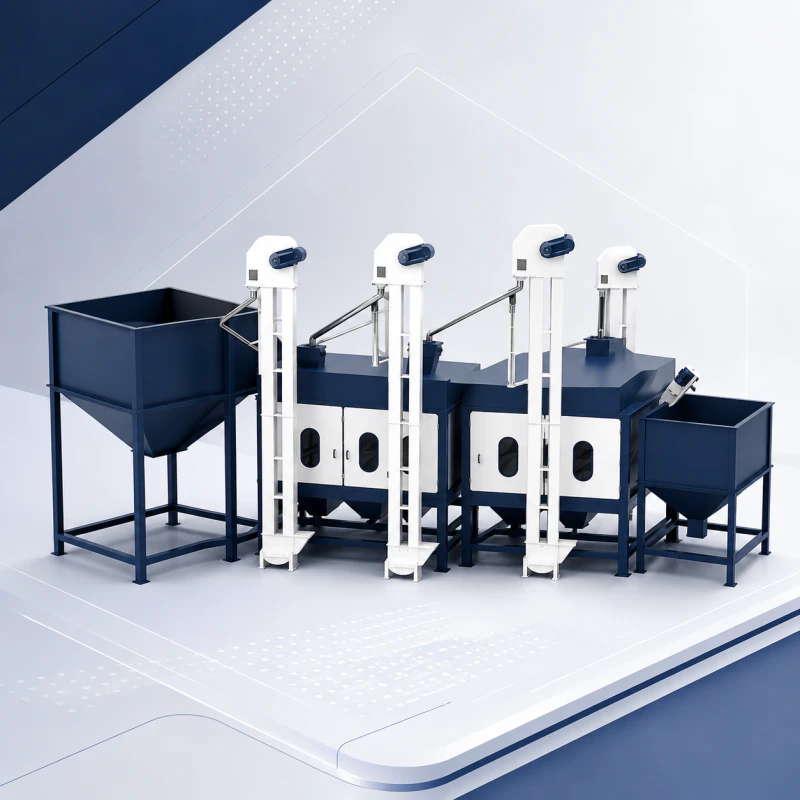
What Is an Electrostatic Separator?
An electrostatic separator is a sophisticated industrial machine that leverages the fundamental principles of electrical charges to meticulously separate materials based on their unique conductivity and dielectric properties. Often referred to in the recycling industry as an electrostatic plastics sorting machine, this technology is specifically engineered to handle the complex challenge of sorting mixed polymer streams. In practice, this means it can effectively remove contaminants such as PVC or rubber from a mixture containing PET, polypropylene, or polyethylene, a task that is notoriously difficult for other sorting technologies. The core operational mechanism involves first ionizing the surface of the material particles, which are typically ground into small flakes. These charged particles are then introduced into a high-voltage electric field, where the forces of attraction and repulsion act differently on each particle depending on its electrostatic characteristics. Conductive materials, like certain plastics, quickly lose their imparted charge and are physically diverted, while non-conductive materials retain their charge and follow a different trajectory. This precise physical separation is what makes the electrostatic separator an indispensable tool for modern plastic recycling facilities aiming to achieve high-purity output streams.
Understanding the underlying physics of an electrostatic separator is key to appreciating its industrial value. The process relies on the triboelectric effect and corona discharge, two well-established electrical phenomena. A corona discharge, generated by a thin wire at very high voltage, creates a cloud of ions that bombards the plastic flakes as they pass through the feed zone. This bombardment imparts a negative charge to the surface of all flakes. Following this charging stage, the flakes travel on a rotating drum. Conductive flakes, such as those made of PVC or ABS, have the ability to rapidly transfer this charge to the earthed drum surface. Once neutralized, they are no longer attracted to the rotating drum and are thrown off by centrifugal force. Conversely, non-conductive flakes like those made of PE, PP, or PS retain their strong surface charge and remain firmly attracted to the drum's surface. They are carried further around the drum's rotation until a scraper or brush physically removes them into a separate collection bin. This entire process, from charging to separation, happens in a fraction of a second, enabling high throughput while maintaining an exceptional degree of material purity.
How Does an Electrostatic Separator Sort Plastics?
The sorting process within an electrostatic separator is a meticulously choreographed sequence that involves several precise steps, each critical to achieving the highest possible level of separation efficiency. The journey begins with material preparation, a phase that cannot be overlooked. The incoming plastic mixture, whether it is post-consumer bottle waste or industrial scrap, must be thoroughly cleaned to remove any labels, adhesives, or organic residues. Following cleaning, the material is ground into uniformly sized flakes, typically ranging from 2 to 12 millimeters. This consistent flake size is vital for ensuring that each particle experiences the same electrical field strength and mechanical forces. More importantly, the flakes must be completely dried. Moisture on the surface of a plastic flake acts as a conductor, effectively neutralizing the electrostatic charge before separation can occur. Even a small amount of residual moisture, as little as 1%, can drastically reduce the separator's performance, leading to unacceptable levels of contamination in the output fractions. Therefore, an industrial drying system, such as a fluidized bed dryer, is almost always integrated directly upstream of the electrostatic sorting machine.
Once the plastic flakes are clean, dry, and uniformly sized, they enter the separation chamber for the next critical stage: pre-charging. As the flakes are fed onto a high-speed rotating drum or a vibrating conveyor belt, they pass through a corona discharge zone. In this zone, a sharp electrode held at a high negative voltage (often in the range of 20-30 kV) ionizes the air, creating a continuous stream of negative ions. These ions rapidly attach to the surface of every plastic flake, giving them a strong surface charge. The design of this charging system is critical; the corona wire must be kept clean and free from dust buildup to maintain a consistent and powerful ion flow. Following the charging stage, the flakes are transported into the main high-voltage separation field. This field is generated between the rotating earth-grounded drum and an electrode positioned at a specific angle. It is here that the true differentiation occurs. Conductive particles, like PVC, quickly lose their acquired charge, fall from the drum, and are collected in a designated bin. The non-conductive particles remain attached, rotating with the drum until a lower-voltage electrode or a mechanical brush detaches them into a separate collector. The ability to finely adjust the voltage, drum speed, and electrode angles allows operators to fine-tune the separation for specific plastic mixtures.
What Plastics Can an Electrostatic Separator Detect?
An electrostatic separator is particularly adept at detecting and separating materials based on their inherent electrical conductivity, which creates a clear demarcation between different polymer categories. Among the detectable and separable materials, conductive polymers are the primary candidates for removal. This group includes materials like PVC (polyvinyl chloride), ABS (acrylonitrile butadiene styrene), and various types of rubber and silicone. These materials are targeted because their surface allows the electrostatic charge to dissipate quickly, causing them to behave predictably within the high-voltage field. For instance, in a blend of PET bottle flakes and PVC cap fragments, the electrostatic separator excels at pulling out the conductive PVC, leaving a nearly pure PET stream. On the other side of the spectrum, non-conductive polymers are the materials that are typically collected and recovered. This includes high-value commodity plastics like polyethylene (PE), polypropylene (PP), polystyrene (PS), and PET itself. These polymers retain their surface charge tenaciously, allowing them to be physically separated from conductive contaminants. The machine is also highly effective at processing complex mixed waste streams, such as automotive shredder residue (ASR) or post-consumer electronics waste, where a wide variety of polymers and materials are present.
However, the electrostatic sorting process does have its limitations, and some materials are inherently difficult or impossible to sort effectively. Non-detectable or difficult materials include thin films or very fine dust particles. If the flake size drops below approximately 0.5 millimeters, the particles become too light to reliably travel through the air gap and can be lost to the extraction system or stick to the drum surface due to static forces. Similarly, wet or dirty materials are a major obstacle. As mentioned previously, moisture on the surface of any flake creates a conductive bridge, which neutralizes the electrostatic charge required for separation. This makes it nearly impossible to sort any material that has not been thoroughly pre-dried. Furthermore, sorting becomes problematic when dealing with mixtures of conductive and non-conductive materials that have very similar densities. For example, highly contaminated PET that has a slight surface moisture from a washing stage can behave in an unpredictable manner, falling somewhere in between the conductive and non-conductive behavior. This can lead to a mixed fraction rather than a pure product. Understanding these limitations is crucial for a recycling plant's manager when designing a full material recovery facility layout.
Electrostatic Separator Specifications
When selecting an electrostatic separator for a commercial recycling operation, understanding the technical specifications is paramount to ensuring the machine meets your production demands. The table below provides a detailed comparison of three common industrial models, designated as ES-800, ES-1200, and ES-1600. These specifications highlight key performance metrics such as throughput capacity, feed width, number of sorting channels, achievable purity, and power consumption. The throughput, measured in kilograms per hour (kg/h), varies significantly across models, from 300 kg/h for the entry-level ES-800 up to 1500 kg/h for the high-capacity ES-1600. This allows a plant manager to match the sorter's capacity directly to the output of their upstream shredder or washing line. The feed width is another critical dimension, as it determines the maximum width of material that can be fed onto the separation belt at one time, directly correlating to the machine's overall processing speed. The number of channels refers to the active separation stages each particle must pass through. A multi-channel machine, like the ES-1600 with four channels, subjects the material to repeated passes of charging and deflection, which dramatically improves the final product purity.
| Model | Throughput (kg/h) | Feed Width (mm) | Number of Channels | Purity (%) | Power (kW) |
|---|---|---|---|---|---|
| ES-800 | 300–500 | 800 mm | 2 channels | >98% | 6.5 kW |
| ES-1200 | 600–1000 | 1200 mm | 3 channels | >99% | 10 kW |
| ES-1600 | 1000–1500 | 1600 mm | 4 channels | >99.5% | 15 kW |
Interpreting these specifications requires careful consideration of your specific application. For example, a small start-up recycling plant processing around 500 kg/h of post-consumer bottle waste might find the ES-800 to be an ideal and cost-effective solution, especially if a purity of 98% is acceptable for their downstream applications. In contrast, a large-scale industrial recycler aiming to produce high-grade rPET for food-contact packaging will demand a purity level exceeding 99.5%. In that case, the ES-1600 model, with its 4-channel sorting system and 1500 kg/h throughput, is the appropriate choice. The power consumption is also a substantial operational cost. A 15 kW motor for the ES-1600 versus a 6.5 kW motor for the ES-800 represents a significant difference in annual electricity bills. Furthermore, the equipment footprint must be taken into account. A machine with a 1600 mm feed width requires a substantially larger floor space and a heavier support structure than its smaller counterpart. A comprehensive evaluation of these technical specifications, in conjunction with a financial analysis of the return on investment, will guide you to the correct model for your specific industrial plastic sorting needs.
Electrostatic Separation vs. Optical Sorting
Choosing between an electrostatic separator and an optical sorter is a common decision for modern plastic recycling facilities, as each technology excels in different areas of material separation. Optical sorting technology uses high-resolution cameras that capture spectral reflections from each particle as it passes by. This system is exceptionally effective for color-based separation, such as removing any green PET flakes from a stream of clear PET flakes, or sorting blue HDPE from mixed colors. Furthermore, advanced near-infrared (NIR) optical sorters can identify the polymer type based on its unique infrared signature. However, optical sorters have a significant weakness: they struggle with black or very dark-colored plastics. Because these materials absorb most wavelengths of light, the cameras cannot gather enough reflection to make a sorting decision, rendering them effectively invisible to the sensor. In contrast, an electrostatic separator relies on electrical conductivity, not light reflection. Therefore, it can easily sort black, dark, or opaque plastics, including black PP battery casings or black ABS from electronic waste, removing conductive contaminants like rubber or PVC from these challenging streams with high efficiency.
| Feature | Optical Sorter | Electrostatic Separator |
| Detection Principle | Spectral reflection | Conductivity & dielectric |
| Works on black plastics | No | Yes |
| Removes conductive contaminants (PVC, rubber) | Limited | Excellent |
| Requires dry material | Yes | Yes |
| Suitable for mixed recycling | Moderate | High |
The choice between these two technologies often comes down to the specific composition of the feed material. If your input stream is primarily composed of colored PET bottles and requires a high level of color sorting, an optical sorter is the superior choice. However, if your feed contains a high percentage of PVC, rubber, silicone, or other conductive materials, or if the plastics are uniformly dark-colored, the electrostatic separator is the far more effective solution. Many large-scale recycling plants employ a synergistic approach. They first use an optical sorter to separate plastics by color and polymer type (e.g., removing green PET). Then, the output from the optical sorter is fed into an electrostatic separator to remove the conductive contaminants that the optical sorter missed, such as PVC caps or black rubber seals. This combined approach leverages the strengths of both technologies to achieve the highest possible purity. It is also worth noting that both systems require dry material. The versatility of electrostatic sorter technology makes it an indispensable tool for tackling the most difficult recycling problems, particularly the removal of troublesome contaminants from high-value polymer streams.
What Industries Use Electrostatic Sorters?
The application of electrostatic separators is widespread across several key industrial sectors, primarily focused on resource recovery and waste management. Plastic recycling plants are the most common users of this technology. These facilities process a wide variety of feedstocks, including post-consumer beverage bottles, industrial purge from injection molding processes, and mixed regrind from various manufacturing operations. In such plants, the electrostatic sorter is often the final stage of a multi-step sorting line, tasked with removing last traces of PVC, rubber, or silicone. For instance, a plant processing mixed rigid plastics from municipal recycling will use the machine to ensure the purity of its final products—like high-density polyethylene or polypropylene—meeting the stringent specifications required by compounders and end-product manufacturers. The Waste Electrical and Electronic Equipment (WEEE) recycling industry also heavily relies on electrostatic separation. When processing shredder residue from computers, televisions, and other electronics, the material stream is a complex mixture of plastics (ABS, PS, PC) and conductive materials like metals and rubber. Electrostatic sorters are exceptionally effective at pulling out the conductive fraction, leaving a clean plastic stream that can be sold as high-value engineering-grade polymer.
Beyond traditional plastic recycling and e-waste processing, electrostatic sorters are valuable in several other niche but critical operations. For example, in automotive shredder residue (ASR) processing, the goal is to recover valuable polypropylene and polyethylene from the "fluff" that remains after metals are extracted. This residue is notoriously difficult to sort due to its high content of rubber, foam, and fabric. An electrostatic separator can effectively remove the rubber and foam, dramatically upgrading the quality of the remaining polypropylene. In the packaging industry, these machines are used for cleaning contaminated film fractions. For example, a stream of mixed plastic packaging films might contain silicone seals or rubber bands. An electrostatic separator can remove these conductive contaminants, allowing the polyethylene film to be recycled into new products. Even in chemical and industrial manufacturing, electrostatic separation is used for reclaiming high-purity polymers from production waste. A manufacturer might generate in-house scrap consisting of off-spec or mixed materials. By using an electrostatic sorter, they can recover the majority of their material as a clean, reusable feedstock, reducing waste and saving raw material costs. This broad applicability demonstrates the electrostatic sorter’s role as a versatile tool in the modern circular economy.
How to Choose the Right Electrostatic Sorter
Selecting the correct electrostatic sorter for your recycling operation requires a systematic evaluation of your material, production targets, and facility constraints. The first and most critical step is a thorough analysis of your input material. You must know the exact composition of your plastic blend, including the percentage of conductive versus non-conductive materials. More importantly, you must rigorously test the moisture content of your feed. Electrostatic separators absolutely do not tolerate wet feeds; any residual moisture will render the machine ineffective. Therefore, ensuring you have a robust pre-drying system in place is a prerequisite. If your material is consistently wet or has high levels of organic contamination, an electrostatic sorter may not be the right technology. Once you have confirmed your material is dry and well-prepared, the next factor to consider is your target purity. If your downstream customer demands a purity of greater than 99.5%, you will need a multi-channel model with a higher number of passes, such as the ES-1600 with four channels. For less demanding applications, a simpler two-channel machine may be perfectly adequate.
After defining your material and purity requirements, you must match the machine's capacity to your production line. Your throughput needs, measured in kilograms per hour, will dictate which model size is appropriate. It is essential to not oversize or undersize the machine. An oversized sorter will waste capital and energy, while an undersized one will create a bottleneck in your plant, limiting overall output. Consider your future expansion plans as well; it is often wise to choose a model with some spare capacity. Furthermore, evaluate the space and power constraints of your facility. The machine's feed width and overall footprint must fit into your planned layout. Check the available electrical supply; a machine with a 15 kW power requirement needs appropriate electrical infrastructure. Finally, a rigorous cost-benefit analysis is crucial. Electrostatic separators often have a higher upfront capital cost compared to equivalent optical sorters. However, they offer superior performance for removing conductive contaminants and can dramatically increase the value of your output material. Calculate your return on investment based on the increased selling price of your higher-purity plastic and the volume of material you will process. A machine that pays for itself in material value improvements within a year is a sound investment for any plastic recycling business.
FAQ
What materials cause the most problems for an electrostatic separator?
The main problematic materials for an electrostatic separator are conductive contaminants that can short-circuit or disturb the electrical field. Specifically, carbon-black-filled rubber, metal fragments, and carbonized materials are the most disruptive. These highly conductive items can cause arcing or sparking inside the separation chamber, which not only reduces efficiency but can also potentially damage the high-voltage power supply or the electrode itself. Beyond these materials, any sticky residues, such as glues or labels that were not fully removed during the washing process, can coat the rotating drum surface. This coating creates a thin insulating layer that prevents the non-conductive plastic flakes from effectively transferring their charge to the drum. As a result, these flakes will not be properly attracted and will be thrown off into the wrong collection bin, contaminating the conductive fraction. Similarly, wet flakes are a major problem. Even a small amount of moisture on the surface of a polypropylene flake can make it behave like a conductive material. The water layer provides a conductive path for the charge to escape, causing the flake to lose its attraction to the drum and be sorted incorrectly. To address these challenges, it is essential to always pre-dry and sieve the material before it enters the electrostatic sorter. A vibrating sieve can remove fine dust and metal contaminants, while a thermal dryer will eliminate any residual moisture from the washing process.
Can an electrostatic separator handle both flake and pellet forms?
While electrostatic separators are highly versatile machines, they are most effective when processing plastic in flake form. The ideal particle size for a standard corona-charging electrostatic separator is between 2 and 12 millimeters. Flakes within this size range have a large, flat surface area that can effectively hold a surface charge. The edges of the flakes also help them to maintain their orientation in the air gap. Pellets, on the other hand, present a significant challenge. Plastic pellets are round, small, and have a much smaller surface area relative to their volume. When they pass through the corona discharge zone, they do not acquire a strong or consistent surface charge. Furthermore, because they are spherical, they roll easily and do not maintain a stable position on the drum. This rolling motion causes them to lose their charge quickly and fall off unpredictably, making accurate separation impossible. For sorting pellet mixtures, another type of electrostatic separator is used, known as a tribo-electrostatic separator. This device uses the triboelectric effect, where particles are charged by friction against a wall or against each other, rather than by direct corona discharge. For a standard industrial plastic sorting machine used in a recycling plant, the feed material should always be in a flake form. Fine dust smaller than 0.5 mm is also problematic, as it can be blown away by the airflow or stick to the drum, reducing the machine's overall effectiveness.
How often do the electrode rollers need maintenance?
The high-voltage electrode and the rotating drum in an electrostatic separator require regular cleaning to maintain optimal performance. For most industrial units processing a typical post-consumer plastic waste stream, the high-voltage electrode needs to be inspected and cleaned every 8 to 16 hours of operation. This is because the corona discharge wire and its surrounding housing accumulate a fine layer of plastic dust, micro-fines, and airborne contaminants. Over time, this buildup creates a resistive coating that reduces the efficiency of the corona discharge. When the corona discharge weakens, the ion bombardment of the plastic flakes becomes less effective, leading to a decrease in the machine's separation accuracy. A dirty electrode can cause an increase in the percentage of misplaced plastics, which contaminates the final product. In many modern electrostatic separators, automated brush cleaners or wiper systems are integrated to address this issue. These automated systems continuously or periodically clean the corona wire, allowing the machine to run for extended periods without manual intervention. However, even with automated cleaning, a weekly thorough manual inspection and cleaning of the entire chamber, including the rotating drum surface, is highly recommended. Maintaining a clean electrode and drum is the single most important factor in ensuring consistent, high-purity separation over the long term.
Is electrostatic separation environmentally friendly?
Yes, electrostatic separation is considered an extremely environmentally friendly technology for plastic sorting. This is primarily because it is a completely dry process, meaning it uses no water or chemicals to separate materials. In contrast, many traditional separation methods, such as sink-float tanks or froth flotation, require large volumes of water and often rely on chemical agents to modify the surface properties of the plastics. These wet processes generate significant amounts of wastewater that must be treated and managed, adding both cost and environmental burden. An electrostatic separator, however, operates with only one major input: electricity. The energy is used to power the high-voltage power supply that generates the corona discharge and to drive the feed conveyor or rotating drum. Since it is a non-contact process, there is no wear and tear on the machine from abrasives or chemicals, which reduces the material waste associated with replacing parts. Furthermore, the process produces no wastewater, no sludge, and no harmful emissions. The only solid output is the sorted plastic fractions themselves, which are ready to be recycled into new products. By enabling the recovery of high-purity polymers from complex waste streams, electrostatic sorters play a vital role in reducing the amount of plastic sent to landfill and minimizing the demand for virgin plastic production, making them a cornerstone technology of the circular economy.