Types of Color Sorter
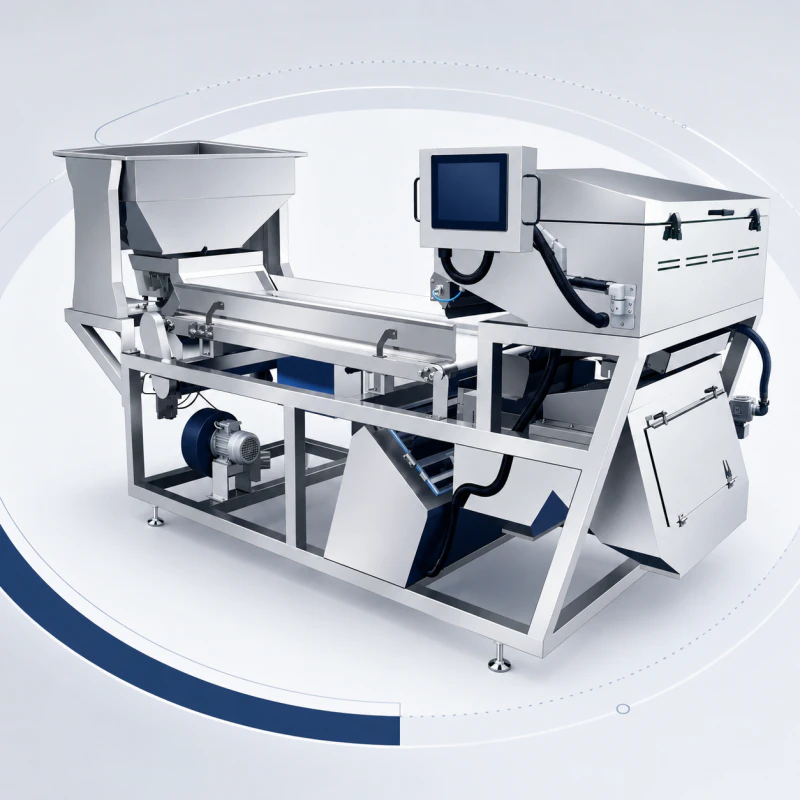
What Is a Color Sorter for Plastics?
A color sorter for plastics is an automated industrial machine that separates plastic flakes or granules based on their color. It uses high-resolution optical sensors and high-speed air ejection systems to identify and remove discolored or off-spec materials. Also known as an optical plastic sorter or color sorting machine, it ensures that the output stream meets strict purity standards for recycling or reprocessing. This equipment is vital in modern plastic processing facilities because it eliminates the need for manual sorting, which is slow, costly, and prone to human error. The optical detection system can analyze thousands of particles per second, making it ideal for high-volume operations where consistency is critical. For instance, in a PET bottle recycling plant, a color sorter can separate clear flakes from green or blue ones with a purity level exceeding 99.5 percent. This high level of accuracy helps processors meet the stringent quality requirements of downstream buyers, such as manufacturers of food-grade packaging or automotive components. Additionally, the machine’s ability to handle a wide particle size range, from fine granules to larger flakes, enhances its versatility across different recycling streams. The combination of advanced sensor technology, real-time processing, and precise ejection mechanisms makes the color sorter an indispensable tool in achieving resource efficiency and reducing waste. By integrating such a system, companies can not only improve product quality but also increase overall throughput, as the sorting process operates continuously without fatigue. Furthermore, modern color sorters are designed with user-friendly interfaces that allow operators to adjust sorting parameters quickly, enabling adaptation to changing material compositions.
How Does a Color Sorter Sort Plastics?
The sorting process combines optical scanning, real-time image processing, and pneumatic ejection. This integrated workflow begins with material conditioning, moves through detection, and ends with rapid separation, all within milliseconds. Each stage is finely tuned to maximize accuracy and minimize false rejects, ensuring that the final product meets purity specifications. The following subsections detail the four key phases: material distribution, optical inspection, decision-making, and physical separation. Understanding these steps helps operators troubleshoot issues and optimize performance for different plastic types.
Feed and Vibratory Distribution
The plastic material enters a vibratory feeder, which spreads it evenly into a single-layer stream to ensure each particle is individually visible to the sensors. This uniform distribution is crucial because overlapping or clustered particles can cause the optical system to misidentify colors or miss contaminants entirely. The vibratory feeder typically uses adjustable frequency and amplitude controls to accommodate different particle sizes and densities, from fine PVC pellets to chunky ABS regrind. By maintaining a consistent feed rate, the system prevents bottlenecks and ensures that the inspection zone receives a steady flow of material. Some advanced models incorporate a pre-screening stage to remove large debris before the material reaches the vibratory tray, further improving sorting accuracy. The design of the chute and feeder also minimizes particle breakage, preserving the value of the output. Additionally, the feeder’s linear motion helps align particles in a single-file line, making it easier for the cameras to capture their color data without shadows or overlaps. This attention to material handling directly correlates with higher sorting purity, as a well-prepared stream allows the machine to make accurate decisions on every piece.
Optical Detection
As the material passes through the inspection zone, high-resolution cameras and LED light sources capture the color information of every particle. These cameras, often with charge-coupled device (CCD) or complementary metal-oxide-semiconductor (CMOS) sensors, can detect subtle differences in hue, saturation, and brightness. The LED lighting is carefully calibrated to provide consistent, flicker-free illumination, which is essential for accurate color differentiation. Some machines use multiple light wavelengths, including visible and near-infrared spectrums, to identify not just color but also material type. This optical detection system can distinguish between closely related shades, such as light blue and medium blue, or between transparent and translucent materials. The speed of image capture is critical; typical systems can process up to 10,000 images per second, allowing the machine to keep pace with high-throughput operations. Each particle’s image is converted into digital data, which is then sent to the control unit for analysis. The camera lenses are often air-purged to prevent dust accumulation, ensuring consistent performance over long production runs. This continuous image acquisition forms the foundation of the sorting process, as any error in detection directly impacts downstream separation accuracy.
Image Analysis and Decision
The machine’s computer analyzes each particle’s color data and compares it against pre-set thresholds. Non-target colors trigger an ejection signal. This analysis uses algorithms that account for variations in particle size, shape, and surface texture, reducing false positives. The decision-making logic can be customized for different applications, such as setting a strict cut-off for pure white flakes or allowing a tolerance band for mixed-color batches. In advanced systems, machine learning models are trained on thousands of sample images to improve accuracy over time. The analysis occurs in real time, with a typical latency of less than two milliseconds between detection and decision. This speed is essential for maintaining high throughput without sacrificing quality. The computer also logs sorting data, such as the number of rejected particles and their color distribution, which operators can use to monitor performance and adjust settings. If the system detects a sudden change in material composition, it can automatically recalibrate thresholds to maintain sorting efficiency. This adaptive capability is particularly useful for processing post-consumer waste, where color profiles vary significantly between batches. The decision phase ultimately determines which particles are accepted and which are rejected, making it the brain of the entire sorting operation.
Air Ejection
A high-precision air nozzle array fires compressed air bursts to reject the identified off-color particles into a separate waste channel. These nozzles are arranged in a grid pattern, with each nozzle covering a specific zone of the material stream. The ejection timing is synchronized with the particle’s trajectory, calculated based on its speed and distance from the nozzle. Typical air pressure ranges from 5 to 8 bar, with pulse durations as short as a few milliseconds to avoid disturbing adjacent particles. The nozzle block is designed for easy cleaning and maintenance, as dust and debris can clog the orifices over time. Some models use solenoid valves that can cycle millions of times without failure, ensuring reliability in continuous operation. The air ejection system can handle high throughputs, with some machines processing up to three tons per hour. The spatial resolution of the nozzles determines the minimum particle size that can be effectively rejected; finer nozzles are better for sorting small flakes of two to three millimeters. The waste stream is then channelled into a separate chute, while accepted material continues along the main path. This pneumatic separation method is preferred over mechanical diverters because it is non-contact, gentle on particles, and allows for high-speed operation without wear and tear.
Collection
Accepted material and rejected material exit through different chutes for separate collection. These chutes are often equipped with sensors to monitor flow rates and detect blockages, enabling automatic shutdown if a jam occurs. The collection system can be integrated with downstream equipment, such as conveyors, storage bins, or bagging stations, depending on the facility layout. For accepted material, maintaining a clean, consistent stream is important for subsequent processing steps, such as washing, drying, or extrusion. The rejected material, which includes off-color particles and any impurities, may be further processed through secondary sorting stages or sent to landfills or energy recovery systems. The design of the chutes minimizes cross-contamination by preventing particles from bouncing between streams. Some systems use transparent chute walls for visual inspection, while others incorporate air curtains to separate the flows. The collection stage also includes dust extraction ports to remove fine particles that could accumulate and affect air quality. Overall, this simple yet effective last step ensures that the sorting machine delivers two clearly defined output streams, ready for the next stage of the recycling or manufacturing process.
What Plastics Can a Color Sorter Detect?
A color sorter detects a wide range of plastic colors, including transparent, white, black, blue, green, red, yellow, and mixed-color batches. The optical sensors are calibrated to distinguish between these categories based on their spectral reflectance properties. For example, transparent materials allow light to pass through, while opaque colors reflect light at specific wavelengths. This detection capability is essential for applications where color purity is paramount, such as in PET bottle recycling for food-grade rPET or in the production of colored masterbatch. The machine can handle both virgin and recycled plastics, as long as the surface is not heavily coated or contaminated. In addition to solid colors, a color sorter can separate translucent and frosted plastics, using threshold adjustments for light transmission. This versatility makes it suitable for sorting post-consumer waste, which often contains a mosaic of different colored items.
Suitable Materials
PET flakes from bottle recycling are one of the most common applications, where the sorter removes green, blue, and opaque bottles from the clear stream. PP, PE, and HDPE granules benefit from color sorting, especially for applications requiring uniform coloration, such as automotive parts or household goods. PVC pellets and regrind, used in pipes and window profiles, can be sorted to eliminate color contamination. ABS and PS scrap from electronic waste are also sorted to separate black, white, and colored fractions, improving the value of recycled material. PMMA, or acrylic particles, are sorted to maintain their optical clarity, which is important for display and lighting applications. Other suitable materials include nylon, polycarbonate, and thermoplastic elastomers, provided they have distinct color differences. The machine’s ability to handle particle sizes from one millimeter to twenty millimeters makes it flexible for various recycling streams.
Limitations
Solid black polymers pose a challenge because most standard color sensors cannot distinguish different shades of black; black plastic sorting often requires a separate near-infrared (NIR) sorter that identifies polymer type rather than color. Metallic or coated plastics, such as those with chrome finishes or metallized labels, can cause surface reflections that confuse the optical system, leading to false rejections. Wet or dirty materials reduce detection accuracy because water films create light diffraction, and dust can obscure the particle surface. For these materials, pre-drying or washing is recommended to achieve optimal sorting performance. Additionally, very dark colors like deep brown or navy blue may be misclassified as black if they absorb too much light. Some advanced systems use hyperspectral imaging to overcome these limitations, but they are more expensive and require specialized operation. Furthermore, very small particles, below one millimeter, may be difficult to sort because the air ejection system cannot target them precisely without affecting neighbors. Understanding these limitations helps operators decide when a color sorter is appropriate and when alternative technologies are needed.
Color Sorter Specifications
The table below provides typical specifications for three color sorter models from our CS series. Throughput ranges from 500 to 2800 kilograms per hour, depending on the sorting width and number of channels. Sorting purity consistently exceeds 99 percent, with higher channel counts improving accuracy for demanding applications. Power consumption scales with machine size, from 4.5 kW for the CS-600 to 11.2 kW for the CS-1800. These models are designed for continuous industrial operation, with robust construction and easy maintenance. When selecting a model, consider your hourly input, material characteristics, and space availability. The CS-600 is suitable for small to medium operations, while the CS-1800 is ideal for large-scale processing facilities.
| Model | Throughput (kg/h) | Sorting Width (mm) | Number of Channels | Sorting Purity (%) | Power Consumption (kW) |
|---|---|---|---|---|---|
| CS-600 | 500–800 | 600 | 2 | ≥99 | 4.5 |
| CS-1200 | 1000–1500 | 1200 | 4 | ≥99.5 | 7.8 |
| CS-1800 | 2000–2800 | 1800 | 6 | ≥99.8 | 11.2 |
Color Sorting vs. Density Sorting
Color sorting removes impurities by color, while density sorting separates plastics by weight in a water or air medium. These two technologies are complementary rather than competing. Color sorting excels when specific color uniformity is required, such as for white regrind used in visible automotive parts. Density sorting, on the other hand, is effective for separating heavy polymers like PVC from lighter ones like PP, but it cannot discriminate between different colors of the same material. In terms of accuracy, color sorting can isolate one specific color pool to less than one percent contamination, while density sorting typically leaves residual color variation. Material loss is lower with color sorting because only off-color particles are rejected, whereas density sorting can lose valuable material due to misclassification of similar densities. For example, in PET recycling, a color sorter removes green and blue bottles while preserving clear PET, resulting in higher yield. Density sorting is best used upstream to remove heavy contaminants like metals or glass, or to separate mixed polymers by type. When choosing between the two, consider your end-product specifications. If your customer requires color consistency, a color sorter is indispensable. If you need to separate different polymers, density sorting may be more appropriate. Many facilities combine both technologies for comprehensive sorting.
When to Choose a Color Sorter
If your application requires cosmetic consistency—for example, white regrind for automotive parts or food-grade clear flake—a color sorter is essential. It is also the preferred technology for upgrading mixed-color waste streams into single-color fractions, which command higher market prices. In processes where color variation leads to product rejection by downstream buyers, such as in the production of clear packaging or colored consumer goods, a color sorter ensures that your output meets strict visual standards. Use density sorting upstream for heavy/light separation, such as removing PVC from PET or separating polypropylene from polyethylene. In some cases, a color sorter can handle both functions if the light and heavy particles have distinct colors, but this is uncommon. The decision ultimately hinges on your quality targets and material composition. For most applications, investing in a color sorter pays off through higher selling prices for sorted products and reduced waste.
What Industries Use Color Sorters?
PET bottle-to-bottle recycling is a major industry, where color sorters remove dark, green, and opaque PET from the clear stream to produce high-quality rPET for new bottles. Plastic compounding companies use color sorters to ensure color consistency in masterbatch production, preventing off-spec batches that require reprocessing. Automotive part recycling involves sorting dyed PP and PE to produce uniform regrind for interior or exterior components. WEEE and e-waste recycling facilities separate colored ABS and HIPS from mixed plastic streams, improving the value of recovered materials for use in electronics manufacturing. Post-consumer mixed waste plants upgrade low-grade mixed plastics into high-purity single-color fractions, enabling them to supply niche markets like fiber production or injection molding. Other industries using color sorters include packaging recycling, agricultural film processing, and construction material reprocessing. The common thread is the need for color uniformity, which drives demand for reliable sorting equipment. These industries often operate around the clock, requiring machines that can maintain performance over extended periods. Color sorters meet this requirement with durable components and self-cleaning features.
How to Choose the Right Color Sorter
Throughput requirement is the first consideration; match the machine capacity to your hourly input to avoid underutilization or bottlenecks. Material size and shape matter greatly—ensure the feeder and chute design handle your flake or pellet geometry, as irregular shapes may cause bridging or misalignment. Purity target dictates the number of channels and nozzle density; higher channel count and finer nozzles improve purity but increase initial cost and maintenance needs. Sensor type selection depends on your material: basic CCD cameras work for most colors, but advanced hyperspectral sensors are needed for near-black differentiation or when sorting multiple polymers. Space and power constraints can limit your options; compact models like the CS-600 fit smaller plants, while larger machines require dedicated floor space and electrical upgrades. After-sales support is critical—look for suppliers with local service technicians, spare parts inventory, and training programs. Also consider the control interface: a user-friendly touchscreen with recipe storage can reduce operator training time and improve consistency. Finally, request a pilot test with your specific material to verify accuracy before purchasing. Many suppliers offer trial runs at their facility or provide rental units for site evaluation.
FAQ
Can a color sorter separate clear from frosted plastic?
Yes, it can distinguish between clear and frosted plastic based on light transmission and surface reflection differences. Clear plastic transmits more light, while frosted plastic scatters it due to its textured surface. The machine uses adjustable threshold settings to separate these subtle optical variations. For best results, the material should be dry and clean, as moisture can reduce the contrast between the two types. In practice, a sorting purity of over 98 percent is achievable for clear-vs-frosted separation when the machine is properly calibrated.
Does the machine work with wet plastic?
Standard color sorters struggle with wet plastic because water films cause light diffraction and false readings. We recommend drying the material to a moisture content below five percent before feeding. Some manufacturers offer specialized wet sorting modules with air knives to blow off surface water, but these add complexity and cost. For applications where wet material is unavoidable, consider integrating a pre-dryer into your line. Even with wet sorting options, accuracy drops by 10 to 20 percent compared to dry sorting.
What is the typical lifespan of a color sorter?
With regular maintenance, a color sorter lasts 10 to 15 years. Key parts like nozzles, camera lenses, and LED modules are replaceable, extending the machine’s service life. We recommend a preventive maintenance schedule that includes cleaning optical components monthly, checking air filters quarterly, and replacing nozzle seals annually. In heavy-duty applications with abrasive materials like glass-filled plastics, component wear may be faster, requiring more frequent replacements. Many of our customers report continued high performance after a decade of use.
Can I integrate a color sorter with my existing conveyor line?
Yes, most models offer standard input and output hopper heights to fit into existing conveyor systems. We provide custom adapter brackets and chute extensions for seamless integration. The machine can be placed inline with minimal modifications to your current layout. Our team conducts a site visit to measure existing conveyors and recommends the best installation position. Integration typically takes one to two days, and we provide technical support during the setup to ensure proper alignment and calibration.