Types of AI Robotic Sorter
What Is an AI Robotic Sorter?
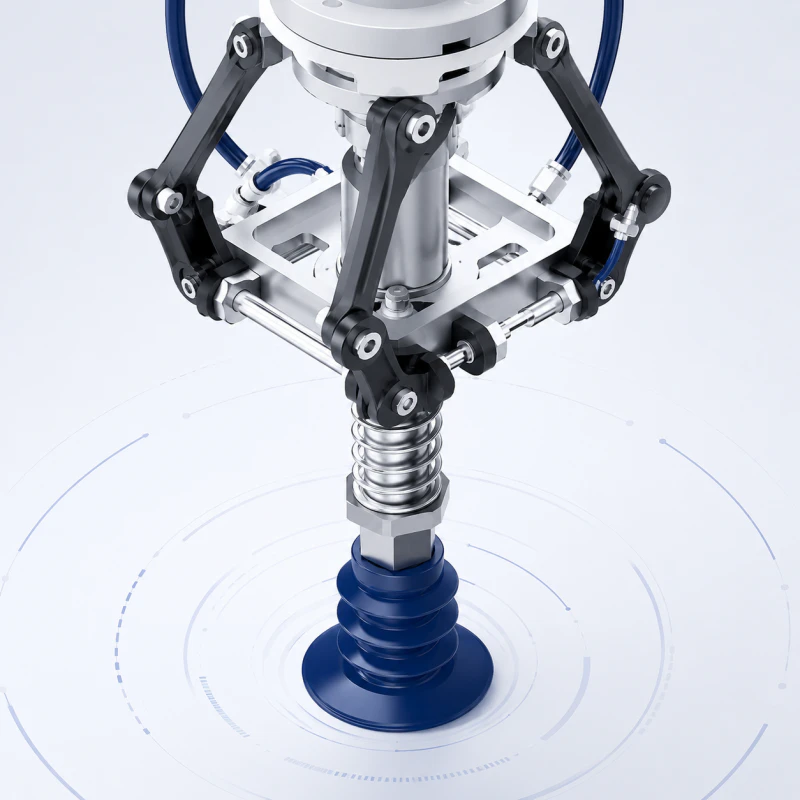
An AI Robotic Sorter is an intelligent industrial machine designed to automatically pick, classify, and separate materials using a combination of computer vision and artificial intelligence. Often referred to as an intelligent picking robot or AI sorting machine, this system integrates high-resolution cameras, advanced sensors, and a robotic arm to make real-time decisions about each item moving along a conveyor belt. Unlike conventional automated sorters that rely on rigid, pre-programmed rules, an AI Robotic Sorter learns from vast datasets of labeled images and physical characteristics. This learning capability allows it to recognize objects not just by predefined patterns but by nuanced visual and textural features such as color, shape, size, and even material composition. For instance, when a mixed stream of post-consumer plastics passes under its field of view, the machine can differentiate between a transparent PET bottle and a translucent HDPE container with high accuracy. The robotic arm, typically equipped with a suction cup or custom gripper, then gently lifts the identified item and places it into the correct collection bin without damaging the material. This gentle handling is a key distinction from other sorting technologies, as it preserves the integrity of valuable plastics for downstream processing. In modern recycling plants dealing with complex waste streams—where items vary in size, shape, and contamination level—an AI Robotic Sorter provides a level of flexibility and precision that traditional methods simply cannot match. By automating these intricate decisions, the system significantly reduces reliance on manual labor, improves worker safety by minimizing exposure to hazardous waste, and drastically boosts overall sorting efficiency. The core advantage lies in its ability to adapt; as new types of packaging enter the waste stream, the AI model can be retrained without modifying hardware, making it a future-proof investment for any facility aiming for high-purity output.
How Does an AI Robotic Sorter Sort Plastics?
Step 1 – Object Detection and Imaging
The sorting process begins the moment plastic items enter the detection zone on a moving conveyor belt. High-resolution cameras and 3D depth sensors work in tandem to capture each piece from multiple angles, creating a detailed digital fingerprint of the object. These sensors are typically calibrated to operate at belt speeds exceeding 2 meters per second, ensuring that even small or fast-moving items are not missed. The lighting system is carefully designed to illuminate the material uniformly, preventing shadows or glare that could confuse the visual analysis. This initial imaging stage is critical because it captures all the raw data—shape, contour, surface texture, and approximate color—that the AI engine will later use for classification. In the context of plastic sorting, the system must distinguish between materials that look nearly identical to the human eye, such as clear PP and clear PET flakes. Therefore, the sensors often include near-infrared (NIR) or hyperspectral capabilities that go beyond visible light, allowing the machine to read chemical signatures embedded in the polymer structure. This multi-spectral approach ensures that even black plastics, which are notoriously difficult to sort using standard optical methods due to light absorption, can be identified based on their unique infrared reflection patterns. Once the imaging data is captured, it is instantly compressed and transmitted to the central processing unit, where the artificial intelligence model begins its analysis. The entire detection cycle—from item entry to data transmission—typically takes less than 50 milliseconds, enabling real-time decision-making without slowing down the production line.
Step 2 – AI Recognition and Classification
After the imaging data is collected, it is fed into a deep learning model that has been trained on thousands, or even millions, of annotated plastic samples. This AI model does not simply match images to a static library; it identifies subtle correlations between visual features and material properties. For example, it learns that a specific shade of green combined with a certain thread pattern on a bottle cap strongly indicates PET, while a waxy feel and a slightly milky appearance suggests HDPE. The model can also consider textural clues, such as the presence of a shrink sleeve label or the rigidity of the container, to further refine its decision. In a fraction of a second, the system assigns a confidence score to its identification—typically requiring a threshold above 95% before triggering a sort action. If the confidence is lower, the item may be flagged for manual review or sent to a residue stream. One of the standout features of this step is its ability to handle mixed compositions. For instance, a plastic bottle with a polypropylene cap and a PET body is recognized as a composite item, and the AI can decide whether to pick the entire object or, in more advanced systems, guide the robotic arm to separate the cap from the body. This classification stage is also where the system logs data for continuous improvement; every pick decision creates a feedback loop that updates the model's parameters over time. In facilities processing post-consumer waste with high contamination rates, the AI's ability to ignore dirt, oil, or moisture while still accurately identifying the base plastic is a game-changer. The software can be updated remotely, allowing the sorter to adapt to new packaging materials—such as bio-based plastics or multilayer films—without requiring hardware modifications. This adaptability not only future-proofs the investment but also ensures that the sorting line remains profitable as waste composition evolves.
Step 3 – Robotic Pick-and-Place
Once the AI has classified an item and determined its destination bin, the control system calculates the precise trajectory for the robotic arm. This calculation accounts for the conveyor belt's speed, the item's current position, and the optimal angle for gripping. The robotic arm, often a six-axis industrial unit, moves with exceptional speed and precision to intercept the target. Depending on the plastic's shape and weight, the end effector—usually a suction cup, soft gripper, or mechanical claw—is deployed. Suction cups are favored for smooth, flat surfaces like bottle bodies, while grippers excel with irregular shapes such as jug handles or film rolls. The gentle nature of the pickup is critical; aggressive handling could break brittle plastics like PS or scatter small flakes, leading to contamination in the bins. The arm then rotates to drop the item into the designated chute, which feeds into a baler, grinder, or storage silo. This step is repeated hundreds of times per hour per robot, with modern systems achieving pick rates of 1,200 items per hour on a single arm. The placement accuracy is typically within millimeters, ensuring that each item lands cleanly in its intended stream. For plants sorting multiple fractions—like clear PET, colored PET, HDPE, and PP—multiple arms can be arrayed along the belt, each dedicated to a specific material type. The pick-and-place process is not only faster but also safer than manual sorting; it eliminates repetitive strain injuries and exposes workers to fewer contaminants. Furthermore, because the arm touches only the item itself, there is less wear on the conveyor belt and fewer jam-ups compared to mechanical flippers or air jet systems. The entire operation is silent except for a soft hiss from compressed air and the rhythmic whir of servomotors, creating a cleaner, quieter work environment that is a significant improvement over traditional sorting halls.
Step 4 – Continuous Learning Feedback
After each pick, the AI Robotic Sorter does not simply move on to the next object—it records the outcome. Every decision, whether successful or flagged as a potential error, is logged into a central database. This log includes the original image, the AI's classification confidence, the pick location, and the final destination bin. If an item was placed in the wrong chute, perhaps due to an oddly colored label or a damaged shape, the system identifies this anomaly and can trigger a recalibration. Maintenance personnel can review these logs weekly or monthly to see which plastic types are causing repeated misclassifications, allowing them to update the training dataset. More advanced systems even run automated reinforcement learning in the background; if the AI notices that a certain color shade of HDPE is frequently confused with PP, it can adjust its internal weightings without human intervention. This continuous feedback loop means the machine becomes more accurate over its lifespan, often starting at 92% purity and climbing above 98% within the first six months of operation in a new facility. For recycling plants that regularly see shifts in their incoming material stream—for example, during seasonal packaging changes or after a new local recycling law takes effect—this learning capability is invaluable. It reduces downtime for manual retuning and ensures that the sorter remains effective against evolving waste complexity. Additionally, the feedback system can generate predictive maintenance alerts; if the robotic arm's torque readings suggest a bearing is wearing out, the system can schedule service before a breakdown occurs. By closing the loop between action and outcome, the AI Robotic Sorter transforms from a simple sorting tool into an intelligent asset that continuously optimizes its own performance, driving higher yields and lower operational costs for the facility.
What Plastics Can an AI Robotic Sorter Detect?
An AI Robotic Sorter is capable of detecting a broad spectrum of plastics, from the most common packaging materials to specialized engineering polymers. The core detection capability covers the six major resin types found in municipal and industrial waste: PET (polyethylene terephthalate), HDPE (high-density polyethylene), PP (polypropylene), PS (polystyrene), PVC (polyvinyl chloride), and PC (polycarbonate). These materials account for the vast majority of post-consumer plastic waste, including bottles, containers, trays, and caps. However, the AI's ability extends beyond simply labeling a material; it can differentiate between subgrades, such as food-grade versus non-food-grade HDPE, based on slight variations in color, transparency, and surface texture. The system can also handle clear, translucent, and opaque items with equal proficiency, as long as they reflect enough light for the cameras to capture meaningful data. For example, a clear PET water bottle and a translucent milk jug made of HDPE are easily distinguished, even if both are flattened or crumpled. One common challenge in the industry is sorting black plastics, which absorb visible and near-infrared light, making them invisible to standard optical sensors. Advanced AI Robotic Sorters address this by using alternative sensing technologies such as mid-infrared or terahertz spectroscopy, or by relying on shape and texture recognition when color data is unavailable. Some models are even trained to identify multilayer packaging, where a PET outer layer is combined with an EVOH barrier layer, and can decide whether to accept or reject such items based on the recyclability of the overall structure. In facilities that process electronic waste, the sorter can identify ABS (acrylonitrile butadiene styrene) and other toughened plastics found in computer casings and appliance housings, thanks to their distinct surface finishes and density profiles. Heavily degraded materials, such as weathered agricultural films or UV-damaged bottles, pose a challenge because their visual cues may be diminished; however, the AI can still often classify them by residual shape and textural features. As the technology evolves, manufacturers are training models on an ever-wider array of polymers, including polyamide (nylon), polyurethane, and even biodegradable compounds, making the AI Robotic Sorter an increasingly versatile tool for any recycling or manufacturing operation dealing with mixed plastic waste.
AI Robotic Sorter Specifications
| Specification | Typical Range |
|---|---|
| Throughput | 800 – 1,200 picks per hour |
| Sorting Width | 1,200 – 2,400 mm |
| Number of Pick Points (Channels) | 2 – 6 (or more) |
| Picking Purity | 95% – 99% |
| Power Consumption | 2 – 8 kW |
The specifications listed above represent typical operating parameters for a commercially available AI Robotic Sorter, though exact figures vary by model and application. Throughput, measured in picks per hour, is influenced by the item size and belt speed; smaller items allow for more picks per hour, while bulky or oddly shaped objects reduce the rate. Sorting width refers to the width of the conveyor belt that the robot can cover, usually designated by a single arm's reach or by multiple arms working in tandem. A wider sorting width reduces the need for additional pre-classification stages. The number of pick points, or channels, indicates how many different material fractions the system can sort simultaneously; a six-channel setup, for example, can separate clear PET, colored PET, HDPE, PP, PS, and a residue stream in one pass. Picking purity, which is the percentage of correctly sorted material in each output stream, consistently reaches 95% to 99% in well-maintained systems with trained AI models. Power consumption is a critical factor for operational cost calculations, and modern servo-driven robotics are relatively energy-efficient, consuming between 2 and 8 kW depending on the number of active axes and the conveyor load. For example, a single-arm sorter processing 1,500 picks per hour might draw around 4 kW, making it more energy-efficient than compressed air-based alternatives when accounting for purity gains. When evaluating these specifications for a specific plant, it is essential to consider the balance between speed and accuracy; a faster pick rate might slightly lower purity if the AI has less time to analyze images, so operators should match throughput to their material complexity. The sort width and channel count should reflect the diversity of the incoming waste stream—a facility receiving mostly bottle-grade materials may only need two or three channels, while a mixed plastics MRF (materials recovery facility) might require six or more. Overall, these specifications provide a baseline for comparing different manufacturers and ensuring the chosen sorter integrates seamlessly into existing line layouts.
AI Robotic Sorting vs. Optical Sorting
While both AI Robotic Sorters and traditional Optical Sorters are used to separate materials in recycling lines, they operate on fundamentally different principles and are suited to different tasks. Optical sorters, also known as color sorters or NIR sorters, rely on a stationary array of cameras and sensors to scan the material stream as it passes at high speed on a conveyor belt. When the system identifies a target material, it activates a bank of precisely directed air jets that physically blow the item out of the stream and into a chute. This method is extremely fast—capable of processing tons per hour—and works well for materials that are relatively flat, uniform in size, and consistently positioned on the belt, such as plastic flakes or shredded paper. However, the air jet approach has limitations: it can misdirect small or lightweight items, creates loud noise, and is less effective for bulky, oddly shaped objects that do not present a consistent surface area for deflection. An AI Robotic Sorter, by contrast, uses a robotic arm that physically approaches and picks each item individually. This gentle, precise action allows it to handle mixed, bulky, or irregularly shaped plastics—such as whole detergent bottles, nested containers, or flexible films—without causing jams or damaging the material. For a plant processing post-consumer waste that contains large, rigid items like five-gallon buckets or automotive interior parts, the AI Robotic Sorter offers superior flexibility and sorting purity because it can carefully extract each item without scattering debris. The trade-off is throughput; a robotic arm picks items one at a time, so it is typically slower than an optical sorter on pure volume. In practice, many modern recycling facilities deploy a hybrid approach: optical sorters handle the bulk separation of high-volume, homogeneous streams (like flake sorting), while AI Robotic Sorters are stationed downstream to perform final polishing, extracting contaminants and ensuring purity in the premium product streams. For example, a bottle-to-bottle plant might use an optical NIR sorter to remove PVC and PETG from a PET flake line, then an AI Robotic Sorter to hand-pick any remaining aluminum caps or opaque labels. This combination leverages the strengths of each technology—speed from optical and precision from robotics—to maximize overall yield and purity. The cost difference is also notable; optical sorter are generally purchased at a lower initial capital cost but may require more frequent calibration and compressed air infrastructure, while AI Robotic Sorters have a higher upfront price but lower consumable costs and can adapt to changing waste composition without hardware upgrades. When deciding between the two, plant managers must evaluate their material characteristics, target purity, line speed, and budget constraints to find the optimal balance for their specific application.
What Industries Use AI Robotic Sorters?
AI Robotic Sorters have found widespread adoption across multiple industries where manual sorting is inefficient, dangerous, or insufficient for achieving desired purity levels. The largest segment is plastic recycling facilities that process municipal solid waste (MSW), where incoming loads contain a chaotic mix of containers, films, and other packaging. At a typical MRF, AI robots are deployed to extract valuable PET and HDPE bottles from a mixed stream, achieving higher capture rates than manual pickers while operating 24/7 without fatigue. Another significant sector is electronic waste (e-waste) dismantling lines. E-waste contains valuable base metals and also a variety of plastics, including flame-retardant ABS and polycarbonate blends used in casings, connectors, and internal frames. Robots equipped with specialized grippers can safely separate these plastics from metal and glass components, reducing the risk of hazardous material exposure for workers. The automotive shredder residue (ASR) processing industry also benefits greatly. After cars are shredded and metals are magnetically extracted, the remaining material—known as "shredder fluff"—contains plastics like PP, PVC, and polyurethane foam, typically mixed with dirt and glass. An AI Robotic Sorter can identify and recover clean polypropylene for reuse in new automotive parts, significantly improving recycling rates in the vehicle end-of-life cycle. Packaging and bottle-to-bottle recycling plants are another key user; these facilities require extremely high purity to produce food-grade rPET (recycled PET). Robots remove contaminants such as PVC labels, colored caps, and non-PET bottles that could degrade the quality of the final pellet. In manufacturing, composite material separation is emerging as a growth application. For instance, production waste from multi-material packaging lines, including ketchup bottles with EVOH barriers, can be sorted to recover the primary polymer for closed-loop recycling. Finally, food-grade plastic recovery is critical for companies aiming for true circular economy models. By ensuring that sorted plastics meet food-contact standards through precise removal of non-compliant items, AI Robotic Sorters enable processors to sell premium recycled resins at higher prices. Across all these industries, the common driver is the need for high-purity, selective picking that reduces contamination and maximizes the value of recovered materials, while also improving worker safety and operational consistency. As global regulations tighten around waste diversion and recycled content mandates, the adoption of robotic sorting solutions is expected to accelerate further.
How to Choose the Right AI Robotic Sorter
Selecting the appropriate AI Robotic Sorter for your facility requires a careful assessment of your incoming material characteristics, desired output quality, and integration constraints. The first step is to characterize your feedstock. You must know the plastic types present (e.g., PET, HDPE, PP, PS), their size distribution (from small flakes to large containers), and the level of contamination (dirt, moisture, adhesives). If your stream is highly variable and includes bulky items like crates, drums, or mixed rigid packaging, an AI Robotic Sorter is more effective than optical-only systems because it can handle size and shape extremes without jamming. Next, you need to evaluate your target throughput. Check the advertised pick rate against your line speed; for example, if your conveyor runs at 1.5 m/s and you process 3 tons per hour of mixed plastics, you may need multiple robots to achieve the desired yield. The number of pick channels is another crucial factor. Decide how many distinct output fractions you need—clear PET, colored PET, HDPE, PP, and one residue stream—and ensure the sorter can handle that complexity. Consider the robot's reach and gripper type. For bottles and containers, a suction cup is ideal, but for irregular shapes like jugs with handles, a parallel gripper may be necessary. Some manufacturers offer swappable end-of-arm tooling to handle different seasons or material shifts. The AI software is a critical component; you need to know whether the model can be updated with new material data as your feedstock changes. Ask the vendor about the training process—can you provide custom samples to improve accuracy for your specific waste stream? Also, inquire about available sensors: are they only visible-light cameras, or do they incorporate NIR, hyperspectral, or 3D depth sensing? For sorting black plastics or multilayer packaging, advanced sensor fusion is essential. As mentioned in the comparison above, for high-purity selective picking, robotic sorting often delivers better results than air-jet systems when the material is bulky or contaminated. Additionally, evaluate the physical footprint and installation requirements; some robotic sorters need a dedicated platform or safety guarding that may require modifications to your existing layout. Finally, consider the long-term service and software support. A reputable supplier should offer remote monitoring, AI model updates, and spare parts availability. By systematically matching these specifications to your unique material profile and production goals, you can select an AI Robotic Sorter that not only meets today’s needs but also adapts to future challenges in the recycling market.
FAQ
How accurate is an AI Robotic Sorter?
Accuracy typically exceeds 95%, and with continuous training can reach 99% purity. The AI model adapts to new materials over time, improving its decision-making as the facility logs more data. The robotic arm’s precise placement minimizes cross-contamination, ensuring that each item lands in the correct bin without spilling or mixing. In controlled trials with post-consumer bottles, users have reported achieving 98% purity within the first month of operation, climbing to 99% after a year as the models fine-tune their recognition of subtle label variations and degradation patterns.
Can an AI Robotic Sorter handle wet or dirty plastics?
Yes, but performance may be slightly reduced by heavy moisture or mud. The vision system can still detect colors and shapes, though extremely dirty or sticky items might require pre-washing or an enhanced lighting setup. The robot's gripper is designed to avoid slipping on wet surfaces, and algorithms can compensate for some visual obstructions. For facilities processing highly contaminated streams, a pre-rinse stage is recommended to maintain optimal throughput and accuracy. Nonetheless, even in challenging conditions, the sorter typically achieves better results than manual sorting because it does not tire or get distracted.
What maintenance does an AI Robotic Sorter require?
Routine maintenance focuses on the robotic arm joints, suction cups, and conveyor cleanliness. The suction cups should be inspected weekly for wear and replaced when they show signs of cracking or loss of grip. The robotic arm's bearings and belts need periodic lubrication and tensioning according to the manufacturer's schedule (typically every 2,000 operating hours). The conveyor belt must be kept free of debris that could interfere with the cameras or cause misalignments. The AI software also needs periodic updates to maintain sorting performance as material characteristics change, such as when new packaging types enter the recycling stream. Many suppliers offer remote diagnostics and annual service contracts to minimize unplanned downtime.