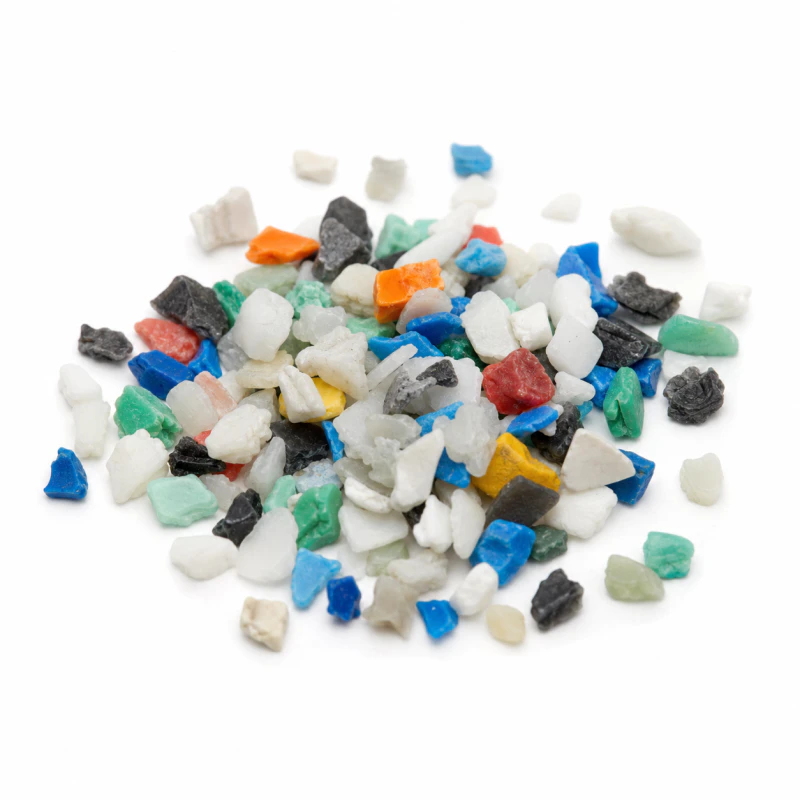
PP/PE Flake Separation Solution for Plastic Recycling
PP/PE flake separation is an important process for plastic recycling facilities that handle mixed polypropylene (PP) and polyethylene (PE) materials. These two polyolefin plastics are widely used in packaging, household products, containers, caps, closures, and industrial applications, but their similar physical appearance can make manual identification difficult. When PP and PE flakes remain mixed after shredding and washing, the resulting recycled material may have inconsistent polymer composition, which can affect processing stability and the quality of the final product. A properly configured PP/PE flake separation solution uses suitable material preparation, near-infrared identification, and targeted separation to improve polymer consistency and help recycling plants produce more controlled recycled plastic streams.
Rather than relying on a single machine, an effective separation line considers the entire recycling process, including flake size, residual moisture, surface contamination, material overlap, and the required purity of each output. NIR optical sorting can identify many suitable PP and PE flakes according to their polymer characteristics, while screening, drying, feeding, and downstream quality checks help maintain stable operating conditions. The appropriate configuration depends on the incoming material composition, the proportion of non-target plastics, the desired output specifications, and the production capacity of the facility. This solution is designed to integrate polymer separation into an existing or newly planned plastic recycling line.
Why PP and PE Flakes Need Separation
PP and PE are both widely recycled thermoplastics, but they have different material properties and are used in different product applications. PP is commonly found in rigid packaging, caps, containers, household products, and various molded components, while PE includes HDPE used in bottles and containers as well as LDPE used in films and flexible packaging. When flakes from these materials are combined, the recycled feedstock may contain a polymer mixture that does not meet the requirements of a particular downstream manufacturing process. Separating the materials according to their polymer type helps recyclers establish more consistent output streams and improve control over recycled resin applications.
The challenge becomes more significant when a recycling line processes post-consumer plastics collected from multiple sources. Different products may have different colors, shapes, surface conditions, labels, and contamination levels, even when they are made from the same polymer. Washing and shredding can remove some contaminants and reduce products into flakes, but these operations do not automatically separate PP from PE. A dedicated polymer separation stage can therefore provide an additional quality-control step between mechanical preparation and the production of recycled flakes or pellets.
| Separation Challenge | Effect on Recycling | Recommended Process Response |
|---|---|---|
| Similar appearance of PP and PE flakes | Manual sorting may struggle to identify polymer differences consistently. | Use suitable NIR optical identification to distinguish detectable polymer types. |
| Mixed colors and variable flake shapes | Material presentation and sorting consistency may become less stable. | Prepare a more uniform feed and configure the sorting program for the actual material stream. |
| Residual moisture, labels, or surface contamination | Identification reliability and separation efficiency may be affected. | Improve washing, drying, and contaminant removal before optical sorting. |
| Overlapping flakes or excessive feed density | Individual flakes may not be presented clearly for detection and ejection. | Optimize spreading, feeding speed, and material distribution. |
| Changing input composition | Output purity and recovery can vary between production batches. | Adjust sorting parameters and verify output quality through regular sampling. |
How NIR Optical Sorting Separates PP and PE Flakes
Near-infrared spectroscopy is widely used in plastic sorting because different polymer types exhibit different spectral responses under suitable detection conditions. An NIR sorting system analyzes the response from individual flakes and uses the configured recognition system to classify detectable materials into target and non-target categories. For PP/PE separation, the sorting program is configured around the polymer streams that the recycling facility wants to recover, such as accepting PP while rejecting PE, or accepting PE while rejecting PP. The exact identification capability depends on the sorter design, sensor configuration, material condition, and the quality of the reference data used for classification.
After a flake has been identified, the sorting system coordinates the detection result with the material's movement through the machine. Depending on the equipment configuration, compressed-air ejectors can divert selected flakes away from the main material stream, allowing the line to recover a target polymer while removing unwanted flakes. Separation performance is influenced by the distribution of flakes across the sorting area, their speed and orientation, the stability of the feed, and the response of the ejection system. For this reason, correct equipment selection and feed preparation are as important as the recognition technology itself.
PP Recovery from Mixed PP/PE Flakes
When PP is the target material, the sorting program is configured to retain detectable PP flakes in the desired product stream while rejecting identified PE flakes and other configured non-target materials. This approach is suitable for recycling lines that process mixed rigid plastic flakes from containers, household products, caps, closures, and other compatible PP-containing waste streams. Before sorting, the material should be prepared to reduce residual moisture, loose labels, excessive fines, and overlapping flakes, since these conditions can interfere with reliable identification or material handling. Where the feed contains additional polymers or foreign materials, upstream separation may be required to prevent unnecessary loading on the PP recovery stage.
PE Recovery from Mixed PP/PE Flakes
When PE is the target material, the sorting program can be configured to recover detectable PE flakes and divert identified PP flakes into a separate stream. The suitable feed may include HDPE-rich rigid flakes or other compatible PE-containing material, depending on the design and capabilities of the sorting equipment. Since PE feedstocks can vary significantly in color, shape, surface condition, and composition, the line should be evaluated using representative samples rather than assuming that every PE flake will be identified under identical conditions. A properly prepared feed and a suitable sorting configuration can help produce a more consistent PE stream for subsequent extrusion, pelletizing, or other recycling operations.
PP/PE Flake Separation Process Flow
A complete PP/PE flake separation solution usually begins with prepared plastic flakes from a washing and size-reduction process. The material is checked and conditioned to reduce factors that may affect detection, after which a controlled feeding system spreads the flakes for optical inspection. The NIR sorter identifies detectable polymer types and directs selected flakes into the configured product or reject streams. Output inspection then helps determine whether the material meets the intended requirements or needs another sorting pass.
The exact process flow should reflect the characteristics of the incoming waste and the quality requirements of the recycled product. A relatively clean and uniform feed may require a simpler configuration, while mixed post-consumer flakes with variable colors, labels, residual contaminants, or several polymer types may require additional preparation and separation stages. The line should also provide access for sampling, routine cleaning, and inspection so operators can identify changes in material quality before they affect a large production batch.
| Process Stage | Main Function | Key Operating Consideration |
|---|---|---|
| Feed inspection | Assess polymer composition, contamination, moisture, and flake size. | Use representative samples to establish the actual sorting requirements. |
| Screening and preparation | Remove unsuitable fines and prepare a more consistent material stream. | Select screening and drying arrangements according to feed conditions. |
| Controlled feeding | Distribute flakes for individual inspection by the optical sorter. | Avoid excessive overlap, surges, and uneven material loading. |
| NIR identification and separation | Classify detectable polymers and separate configured target and non-target materials. | Confirm the recognition capability using the actual PP/PE feedstock. |
| Output inspection | Check the purity and composition of recovered PP and PE streams. | Use sampling results to determine whether another sorting pass is necessary. |
| Downstream recycling | Send qualified material to extrusion, pelletizing, or other suitable processing equipment. | Match downstream processing conditions to the polymer and intended application. |
Materials Suitable for PP/PE Flake Separation
PP/PE flake separation can be considered for a range of prepared plastic recycling streams, provided the flakes are compatible with the selected optical sorting system. Typical materials include shredded rigid packaging, washed container flakes, caps and closures, household plastic products, and mixed polyolefin flakes recovered from suitable industrial or post-consumer waste. The actual suitability of each feedstock depends on its polymer composition, dimensions, color distribution, contamination level, and surface condition. A material assessment is recommended before selecting the sorting configuration, particularly when the input contains several polymer families or a significant proportion of dark and heavily contaminated flakes.
| Material Stream | Separation Objective | Important Considerations |
|---|---|---|
| Mixed PP and PE rigid flakes | Separate detectable PP and PE fractions into different output streams. | Check flake size, material overlap, and the presence of other polymers. |
| Washed PP-rich flakes | Remove detectable PE and other configured non-target materials. | Confirm the proportion of PE contamination and the required PP output quality. |
| Washed PE-rich flakes | Recover detectable PE flakes and reject identified PP contamination. | Evaluate differences in color, thickness, surface condition, and feed composition. |
| Mixed polyolefin recycling feed | Improve polymer consistency before further material processing. | Additional sorting stages may be needed for non-polyolefin plastics and foreign matter. |
| Industrial PP/PE production scrap | Recover compatible polymer fractions from segregated manufacturing waste. | Known material composition and consistent flake preparation can simplify configuration. |
NIR Sorting Compared with Other Separation Methods
Mechanical recycling facilities may use several methods to separate plastics, but each method addresses different material characteristics. Screening is useful for size classification, washing removes certain surface contaminants, and density-based separation can divide materials with sufficiently different buoyancy characteristics. However, PP and PE generally have overlapping low-density ranges and both commonly float in water under conventional float-sink conditions, so ordinary water-based density separation is not usually sufficient on its own to reliably distinguish these two polymers. NIR optical sorting provides a different approach by analyzing detectable polymer characteristics rather than depending only on particle size or buoyancy.
These methods are often complementary rather than interchangeable. Screening and washing can improve the condition of the feed before optical sorting, while density separation may be useful elsewhere in a recycling line for material pairs with more suitable density differences. NIR sorting can then target the separation of identifiable PP and PE flakes when the material presentation and detection conditions are appropriate. The final configuration should be selected according to the complete feed composition, the quality target, operating costs, and the performance demonstrated during material testing.
| Method | Primary Separation Basis | Role in PP/PE Recycling |
|---|---|---|
| Manual sorting | Visual inspection and operator judgment | May be useful for visible contaminants or preliminary sorting, but polymer identification can be difficult when flakes look similar. |
| Screening | Particle size and physical dimensions | Prepares the feed and removes unsuitable size fractions but does not directly distinguish PP from PE. |
| Float-sink separation | Density and buoyancy in a separation medium | Useful for suitable density-based separations, but conventional water separation generally cannot reliably separate PP from PE because both usually float. |
| NIR optical sorting | Detectable near-infrared spectral characteristics | Can identify suitable PP and PE flakes and separate configured target materials under appropriate operating conditions. |
Integrating PP/PE Separation into an Existing Recycling Line
For an existing plastic recycling facility, the optical sorting stage is normally planned around the material condition delivered by upstream equipment. Shredding or granulation determines the initial flake dimensions, washing affects the level of surface contamination, and drying helps control residual moisture before detection. Conveyors, hoppers, vibratory feeders, or other suitable feeding equipment can be arranged to deliver a steady stream of flakes to the sorter. The layout should also provide sufficient space for product collection, reject handling, maintenance access, and the inspection of separated material.
Integration planning should account for the relationship between feed capacity and the actual sorting area available inside the machine. Increasing the feed rate without maintaining suitable material distribution can cause overlapping flakes and reduce the opportunity for reliable individual detection. Likewise, a line that generates a large volume of fines or inconsistent flake sizes may require additional screening or process adjustments before the optical stage. Evaluating these factors as part of the complete system helps prevent bottlenecks and makes it easier to maintain consistent operation across different batches.
Facilities with demanding purity requirements may also consider multiple sorting stages, depending on the contamination profile and the value of the recovered material. A primary stage can remove a substantial portion of the unwanted polymer, while a subsequent cleaning or secondary sorting stage may help improve the composition of the target stream. The need for additional passes should be determined through trials, since each pass affects throughput, recovery, energy use, and equipment requirements. Output sampling is important for confirming that the selected arrangement meets the facility's actual quality objectives.
Applications of PP/PE Flake Separation
PP/PE flake separation supports recycling operations that need to manage mixed polyolefin materials and recover more consistent polymer fractions. Typical applications include the processing of rigid packaging, household plastic waste, caps and closures, industrial scrap, and prepared flakes from mixed plastic collection systems. By improving the consistency of the recovered streams, the separation process can help recyclers match material batches more closely to the requirements of downstream processors. The practical value of the solution depends on the input material, the achievable output quality, and the specifications of the intended recycled product.
Separated PP and PE flakes may be sent to further washing, extrusion, filtration, pelletizing, or other compatible recycling processes. These downstream operations must still be selected according to polymer type, residual contamination, melt-processing requirements, and the intended application of the recycled material. Optical separation alone does not guarantee a particular mechanical property, regulatory status, or food-contact suitability. For applications with strict material specifications, additional testing and process controls are necessary to confirm that the recycled output meets the buyer's requirements.
Benefits of a Dedicated PP/PE Flake Separation Solution
A dedicated polymer separation stage gives recycling operators greater control over the composition of their PP and PE output streams. By reducing detectable cross-polymer contamination, the solution can support more consistent feedstock for downstream processing and make material quality easier to monitor. Automated identification and separation can also reduce dependence on manual inspection for tasks that require distinguishing visually similar flakes. These benefits are most meaningful when the sorter is matched to the material and supported by appropriate upstream preparation and regular quality checks.
The solution can also provide greater flexibility when a recycling facility handles different batches or product sources. Sorting parameters and operating arrangements can be reviewed as the incoming material changes, although the practical range of adjustment depends on the equipment configuration and its identification capabilities. A well-planned process can help operators balance output purity, recovery, throughput, and operating cost rather than focusing on one performance indicator alone. Actual results should be confirmed through representative material trials and monitored during routine production.
| Operational Objective | How the Solution Helps |
|---|---|
| Improve polymer consistency | Separates detectable PP and PE flakes according to the configured sorting target, helping control cross-polymer contamination. |
| Reduce manual sorting demands | Automates suitable polymer identification and ejection tasks that can be difficult to perform consistently by visual inspection alone. |
| Support downstream processing | Provides more clearly defined polymer streams for compatible extrusion and pelletizing operations. |
| Adapt to changing feedstocks | Allows the sorting configuration and process settings to be reviewed as material composition and quality requirements change. |
| Improve quality monitoring | Supports systematic output sampling and process adjustment to help maintain agreed material specifications. |
Key Factors When Selecting a PP/PE Flake Sorting System
Selecting a suitable PP/PE flake sorting system begins with a clear understanding of the material to be processed. The evaluation should identify the proportions of PP, PE, other polymers, labels, residual contaminants, and fines, while also documenting flake dimensions, color distribution, moisture conditions, and expected changes between batches. These characteristics determine whether the feed is suitable for direct optical sorting or requires additional preparation. Representative samples provide a more reliable basis for equipment selection than estimates based only on the original products entering the recycling line.
Capacity requirements should be evaluated together with output purity and recovery objectives. A higher nominal feed rate is not necessarily the best choice if material distribution becomes unstable or if the required output quality cannot be maintained at that loading level. The facility should also consider the number of target streams, available floor space, compressed-air requirements where pneumatic ejection is used, maintenance access, and integration with existing conveyors and controls. A balanced design accounts for both production demands and the practical conditions under which the system will operate.
Dark or carbon-black plastics require particular attention because conventional NIR systems may have difficulty identifying some black materials, depending on the pigments and sensor technology involved. Heavy surface contamination, residual water, overlapping flakes, multilayer materials, and unsuitable particle dimensions can also affect identification or separation performance. Before confirming a final configuration, recyclers should request testing with representative feedstock and review the resulting product purity, recovery, throughput, and reject composition. This helps establish realistic operating expectations and reduces the risk of choosing a system that does not match the actual waste stream.
Frequently Asked Questions About PP/PE Flake Separation
Can NIR optical sorting distinguish PP from PE?
NIR optical sorting can distinguish many suitable PP and PE flakes because these polymers exhibit different near-infrared spectral responses under appropriate detection conditions. The ability to classify each flake depends on the sensor configuration, material presentation, polymer formulation, surface condition, and the operating parameters of the system. Very dark materials, heavily contaminated flakes, and materials that cannot be reliably detected may require additional evaluation or alternative process arrangements. Testing the actual feedstock is the most dependable way to determine whether a proposed sorter can meet the required separation objectives.
Can PP and PE flakes be separated using ordinary water float-sink equipment?
Conventional water-based float-sink separation is generally not sufficient to reliably separate PP from PE because both polymers commonly have densities below that of water and therefore tend to float. Although density-based techniques can be useful for separating other material combinations, their effectiveness depends on the density characteristics of the plastics involved and the selected separation medium. For a mixed PP/PE stream, polymer identification through suitable optical sorting may be a more appropriate approach when the flakes can be detected reliably. The final process may combine several technologies to address different contaminants and material fractions.
Do the flakes need to be washed and dried before sorting?
Feed preparation is important because residual dirt, labels, adhesive, surface water, and other contaminants can affect material presentation and may interfere with detection. Washing can remove certain surface contaminants, while suitable drying equipment helps control moisture before the flakes enter the optical sorting stage. The exact preparation requirements depend on the incoming material and the sorter design, so not every feedstock requires an identical treatment process. A material assessment can establish whether additional washing, drying, screening, or other preparation is necessary for stable operation.
Can one sorting machine recover both PP and PE?
A sorting system may be configured to target different polymer streams, but the appropriate arrangement depends on the machine design, the number of required outputs, and the quality objectives of the recycling facility. Some applications may use a primary separation stage followed by another sorting pass to recover or clean a second polymer fraction. Whether a single machine can handle both targets efficiently must be verified against the material flow, ejection configuration, and desired output specifications. Where purity requirements are demanding, separate stages or additional quality-control processes may be more suitable.
Will PP/PE separation guarantee high-purity recycled pellets?
PP/PE flake separation can help reduce detectable cross-polymer contamination, but it does not by itself guarantee a specific pellet purity or final product performance. Output quality also depends on the incoming waste, other polymer contaminants, washing effectiveness, filtration, extrusion conditions, and quality-control procedures. Recyclers should define acceptance criteria for the recovered flakes and verify them through representative sampling and appropriate material testing. Additional sorting or processing may be needed when the recycled material is intended for applications with stricter specifications.
Build a PP/PE Flake Separation Solution for Your Recycling Line
Every plastic recycling facility handles a different combination of polymers, colors, flake dimensions, contaminants, and production requirements. An effective PP/PE flake separation solution should therefore be designed around the actual feedstock and the required balance between polymer purity, recovery, throughput, and operating cost. Reviewing the material before selecting the sorting system helps determine the appropriate NIR configuration, feed preparation requirements, number of sorting stages, and downstream integration plan. This approach provides a practical basis for improving polymer consistency without assuming that every recycling line requires the same equipment arrangement.
When planning a new line or upgrading an existing one, provide information about the source of the flakes, the estimated PP and PE proportions, moisture and contamination levels, target processing capacity, and the required output quality. Representative material samples can help evaluate identification performance and determine whether additional screening, drying, or secondary sorting is appropriate. With a configuration based on actual operating conditions, recyclers can make more informed decisions about equipment selection and process integration. Contact our team to discuss your PP/PE flake separation requirements and develop a sorting solution suited to your plastic recycling process.