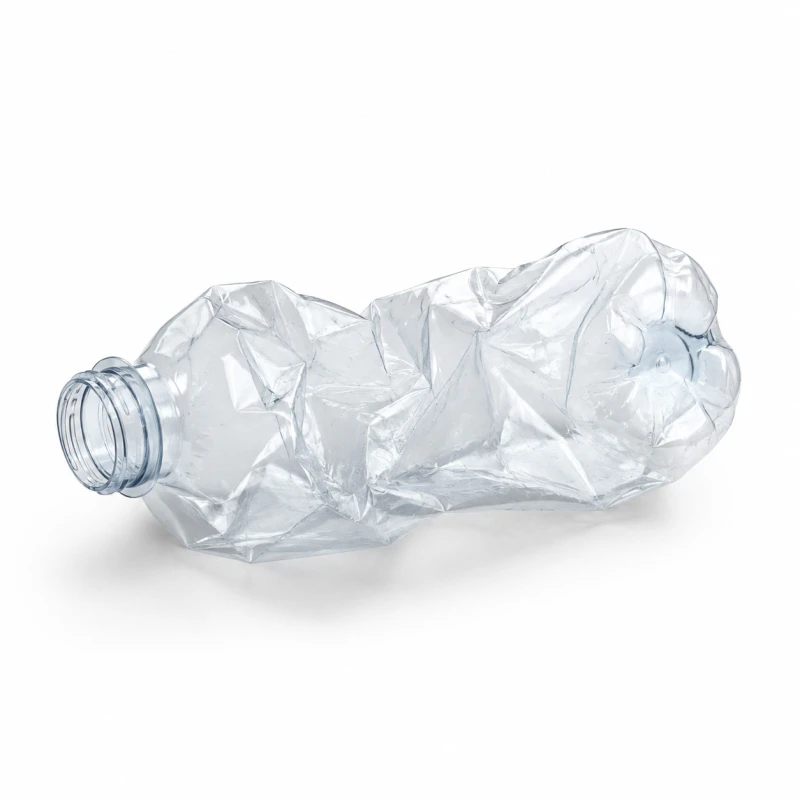
PET Bottle Sorting Solution for Plastic Recycling
PET bottle sorting is an essential process in plastic recycling facilities that handle post-consumer beverage bottles, household packaging, and mixed recyclable waste. Although PET bottles are widely collected for recycling, incoming material streams often contain HDPE containers, PP caps, colored bottles, labels, residual liquids, and other unwanted materials. These contaminants can reduce the consistency of the recovered PET stream and create additional work for downstream washing, flake production, and pelletizing processes. A dedicated PET bottle sorting solution uses optical identification and automated separation to recover suitable PET bottles from mixed material streams, helping recycling facilities improve feedstock quality and establish a more controlled recycling process.
An effective solution involves more than installing an optical sorter. The condition of the incoming material, bottle presentation, label coverage, color distribution, and contamination level all influence the performance of the complete sorting line. Depending on the application, the process may combine screening, controlled feeding, NIR optical identification, visible-light color detection, pneumatic ejection, and downstream quality inspection. Each stage has a specific role in preparing the material, identifying target bottles, and separating unwanted items. By matching the sorting configuration to the actual waste stream and required output specifications, recyclers can build a practical system for PET recovery rather than relying on a single machine to handle every separation challenge.
Common Challenges in PET Bottle Recycling
Post-consumer PET bottles rarely arrive at a recycling facility in a uniform condition. Bottles may be transparent, light blue, green, or other colors, and their surfaces may be covered by printed labels, adhesive residues, dirt, or liquid contamination. The same waste stream can also contain HDPE detergent bottles, PP containers, metal objects, paper, flexible packaging, and other non-target materials. These differences make it difficult to maintain consistent output quality through visual inspection alone, particularly when the facility processes large volumes of material at a steady rate. A dedicated sorting stage helps address these challenges by identifying suitable target materials and directing unwanted items away from the PET product stream.
Another challenge is that bottle shape and condition change throughout collection and handling. Some bottles remain intact, while others are compressed, partially crushed, or tangled with labels and other packaging. Overlapping objects can prevent the sensor system from obtaining a clear reading of each individual item, and heavily covered or unsuitable materials may not be classified reliably. A successful PET bottle sorting solution therefore needs to consider both sensor capability and material presentation. Proper feeding, screening, and process control can help reduce overlapping items and create more consistent conditions for optical identification.
| Recycling Challenge | Potential Impact | Solution Approach |
|---|---|---|
| Mixed PET and non-PET bottles | Unwanted polymers may enter the recovered PET stream and affect downstream processing. | Use optical polymer identification to separate detectable PET bottles from configured non-target materials. |
| Different bottle colors | Mixed colors may limit the suitability of the recovered material for applications requiring specific color characteristics. | Combine polymer identification with suitable color detection when separate color fractions are required. |
| Labels, caps, and residual contamination | Contaminants may increase the workload of washing and downstream separation equipment. | Design the process with appropriate pre-sorting, label removal, washing, and downstream cap separation. |
| Crushed and overlapping bottles | Individual objects may be difficult to identify when their surfaces overlap or are not adequately exposed. | Improve material spreading, feeding stability, and screening where required by the input material. |
| Changing incoming waste composition | Sorting results may vary as the proportion of PET, other polymers, and contaminants changes. | Monitor input and output quality and adjust the sorting configuration to the actual material stream. |
How Optical PET Bottle Sorting Works
An optical PET bottle sorting system identifies target bottles as they move through a controlled inspection area. In a typical NIR-based configuration, the sensor analyzes the near-infrared response of detectable materials and uses the resulting information to classify the objects according to their polymer characteristics. The sorting controller coordinates the identification result with the position and movement of the material, allowing the system to activate selected pneumatic ejectors at the appropriate time. PET bottles can then be diverted into the designated product stream, while identified non-target materials continue toward a separate collection area. The exact detection range depends on the sensor design, material conditions, and sorting program.
Visible-light cameras may also be incorporated when the application requires color recognition or additional visual inspection. NIR identification and visible-light color detection address different characteristics, so the correct sensor combination depends on whether the main objective is polymer separation, color classification, or both. The system also requires stable material presentation, because objects that overlap or pass through the inspection area in an unsuitable orientation may be difficult to classify individually. For this reason, feeding and spreading equipment, sensor configuration, ejection timing, and collection arrangements should be considered as parts of one integrated sorting solution.
Polymer Identification and PET Recovery
When the objective is to recover PET bottles from mixed packaging waste, the sorting program is configured to identify suitable PET objects and separate them from the unwanted material fraction. Depending on the incoming waste stream, non-target items may include HDPE bottles, PP containers, and other detectable packaging materials. Removing these materials before downstream processing helps reduce the amount of unwanted plastic entering the PET washing and recycling stages. The effectiveness of this separation depends on the composition of the feedstock, the detectability of individual items, and whether the bottles are presented clearly enough for reliable inspection.
Color-Based PET Bottle Sorting
Some recycling applications require PET bottles to be divided into separate color categories rather than collected as one mixed-color fraction. Clear and light-blue PET, for example, may have different commercial uses from green or other colored PET, depending on the buyer's specifications and downstream processing requirements. A suitable optical configuration can combine material identification with visible-light color detection to distinguish the required categories where the equipment supports those functions. The target color groups and acceptance criteria should be defined before installation so that the sorting program can be configured around the intended output products.
Automated Ejection and Material Collection
After the system identifies a target bottle or unwanted object, the controller coordinates the separation mechanism to direct that object into the appropriate collection stream. Pneumatic ejection is commonly used in optical sorting systems, with compressed-air nozzles diverting selected objects away from their original trajectory. Correct ejection depends on the accuracy of object tracking, the timing of the air pulse, the spacing between bottles, and the operating condition of the compressed-air system. Product and reject collection areas should be arranged to prevent separated materials from mixing again and to provide operators with convenient access for sampling and inspection.
PET Bottle Sorting Process Flow
A complete PET bottle sorting line usually begins with incoming material inspection and preparation. Depending on the source of the waste, the initial stages may include bag opening, screening, removal of bulky contaminants, and controlled feeding to create a more uniform material stream. The optical sorter then identifies and separates suitable PET bottles according to the selected polymer and color criteria. Following sorting, the recovered PET stream can be directed to baling, further manual quality control, label removal, washing, or other processing stages based on the facility's production layout.
The most appropriate process sequence depends on whether the facility handles loose municipal recyclables, collected beverage bottles, pre-sorted packaging, or material from an existing mechanical recycling line. A stream containing large amounts of mixed waste may need additional front-end separation before the PET sorting stage, whereas a concentrated bottle stream may require a more focused configuration for polymer and color control. Output inspection is important in either case because it helps operators determine whether the current configuration is meeting the required product specifications. Where additional sorting is necessary, a secondary stage can be evaluated against its effect on purity, recovery, throughput, and operating cost.
| Process Stage | Main Function | Process Considerations |
|---|---|---|
| Incoming material inspection | Evaluate the proportion of PET bottles, other polymers, colors, and visible contaminants. | Use representative material samples to define sorting priorities and quality targets. |
| Pre-sorting and screening | Remove unsuitable objects and prepare a more consistent feed for optical detection. | Choose preparation equipment according to bottle size, waste composition, and contamination level. |
| Controlled feeding and spreading | Distribute bottles through the inspection area for individual detection where possible. | Avoid excessive overlap, uneven loading, and unstable material flow. |
| Optical identification | Identify detectable PET bottles and, where configured, classify colors or other target categories. | Match sensor capability and sorting settings to the actual material stream. |
| Automated separation | Direct target bottles and non-target materials into their designated collection streams. | Maintain suitable ejection timing, compressed-air supply, and collection arrangements. |
| Output inspection and downstream processing | Check recovered material quality before baling, washing, or further recycling. | Use quality checks to determine whether secondary sorting or additional cleaning is required. |
What Materials Can a PET Bottle Sorting Solution Handle?
PET bottle sorting solutions are primarily intended for PET beverage bottles and other compatible PET packaging found in suitable recycling streams. Depending on the equipment configuration, the system can be designed to recover target PET bottles while separating detectable non-PET containers and unwanted material categories. Common items in mixed bottle waste include HDPE detergent bottles, PP containers, colored PET bottles, and packaging with labels or closures. Since the appearance and composition of these items can vary considerably, the sorting program should be developed around the actual material rather than assuming that every bottle can be classified under identical conditions.
Material limitations should be assessed before finalizing the equipment arrangement. Conventional NIR systems may have difficulty identifying some carbon-black or very dark plastics, while multilayer packaging, heavy surface contamination, and overlapping objects can also affect classification. A bottle that is heavily covered by a label or combined with other materials may not present the same detectable surface as a clean, exposed object. Where these materials represent a significant proportion of the incoming waste, the recycling line may need additional pre-sorting, a different sensor configuration, or complementary separation equipment to meet its output requirements.
| Material Category | Sorting Objective | Important Considerations |
|---|---|---|
| Clear PET bottles | Recover suitable transparent PET bottles for further recycling. | Define acceptance criteria for color, contamination, and other non-target materials. |
| Colored PET bottles | Recover PET bottles by polymer type or separate them into selected color groups. | Separate color detection may be required when different color fractions have different market specifications. |
| HDPE and PP containers | Remove detectable non-PET containers from the target PET stream. | Confirm that the sensor system can identify the specific polymers and material conditions in the feed. |
| Labeled and capped bottles | Recover suitable bottle bodies before downstream cleaning and component separation. | Optical bottle sorting does not automatically guarantee complete removal of labels, caps, or adhesive. |
| Mixed post-consumer packaging | Extract the PET fraction from a broader stream of recyclable materials. | Additional front-end sorting may be needed for metals, film, paper, and other unwanted objects. |
PET Bottle Sorting for Clear and Colored Material Streams
Clear PET bottle recovery is important for recycling facilities supplying buyers who require consistent color characteristics in their feedstock. When clear and colored bottles are mixed together, the recovered material may need additional sorting or may be suitable for a different application than a more uniform clear fraction. A PET sorting solution can be configured to prioritize the required polymer stream and, where supported by the selected equipment, apply additional color recognition to separate different bottle categories. The most suitable approach depends on the incoming color distribution, the buyer's specifications, and the economics of recovering each material fraction.
Colored PET recovery can also be commercially relevant, but the sorting objectives may differ from those used for clear bottles. Some facilities may prefer to collect colored PET as a combined fraction, while others need to distinguish selected colors to match specific downstream applications. The system should therefore be configured around the required output categories rather than assuming that all colors need to be separated individually. Sampling and output inspection help confirm whether the selected configuration is producing the desired material streams and whether an additional sorting pass is justified.
PET Bottle Sorting Compared with Mixed-Waste Sorting
A dedicated PET bottle sorting solution focuses on recovering PET bottles from a known or partially concentrated material stream. This targeted approach is useful when a facility has already completed preliminary sorting and wants to improve the composition of the PET fraction before further processing. The system can be configured around PET recovery and, where required, additional color classification. Because the sorting objective is more focused, the process design can prioritize the specific contaminants and output characteristics that matter most to the facility.
A broader mixed-waste sorting line has a different purpose: it may need to separate several recyclable material categories, including PET, HDPE, PP, metals, and other fractions. Such a line can require multiple sensor types, separation stages, and collection streams to handle the wider range of incoming materials. In larger recycling operations, both approaches can be combined, with front-end sorting recovering broad material categories before a dedicated PET sorting stage refines the bottle fraction. This integrated arrangement allows each stage to perform a defined role and can reduce the burden placed on the final PET recovery process.
| Comparison Factor | Dedicated PET Bottle Sorting | Mixed-Waste Sorting |
|---|---|---|
| Primary objective | Recover suitable PET bottles from a concentrated or mixed bottle stream. | Separate multiple material categories from a broader waste stream. |
| Typical feed | Collected beverage bottles or a pre-sorted bottle fraction. | Mixed recyclable packaging with different polymers and other materials. |
| Sorting configuration | Focused on PET identification and optional color classification. | May use multiple identification and separation stages to produce several material fractions. |
| Downstream integration | Often connected to bottle baling, label removal, washing, and PET flake production. | Typically feeds several downstream processing lines for different recovered materials. |
| Best suited to | Facilities with a defined PET recovery objective and a suitable bottle feedstock. | Facilities that need to recover multiple material types from mixed incoming waste. |
Integrating PET Bottle Sorting with Washing and Recycling Equipment
PET bottle sorting should be planned in relation to the equipment installed before and after the optical stage. Upstream systems may include conveyors, screening equipment, bag openers, manual inspection stations, or other machinery used to prepare the incoming waste. Their purpose is to create a feed that the optical sorter can process consistently, reducing the number of unsuitable objects and minimizing excessive overlap. The arrangement should also allow operators to inspect the incoming stream and identify changes in bottle composition that may require process adjustments.
After optical sorting, the recovered PET bottles may be sent to a baler, a bottle-processing line, or a washing system, depending on the facility's production strategy. Baling can reduce transport volume when the bottles need to be shipped to another facility, while in-house processing may continue with size reduction, label removal, washing, and separation of bottle components. During these later stages, caps, labels, adhesive, and residual contaminants require their own treatment processes. A PET bottle sorter primarily separates materials according to its configured detection criteria; it should not be treated as a replacement for every cleaning and component-removal stage in a complete recycling line.
For facilities producing PET flakes or recycled PET pellets, sorting performance is only one part of the final quality-control process. The material may require further washing, drying, filtration, and processing controls to meet the requirements of its intended application. Where food-contact or bottle-to-bottle recycling is involved, additional validated processing steps and regulatory compliance checks are necessary; optical sorting alone cannot certify that the output is food-grade. The complete line should therefore be designed around the required recycled product, including its contamination limits, color specifications, and downstream processing conditions.
Factors to Consider When Selecting a PET Bottle Sorting Solution
The selection process should begin with an assessment of the actual incoming material rather than a machine capacity figure alone. Important information includes the proportion of PET bottles, the amount of non-PET packaging, the distribution of bottle colors, the presence of labels and caps, and the percentage of crushed or overlapping objects. Facilities should also establish the required output quality and determine whether the main objective is polymer separation, color classification, or both. This information helps identify the sensor configuration and preparation equipment that are appropriate for the material stream.
Throughput, recovery, purity, and operating cost should be evaluated together because improvements in one area can affect the others. Feeding material too quickly or in an uneven layer can make individual objects harder to detect and separate, while a more intensive sorting configuration may require additional equipment or processing stages. The facility should also consider installation space, conveyor layout, compressed-air requirements where pneumatic ejection is used, maintenance access, and integration with existing controls. These factors influence not only the initial installation but also the consistency and practicality of day-to-day operation.
Material trials are especially valuable when the feed contains dark plastics, heavily labeled bottles, unusual packaging formats, or a wide variation in color and shape. Conventional NIR systems may not reliably identify some carbon-black plastics, and multilayer or heavily covered objects may require additional evaluation. A representative trial can help establish the actual detection limits, achievable output quality, and expected reject composition under suitable operating conditions. Before finalizing a system, recyclers should review these results together with the planned downstream process and the specifications of the recovered PET product.
Applications of PET Bottle Sorting Solutions
PET bottle sorting solutions are used in recycling facilities that process collected beverage containers, mixed recyclable packaging, and prepared bottle streams from material recovery operations. Municipal recycling plants may use optical sorting to recover PET from a broader mixture of packaging, while dedicated PET recyclers may focus on improving the quality of an existing bottle fraction. Packaging recovery businesses can also use the process to create more clearly defined material streams for baling, washing, or further mechanical recycling. The suitable system configuration depends on the source of the waste and the material quality required by downstream customers.
Manufacturers and recyclers supplying recycled PET flakes or pellets may benefit from a sorting stage that reduces detectable polymer contamination before further processing. More consistent feedstock can make it easier to control the composition of the material entering washing and extrusion operations, although the final recycled product still depends on the complete processing chain. For applications requiring strict color or contamination limits, the sorting line should be paired with appropriate inspection and quality-control procedures. The intended end use should therefore be considered at the beginning of the project rather than only after the sorting equipment has been selected.
Frequently Asked Questions About PET Bottle Sorting
Can a PET bottle sorter separate PET from HDPE and PP bottles?
A suitable optical sorting system can identify many PET bottles and distinguish them from detectable HDPE, PP, and other polymer materials. The actual performance depends on the sensor configuration, surface condition, bottle presentation, and material composition. Objects that overlap or cannot be reliably detected may not be separated as expected, so the input stream should be evaluated before the equipment is selected. Where the feed contains a wide range of polymers, the sorting program should be designed around the target PET fraction and the contaminants that need to be removed.
Can the system sort clear PET bottles separately from colored PET bottles?
Clear and colored PET can be separated when the equipment includes suitable color-detection capability and the sorting program is configured for the required categories. Polymer identification and color classification are related but distinct tasks, so the correct sensor combination depends on the intended output. Some facilities may only need to recover PET regardless of color, while others require a separate clear PET stream or additional color fractions. Material testing helps determine whether the selected configuration can meet the required color specifications under actual operating conditions.
Can crushed PET bottles be processed by an optical sorter?
The suitability of crushed or flattened bottles depends on their dimensions, degree of deformation, overlap, and the capabilities of the selected sorting system. A bottle that remains individually exposed may still be detectable, while objects that overlap or form dense clusters can make classification more difficult. Screening and controlled feeding can help prepare the material for inspection, but they cannot eliminate every detection challenge associated with heavily compressed objects. Representative testing is recommended when crushed bottles make up a significant proportion of the incoming stream.
Does PET bottle sorting remove caps and labels completely?
PET bottle sorting primarily separates target bottles from other materials according to the configured detection criteria. It does not automatically guarantee complete removal of caps, labels, adhesives, or other components attached to the bottle body. These materials may require additional processing such as label removal, friction washing, density separation, or other suitable cleaning methods. The exact downstream arrangement depends on the bottle design, cap and label materials, contamination level, and required quality of the recovered PET flakes.
Can one PET sorting machine process all types of plastic packaging?
A PET-focused sorter is designed around a defined recovery objective and should not be assumed to separate every polymer and packaging format equally well. Mixed packaging streams may contain films, multilayer materials, dark plastics, metal components, and objects with different physical characteristics that require other separation methods. Where several material categories must be recovered, a broader sorting line with multiple technologies may be more appropriate. A dedicated PET sorting stage can then be integrated into the line to refine the PET fraction after preliminary material separation.
Does optical PET sorting guarantee food-grade recycled PET?
No. Optical sorting can help reduce detectable non-PET materials and improve the composition of the recovered bottle stream, but food-contact suitability depends on the entire recycling process and the applicable regulatory requirements. Further washing, decontamination, processing validation, and quality testing may be required according to the intended use and local regulations. A sorter should therefore be regarded as one component of a complete recycling system rather than a standalone certification step for food-grade material.
Develop a PET Bottle Sorting Solution for Your Facility
Every recycling facility has its own material composition, contamination profile, processing capacity, and target output requirements. A practical PET bottle sorting solution should account for these differences when determining the sensor configuration, feeding arrangement, separation stages, and connection to downstream equipment. By evaluating the incoming waste and the intended recycled product together, recyclers can select a system that balances recovery, purity, throughput, and operating cost. This approach also helps identify where additional screening, color separation, label removal, or quality-control stages may be needed.
When planning a new installation or upgrading an existing recycling line, useful project information includes the source of the bottles, the estimated proportion of PET, the distribution of bottle colors, the condition of labels and caps, the amount of crushed material, and the required processing capacity. Representative samples can help establish whether the proposed optical system can identify the target materials and achieve the required output characteristics. With the sorting process matched to real operating conditions, the facility can build a more consistent PET recovery workflow and prepare the material for appropriate downstream recycling. Contact our team to discuss your PET bottle sorting requirements and develop a solution for your recycling operation.