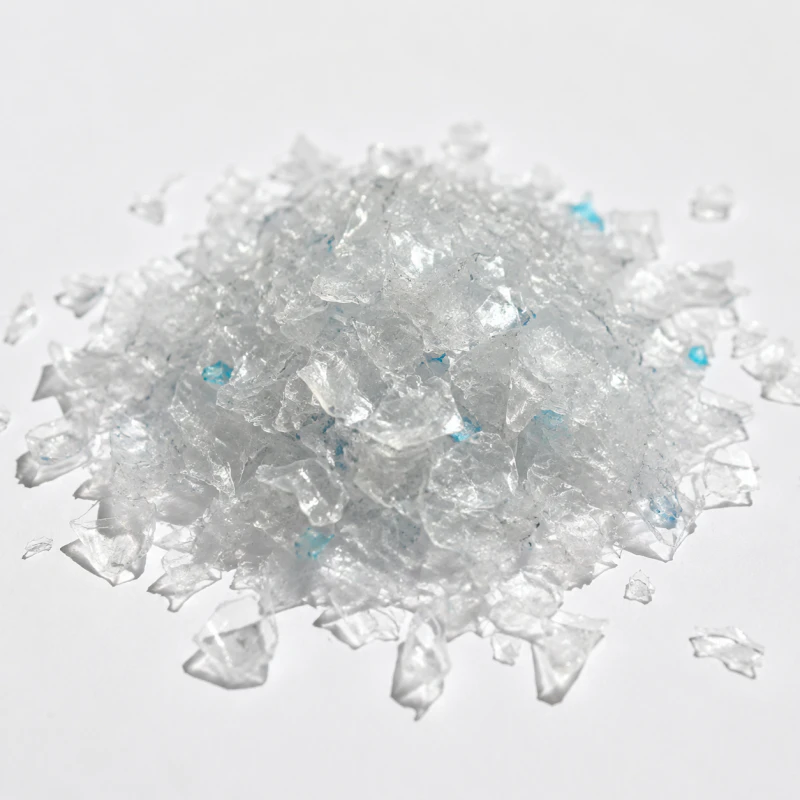
NIR PET Flake Sorting Solution
NIR PET flake sorting is an advanced plastic recycling solution designed to identify and separate polyethylene terephthalate (PET) flakes from mixed plastic streams. Using near-infrared spectroscopy and automated sorting technology, the system identifies material composition and separates target PET flakes from identifiable non-PET plastics and other unwanted materials.
In PET recycling plants, the quality of incoming flakes can vary depending on the collection source, bottle design, washing process, label removal efficiency, and the presence of mixed polymers. Contaminants such as PVC, PE, PP, and other incompatible materials may affect the consistency and usability of recycled PET. An appropriately configured NIR PET flake sorting system helps recycling operators improve material purity, reduce unwanted polymer contamination, and produce more consistent output for downstream processing.
The solution can be integrated into PET bottle recycling lines, washed flake processing facilities, and plastic recycling plants that require automated material identification. The final configuration depends on feedstock composition, flake size, moisture content, required purity, processing capacity, and the characteristics of the target contaminants.
What Challenges Does NIR PET Flake Sorting Solve?
PET flake recycling involves more than separating transparent material from colored material. Different polymers can have similar visual appearances while exhibiting different material properties. NIR technology helps identify polymers according to their spectral response, allowing the sorting system to make separation decisions based on material composition rather than visible color alone.
| Sorting Challenge | Potential Impact | How the Solution Helps |
|---|---|---|
| PVC contamination | PVC contamination can interfere with PET recycling and affect downstream processing. | NIR identification can help distinguish detectable PVC materials from the target PET stream. |
| Mixed polymers | PE, PP, and other incompatible plastics can reduce the consistency of recycled PET feedstock. | Material recognition supports the separation of identifiable non-PET flakes. |
| Colored and transparent flakes | Different color requirements may limit the suitability of recycled flakes for specific applications. | Optical color sorting can be combined with NIR identification when color separation is required. |
| Inconsistent feedstock | Changes in flake size, moisture, material distribution, and contamination can affect sorting performance. | Appropriate feed preparation and system configuration help maintain stable sorting conditions. |
| High output purity requirements | Some downstream applications require stricter control of polymer contamination. | Additional sorting stages and suitable inspection technologies can be evaluated according to the target specification. |
Reducing PVC Contamination in PET Flakes
PVC is one of the important contaminants to control in PET recycling. Even when PVC pieces appear similar to PET flakes, their polymer composition is different. NIR sorting can identify suitable PVC materials when the sensor response, material presentation, and operating conditions allow reliable detection.
Actual removal efficiency depends on flake dimensions, surface conditions, moisture, overlapping material, and the properties of the incoming feed. Representative material testing is recommended before selecting a final sorting configuration.
Separating PET from PE and PP
PET recycling streams may contain PE and PP from caps, closures, labels, packaging components, and other mixed plastic sources. If these materials remain in the PET output, they may affect the performance of downstream extrusion, filtration, and product manufacturing processes.
An NIR PET flake sorting solution can identify and separate detectable non-PET polymers from the target material stream. Feed preparation, uniform material distribution, and appropriate sorting parameters are important for achieving consistent separation.
Managing Color and Appearance Differences
Material composition and visible color are two different sorting criteria. A PET flake can be correctly identified as PET while still failing to meet a particular color specification. When the recycling process requires both polymer purity and color consistency, NIR material identification can be combined with optical color sorting or another suitable inspection method.
Handling Variable Recycling Feedstock
Recycling plants frequently process flakes originating from different collection systems, bottle types, and washing lines. Changes in particle size, residual moisture, and contamination can influence material presentation and sensor recognition. Screening, drying, and controlled feeding should therefore be considered as part of the complete sorting solution rather than relying on the sorter alone.
How Does an NIR PET Flake Sorting Solution Work?
An NIR PET flake sorting system combines material feeding, optical detection, signal processing, and mechanical separation. Flakes are distributed into a controlled flow, inspected by the sensing system, and separated according to the selected material criteria.
| Process Stage | Main Operation | Purpose |
|---|---|---|
| Feed Preparation | Screening, drying, and removal of excessive dust or unsuitable particles where required. | Creates more suitable feed conditions for optical inspection. |
| Material Distribution | A feeding system spreads flakes into a controlled, inspectable material flow. | Reduces excessive overlap and supports consistent detection. |
| NIR Identification | Sensors collect spectral information and processing software evaluates material characteristics. | Distinguishes target PET from identifiable non-target polymers. |
| Targeted Separation | The control system activates the appropriate separation mechanism according to detection results. | Directs target and rejected materials into their designated outlets. |
| Output Quality Control | Output samples are checked against material purity and contamination requirements. | Supports parameter adjustment and verification of sorting performance. |
Step 1: Feed Preparation
Before flakes enter the sorter, the recycling line should prepare the material for optical inspection. Screening can remove unsuitable particle sizes, while drying can reduce excess surface moisture. Dust removal may also be useful when fine particles interfere with material presentation or sensor performance.
The required preparation equipment depends on the condition of the incoming flakes. Material with excessive moisture, heavy dust, or a wide particle-size distribution may require additional treatment before NIR sorting.
Step 2: Uniform Material Distribution
The feeding system delivers flakes into the inspection area at a controlled rate. Proper distribution helps the sensor inspect individual particles and reduces the possibility that overlapping flakes will interfere with identification or separation.
Feed rate, particle size, and material flow should be matched to the sorter configuration. Excessive throughput or uneven distribution can affect detection opportunities and separation accuracy.
Step 3: Near-Infrared Material Identification
Near-infrared sensors evaluate the spectral response of materials passing through the inspection area. The processing system compares detected characteristics with its configured recognition criteria to determine whether a particle belongs to the target PET stream or a detectable non-target category.
Unlike conventional color sorting, which primarily evaluates visible appearance, NIR technology provides information about material identity. However, detection capability varies with polymer type, surface condition, particle presentation, and sensor configuration. Not every contaminant can be reliably identified by a standard NIR system.
Step 4: Automatic Separation
After the material is identified, the control system coordinates the separation mechanism to direct selected flakes into the appropriate outlet. In a typical free-fall optical sorting arrangement, precisely timed air jets can eject detected contaminants while the accepted material continues along its normal trajectory.
The ejection settings must be matched to the speed of the material flow and the characteristics of the particles. Correct calibration helps balance contaminant removal, target material recovery, and operating stability.
Step 5: Output Inspection and Optimization
The sorted output should be sampled and evaluated to determine whether it meets the required polymer purity and contamination limits. Depending on the feedstock and target specification, operators may adjust feeding conditions, detection parameters, ejection timing, or the number of sorting stages.
For demanding applications, a multi-stage process may be considered. The need for additional stages should be established through material testing and a review of the desired output quality, recovery rate, and processing economics.
Suitable Feed Materials and Target Contaminants
NIR PET flake sorting is suitable for applications where PET flakes need to be separated from identifiable non-target polymers. The actual material range depends on the sensor configuration, feedstock condition, particle dimensions, and required separation criteria.
| Feed Material or Contaminant | Typical Characteristics | Sorting Consideration |
|---|---|---|
| Washed PET flakes | Flakes obtained from processed PET bottles or other PET products. | Can serve as the target feed material for polymer-based sorting. |
| PVC flakes | Unwanted polymer fragments mixed into the PET stream. | NIR identification may support separation when the material is detectable under operating conditions. |
| PE and PP flakes | Polyolefin materials that may originate from caps, closures, labels, and other packaging components. | Can be separated from PET when their spectral characteristics and presentation permit reliable identification. |
| Mixed plastic flakes | Material streams containing multiple polymer types and varying levels of contamination. | Feed composition should be assessed to determine the appropriate sorting sequence. |
| Dark or carbon-black plastics | Dark materials that may absorb near-infrared radiation and produce weak or unreliable signals. | Standard NIR detection may be limited. Alternative sensing technology or additional testing may be required. |
| Colored PET flakes | PET flakes with different visible colors, such as green, blue, or mixed colors. | Color classification may require a complementary optical color sorting system. |
Choosing the Right NIR PET Flake Sorting Configuration
A suitable sorting configuration should be selected according to the actual feed material and final product requirements. A system designed for separating PET from mixed polymers may require a different sensor arrangement or process sequence from one intended to produce clear PET flakes with strict color and contamination limits.
| Processing Requirement | Potential Configuration | Key Consideration |
|---|---|---|
| PET and non-PET separation | NIR polymer identification and automated separation. | Identify the main contaminant polymers and test representative samples. |
| PVC contamination control | NIR sorting configured for detectable PVC and other target contaminants. | Validate performance at the expected PVC concentration and particle size. |
| Polymer and color separation | NIR sorting combined with a suitable color sorting stage. | Define polymer purity and color specifications separately. |
| High-purity output | A validated multi-stage sorting process where justified by feed quality and output targets. | Evaluate recovery, residual contamination, throughput, and operating cost. |
| Dark plastic contamination | Alternative or complementary sensing technologies where appropriate. | Confirm detection capability for the actual dark materials before equipment selection. |
Processing Capacity and Feed Characteristics
The required throughput should be evaluated alongside flake size distribution, bulk density, moisture content, and the proportion of unwanted materials. A higher feed rate does not automatically translate into better performance if particles overlap or pass through the inspection area under unsuitable conditions.
A practical equipment assessment should consider both the nominal processing capacity and the sorting results obtained from representative production material.
Required Purity and Material Recovery
Output purity and target material recovery are related but different performance indicators. More aggressive rejection settings may remove additional contaminants while also increasing the risk of rejecting usable PET flakes. The appropriate operating point depends on the commercial value of the output and the contamination limits imposed by downstream processing.
For this reason, equipment selection should consider contaminant removal, PET recovery, throughput, and operating stability together rather than relying on a single performance figure.
Integration with Existing Recycling Lines
An NIR PET flake sorter can be considered as part of an existing washing and recycling line or incorporated into a new processing system. The integration plan should account for upstream washing, drying, screening, conveying, dust management, and downstream storage or extrusion equipment.
The installation layout should provide a suitable material feed, accessible maintenance areas, and clearly separated outlets for accepted and rejected material.
Benefits of NIR PET Flake Sorting
When matched to the feedstock and application, NIR PET flake sorting can improve process control by providing automated polymer identification and reducing dependence on manual inspection. Its value should be assessed against the specific quality and operating challenges of the recycling plant.
| Potential Benefit | Value for Recycling Operations |
|---|---|
| Automated polymer identification | Supports material-based separation that cannot be achieved through visible color inspection alone. |
| Improved feedstock consistency | Helps reduce identifiable non-target polymers in the accepted PET stream. |
| Reduced manual sorting demand | Automates part of the material identification and rejection process, depending on line design. |
| Flexible process configuration | Allows the sorting sequence to be evaluated according to feedstock composition and product specifications. |
| Support for quality management | Provides a process step that can be monitored and adjusted as part of a broader recycling quality-control program. |
| Potential downstream value improvement | Cleaner and more consistent flakes may be better suited to specific processing and manufacturing requirements. |
Applications of NIR PET Flake Sorting
NIR PET flake sorting is used in recycling operations that need to control polymer composition before flakes are reused in manufacturing. The appropriate process depends on the intended end use, required product specifications, and the level of contamination in the incoming material.
| Application | Sorting Requirement | Process Objective |
|---|---|---|
| PET Bottle Recycling | Separate PET flakes from identifiable non-PET materials after bottle processing. | Improve the consistency of the recovered PET material stream. |
| Washed PET Flake Processing | Control polymer contamination in washed and prepared flakes. | Prepare more consistent material for subsequent processing. |
| Recycled Polyester Production | Manage incompatible polymers that may affect downstream processing. | Support feedstock quality requirements for suitable polyester applications. |
| PET Sheet and Packaging Materials | Control material composition according to the specifications of the target product. | Improve consistency of recycled feedstock supplied to manufacturing processes. |
| High-Purity PET Recycling | Combine appropriate sorting and quality-control steps to meet defined material specifications. | Support more demanding output requirements through a validated process design. |
For food-contact or food-grade recycled PET applications, NIR sorting should be regarded as one part of the overall recycling process. It does not independently certify food-contact suitability. Regulatory requirements, decontamination technology, process validation, traceability, and other applicable controls must also be addressed.
Frequently Asked Questions About NIR PET Flake Sorting
What Is NIR PET Flake Sorting?
NIR PET flake sorting is an automated separation process that uses near-infrared sensing to identify PET and distinguish it from detectable non-target polymers. It is commonly considered for plastic recycling lines that require improved polymer purity and consistent feedstock quality.
Can NIR Sorting Separate PET from PVC?
NIR sorting can identify and separate suitable PVC contaminants when their spectral characteristics and physical presentation allow reliable detection. Actual results depend on the sensor configuration, flake dimensions, moisture, overlap, and incoming material conditions. Testing representative samples is recommended to confirm performance.
Can an NIR Sorter Separate PET from PE and PP?
Yes, NIR technology can distinguish PET from suitable PE and PP materials when the materials produce detectable spectral responses. Proper feeding, material distribution, and system configuration are important for achieving the required sorting results.
Can Standard NIR Sorting Identify Black Plastic Flakes?
Detection of black or carbon-black plastics can be difficult for conventional NIR systems because these materials may absorb much of the near-infrared radiation used for identification. The actual capability depends on the material and sensor technology. Alternative or complementary detection methods may need to be evaluated for these applications.
Can NIR PET Flake Sorting Produce Food-Grade Recycled PET?
NIR sorting can help reduce certain polymer contaminants, but it does not independently make PET food-grade. Food-contact applications require a suitable and validated recycling process that meets applicable regulatory and safety requirements, including any necessary decontamination and process controls.
How Do I Choose the Right NIR PET Flake Sorting Machine?
The selection process should begin with an assessment of the incoming material, main contaminants, flake size, moisture content, required throughput, target purity, and material recovery expectations. A representative sample test can help determine whether NIR sorting alone is sufficient or whether complementary technologies and additional sorting stages are needed.
Does PET Flake Sorting Require a Single Machine or Multiple Stages?
The required configuration depends on the incoming contamination level and the target product specification. Some applications may be addressed with one sorting stage, while more demanding applications may benefit from multiple stages or a combination of polymer identification and color sorting. The final process should be determined by material testing and the required balance between purity, recovery, and operating cost.
Find the Right NIR PET Flake Sorting Solution
Every PET recycling line has different feedstock characteristics and product quality requirements. Selecting an appropriate NIR PET flake sorting solution requires an understanding of the polymer composition, major contaminants, particle size distribution, moisture conditions, and desired output specifications.
By evaluating these factors before equipment selection, recycling operators can develop a sorting process that fits their production line and quality objectives. Contact our team to discuss your PET flake sorting requirements and identify a suitable configuration for your recycling application.