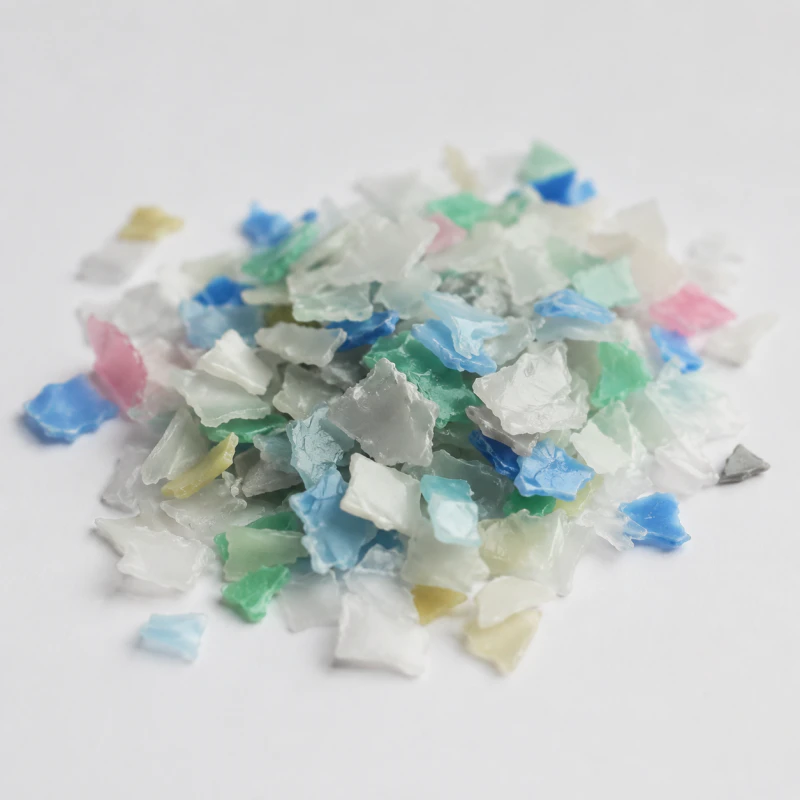
NIR HDPE Flake Sorting Solution
NIR HDPE flake sorting solutions are designed to separate high-density polyethylene (HDPE) flakes from mixed plastic recycling streams using near-infrared material identification technology. During plastic recycling, shredded and washed flakes may contain PET, PP, PVC, PS, and other unwanted polymers. These materials can reduce the consistency of recycled HDPE and create challenges during extrusion and pellet production.
By combining near-infrared spectroscopy, intelligent material classification, and automatic separation, an NIR HDPE flake sorting system helps recycling facilities identify target HDPE flakes and remove detectable non-HDPE materials. Depending on the feed composition and required output, the solution can be configured for HDPE recovery, polymer separation, or additional color sorting.
This solution is suitable for plastic washing plants, post-consumer recycling facilities, rigid plastic recycling lines, and recycled resin manufacturers. The sorting process can be integrated after shredding, washing, and drying to improve material consistency before downstream processing.
Challenges in HDPE Flake Recycling
After shredding and washing, plastic flakes from different containers and packaging products may become mixed together. Because many plastic polymers can have similar colors and physical appearances, visual inspection alone may not provide sufficient information for reliable material separation. Residual labels, contamination, moisture, and inconsistent flake sizes can also affect sorting performance.
NIR-based sorting identifies material according to its spectral response, helping distinguish HDPE from many other identifiable polymers. The system can then separate target and non-target flakes according to the configured sorting criteria.
| Recycling Challenge | NIR Sorting Approach | Potential Benefit |
|---|---|---|
| HDPE flakes mixed with PET | Identify and separate distinguishable polymer types using suitable NIR sensors. | Reduced PET contamination in the HDPE stream. |
| Mixed HDPE and PP flakes | Classify target and non-target flakes according to their detectable spectral characteristics. | Improved polymer separation. |
| Mixed plastic flakes from different sources | Apply material-specific sorting rules to the prepared feed stream. | More consistent recovered material. |
| Remaining unwanted flakes after washing | Use additional optical sorting to reject detectable non-target materials. | Better control of downstream feed quality. |
How the NIR HDPE Flake Sorting Solution Works
The sorting line typically combines material preparation, NIR detection, intelligent classification, and automatic separation. Proper feed preparation is important because flakes must be presented consistently for the sensors to identify individual pieces. The exact process depends on the incoming material, contamination level, and required output specifications.
Flake Preparation and Uniform Feeding
Plastic flakes are transferred from upstream washing and drying equipment to the sorting system. The material should be sufficiently clean and dry for the selected sensor configuration, with a suitable size distribution and limited overlap. Screening or other preparation equipment may be used to remove fines and unsuitable particles before optical inspection.
Near-Infrared Material Identification
As the flakes pass through the inspection area, NIR sensors analyze their spectral response. Different polymer types exhibit different spectral characteristics, allowing a suitably configured system to identify many common plastics, including HDPE, PET, and PP.
NIR identification has important limitations. Carbon-black or other strongly light-absorbing materials may be difficult for conventional NIR systems to identify. Surface contamination, moisture, overlapping flakes, multilayer structures, and certain additives can also affect detection. Representative feed testing is recommended to confirm the suitability of the technology for the target materials.
Intelligent Classification of Target Flakes
The control system evaluates the detected material information and classifies flakes according to the selected sorting program. The system can be configured to retain identifiable HDPE flakes while rejecting selected non-HDPE materials. Where required, color recognition can be incorporated through a suitable additional optical configuration.
Automatic Flake Separation
After classification, the separation mechanism directs selected flakes into the appropriate output streams. In air-ejection systems, accurately timed air jets remove target or reject particles from the main material flow. The separation settings are adjusted according to the material properties, feed distribution, and desired balance between recovery and purity.
Output Inspection and Reprocessing
The recovered HDPE flakes can be sent to storage, blending, extrusion, or pelletizing, depending on the recycling line. Where the incoming material is highly mixed or the final product requires tighter specifications, a second sorting stage or additional quality-control process may be considered.
Which Materials Can Be Separated from HDPE Flakes?
NIR HDPE flake sorting is intended to separate identifiable polymer types from a prepared plastic flake stream. The materials that can be reliably distinguished depend on the sensor configuration, feed condition, flake characteristics, and sorting settings.
| Material Category | Typical Sources | Sorting Objective |
|---|---|---|
| HDPE flakes | Detergent bottles, milk containers, household chemical packaging, rigid HDPE products | Recover the target HDPE fraction. |
| PET flakes | Beverage bottles and PET packaging | Remove identifiable PET contamination. |
| PP flakes | Caps, closures, tubs, and selected rigid packaging | Separate identifiable non-target PP material. |
| PVC and PS flakes | Selected packaging and rigid plastic products | Reject these materials when detectable and included in the sorting program. |
| Mixed-color HDPE flakes | Colored bottles, containers, and rigid packaging | Separate selected colors when suitable color-detection equipment is installed. |
Sorting Configurations for Different HDPE Recycling Applications
Not every HDPE recycling plant processes the same type of material. Some facilities receive relatively uniform flakes from a dedicated bottle stream, while others handle mixed rigid plastic waste with several polymer types. The sorting configuration should match the feed composition and the intended recycled product.
| Feedstock | Recommended Approach | Target Result |
|---|---|---|
| HDPE flakes mixed with PET and PP | NIR-based polymer identification and rejection of selected non-target flakes. | A more consistent HDPE fraction. |
| Mixed-color HDPE flakes | Combine material identification with suitable color-sorting technology where required. | Separate color fractions for different applications. |
| Post-consumer rigid plastic flakes | Prepare the material through washing, drying, screening, and NIR sorting as appropriate. | Reduce identifiable polymer contamination. |
| HDPE flakes requiring additional purity control | Evaluate repeat sorting or complementary inspection based on the residual contaminants. | Improve control over remaining non-target material. |
Integration into a Plastic Recycling Line
NIR HDPE flake sorting is commonly integrated after the flakes have been shredded, washed, and dried. At this stage, the material is more suitable for controlled optical inspection than untreated mixed waste. Screening and consistent distribution help reduce the presence of fines and overlapping particles, supporting more reliable sorting conditions.
A typical process may include shredding, washing, friction cleaning, rinsing, drying, screening, NIR flake sorting, and downstream extrusion. The actual sequence varies according to the source of the plastic, the level of contamination, and the specifications of the recycled resin.
Where a facility also needs to remove unwanted bottles before shredding, an optical HDPE bottle sorting solution can be considered as an upstream stage. Combining bottle sorting and flake sorting may provide additional control over material quality, provided the extra stages are justified by the feedstock and output requirements.
Applications of NIR HDPE Flake Sorting
Rigid plastic recycling: Separate HDPE flakes from mixed rigid plastic streams containing identifiable PET, PP, PS, and other non-target materials.
Post-consumer packaging recycling: Process flakes produced from used detergent bottles, milk containers, household chemical packaging, and other HDPE products.
Plastic washing plants: Improve the consistency of washed and dried flakes before they enter extrusion or pelletizing equipment.
Recycled resin manufacturing: Prepare more consistent HDPE feedstock for manufacturers that require controlled polymer composition and material quality.
Mixed plastic recovery facilities: Add material identification and automated separation to recycling lines that handle variable plastic feedstocks.
Benefits of an NIR HDPE Flake Sorting Solution
Improved polymer separation: NIR identification can distinguish many common polymer types, helping reduce the presence of identifiable non-HDPE flakes in the target stream.
More consistent recycled feedstock: Removing selected unwanted polymers can help improve material consistency before extrusion and further processing.
Automated classification: Optical detection and automatic separation support continuous processing of prepared plastic flakes and reduce dependence on manual identification for defined sorting tasks.
Flexible sorting strategies: The solution can be configured around the incoming polymer mix, required output, and the need for additional color or quality classification.
Integration with existing equipment: NIR flake sorting can be incorporated into suitable washing and recycling lines, subject to feed preparation, available space, and process requirements.
Factors to Consider When Designing an NIR HDPE Flake Sorting Line
Successful sorting depends on more than the choice of sensor. The feed should be prepared appropriately, and the sorting equipment must be matched to the flake size, moisture condition, material composition, and required throughput. Representative testing helps establish realistic expectations for purity and recovery.
| Design Factor | Considerations |
|---|---|
| Polymer composition | Determine which polymers need to be recovered or rejected. |
| Flake size and shape | Check whether the material can be distributed consistently for sensor inspection and separation. |
| Moisture and cleanliness | Evaluate the effect of residual water, labels, dirt, and surface contamination on detection. |
| Dark and carbon-black materials | Confirm whether the selected sensor can identify the specific dark plastics in the feed. |
| Processing capacity | Match the equipment configuration and feeding system to the required throughput. |
| Output quality requirements | Define acceptable contamination levels, target purity, and material recovery objectives. |
Frequently Asked Questions
Can NIR sorting separate HDPE flakes from PET flakes?
Yes. A suitably configured NIR sorting system can distinguish many HDPE and PET flakes based on their spectral characteristics. Actual performance depends on the sensor, material presentation, surface condition, moisture, and the composition of the feed.
Can NIR sorting separate HDPE from PP?
NIR systems can identify many HDPE and PP materials under appropriate conditions. The ability to separate them depends on the installed sensor, the properties of the flakes, and the sorting settings. Representative testing is recommended before confirming expected results.
Can conventional NIR sorting identify black HDPE flakes?
Conventional NIR systems can have difficulty identifying carbon-black and some other strongly light-absorbing plastics because they may not provide a sufficient usable spectral response. The performance of any alternative detection method should be evaluated for the specific material stream.
Does NIR sorting remove dirt, labels, and all other impurities?
NIR sorting primarily identifies materials according to their detectable spectral characteristics. It does not replace washing, label removal, screening, or other cleaning processes, and it cannot guarantee removal of every contaminant. Feed preparation and downstream treatment remain important.
Can NIR HDPE flake sorting guarantee food-grade recycled plastic?
No. NIR sorting helps separate polymer types but does not by itself establish food-contact suitability. Food-grade recycled plastic requires appropriate feedstock controls, validated decontamination and recycling processes, and compliance with applicable regulatory requirements.
Customized NIR HDPE Flake Sorting Solutions
Every plastic recycling plant has different feed materials, contamination levels, processing capacities, and output specifications. An effective NIR HDPE flake sorting solution should be designed around the actual polymer composition, flake condition, and quality requirements of the recovered material.
Whether your objective is to separate HDPE from PET and PP, improve the consistency of washed plastic flakes, or add an optical sorting stage to an existing recycling line, representative material testing can help identify a suitable configuration.
Contact our team with details about your feedstock, flake size, processing capacity, and target output quality to discuss an NIR HDPE flake sorting solution for your recycling operation.