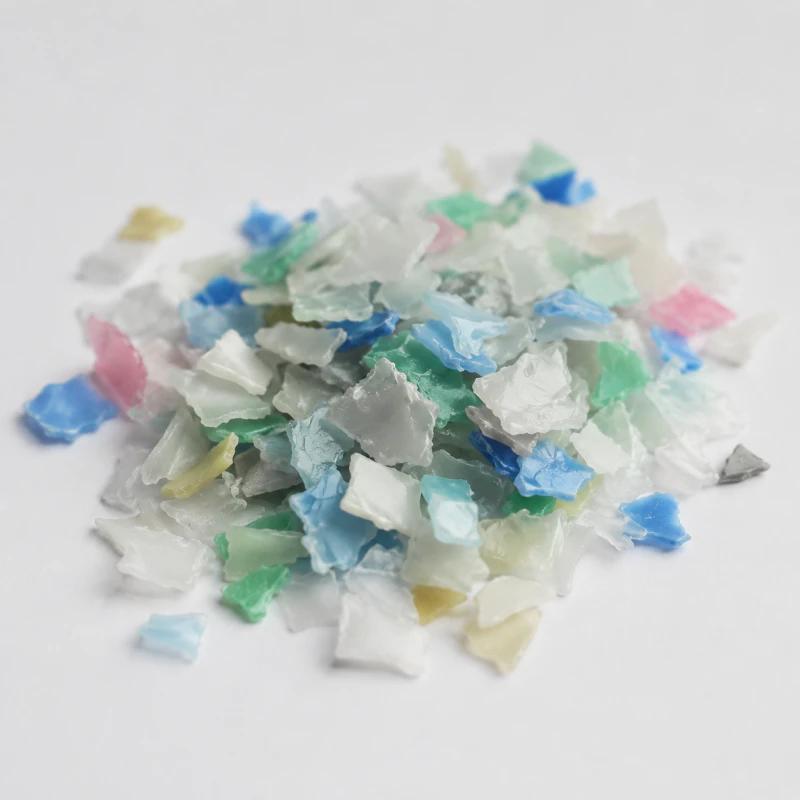
Improve Recycled Plastic Quality with Mixed-Flake Sorting
Mixed plastic flakes can contain several polymer types, different colors, residual labels, fine particles, and other contaminants after shredding and washing. When these materials enter an extrusion or pelletizing line without sufficient separation, incompatible polymers and unwanted residues may reduce the consistency of the recycled product. A mixed-flake plastic sorting solution addresses these challenges by combining suitable material preparation, optical identification, and targeted rejection to produce cleaner and more consistent output fractions.
The appropriate system depends on the composition of the incoming flakes and the quality requirements of the final product. A recycling facility processing mixed packaging flakes may prioritize PET, PE, and PP separation, while an operation handling engineering plastics may need a different sorting strategy. Rather than relying on a single machine for every task, an effective solution defines the target polymers, identifies the main contamination risks, and selects the sorting stages that provide measurable benefits to the overall recycling process.
For facilities upgrading an existing line, the first step is to determine whether the main problem is polymer cross-contamination, unwanted colors, foreign materials, or inconsistent feedstock. This assessment helps establish whether optical sorting should be installed after washing and drying, used as a polishing stage before extrusion, or integrated into a wider material recovery process.
Sorting Challenges in Mixed Plastic Flake Recycling
The appearance of plastic flakes alone does not always reveal their polymer composition. Different plastics may share similar colors and surface characteristics, while flakes made from the same polymer may vary considerably in transparency, thickness, and shape. The sorting process must therefore consider both material identification and the physical condition of the feedstock.
| Sorting Challenge | Potential Impact | Recommended Approach |
|---|---|---|
| Mixed polymer composition | Incompatible materials may reduce the consistency of recycled pellets. | Use NIR-based polymer identification where the target materials are detectable. |
| Mixed colors and opaque flakes | Output color may not meet the requirements of the intended application. | Add camera-based color sorting when color consistency is an important specification. |
| Labels, residual particles, and foreign materials | Contaminants may affect product appearance and downstream processing. | Combine screening, washing, metal removal, and optical sorting as required by the feedstock. |
| Overlapping flakes and excessive fines | Material identification and individual flake rejection can become less reliable. | Improve size classification, feeding uniformity, and material presentation before optical detection. |
| Black or difficult-to-identify plastics | Some materials may not be reliably classified using conventional NIR alone. | Evaluate alternative sensing methods or a separate treatment route through feedstock testing. |
These challenges are interconnected. For example, installing a more advanced sensor will not necessarily solve poor sorting results if the flakes are heavily overlapped, too wet, or mixed with excessive fines. Effective system design therefore addresses material preparation and detection together instead of treating the optical sorter as an isolated piece of equipment.
How the Mixed-Flake Sorting Process Works
A typical mixed-flake sorting line uses several stages to prepare the material, identify unwanted fractions, and collect the selected output. The exact configuration varies according to the feedstock, target polymers, existing equipment, and required product specifications.
Material Preparation and Size Classification
Shredded plastic flakes are screened to remove excessive fines and separate unsuitable particle sizes where necessary. Washing and drying may be required when the feedstock contains dirt, adhesives, residual liquids, or moisture that could interfere with material handling or optical detection. Before sorting, the flakes should be distributed as evenly as practical so that individual particles can pass through the detection area with minimal overlap.
Polymer Identification and Color Detection
Near-infrared spectroscopy can identify many common plastics by analyzing their characteristic spectral responses. Depending on the sensor configuration and the material being processed, this can support separation of detectable polymers such as PET, PE, and PP. Visible-light cameras can provide complementary information about color and visible surface characteristics, helping distinguish clear, colored, or otherwise visually different flakes.
The available identification functions depend on the actual sensor package and sorting software. Not every machine includes every sensor type, and not every polymer or additive can be distinguished reliably under all operating conditions. Target materials should be evaluated using representative production samples before the final equipment configuration is selected.
Selective Ejection and Output Collection
After the system classifies the detected flakes, a controlled ejection system directs selected particles into a reject stream or a designated product stream, depending on the machine's configuration. Proper timing and stable material presentation are important because flakes vary in size, shape, and trajectory. The separated fractions are then collected for further processing, storage, or quality inspection.
Some applications require more than one sorting pass. A first pass may remove the dominant unwanted polymer, while a later pass improves the quality of the retained fraction. Whether a second pass is necessary depends on the incoming contamination level, acceptable material loss, equipment capacity, and the purity requirements of the final product.
Choose the Right Sorting Technology for Each Polymer Stream
The best technology combination depends on what must be separated and which properties can be detected reliably. Polymer identification, color classification, and foreign-material removal are different sorting tasks, so the system should be configured around the specific objective rather than assuming that one sensor can solve every problem.
| Technology | Primary Function | Suitable Applications | Important Considerations |
|---|---|---|---|
| Near-Infrared (NIR) Sorting | Identifies many polymers through their spectral characteristics. | Separation of detectable PET, PE, PP, and other compatible polymer fractions. | Performance depends on polymer type, surface condition, additives, and sensor capabilities. Carbon-black plastics can be difficult for conventional NIR systems. |
| Visible-Light Color Sorting | Distinguishes visible color differences and selected surface characteristics. | Clear, light-colored, and colored flakes where appearance is a key quality requirement. | Similar-looking polymers may still require a suitable material-identification sensor. |
| Metal Separation | Removes ferrous or non-ferrous metal contaminants using suitable magnetic or metal-separation equipment. | Plastic flakes containing metal fragments or processing-related metallic contamination. | The equipment type and position should match the metal contaminants and particle sizes expected in the feed. |
| Screening and Air Classification | Separates material according to particle size or selected physical properties. | Fine removal, feed preparation, and selected lightweight contaminant separation. | These processes complement optical identification but do not independently identify every polymer type. |
For a line focused on PE and PP flakes, NIR identification may be central to polymer separation, with color sorting added if the final product requires tighter color control. For a PET recycling line, the system may instead focus on rejecting unwanted polymers and colored or opaque fractions where the selected sensors can distinguish them. If the material contains a significant proportion of black plastics, multilayer packaging, or other difficult fractions, a separate feasibility assessment is recommended before specifying the sorting equipment.
Application-Specific Mixed-Flake Sorting Solutions
Mixed-flake sorting requirements vary across recycling streams. The following examples illustrate how a sorting line can be adapted to different feedstock compositions and product targets.
Mixed PET, PE, and PP Packaging Flakes
Packaging recycling streams may contain flakes from bottles, caps, containers, tubs, and other discarded products. When these materials are processed together, the resulting flakes can include several polymers with different processing characteristics. A suitable sorting line can use NIR-based identification to separate detectable polymer fractions, followed by color classification where needed. Screening and washing should be considered as part of the wider process when labels, adhesives, and fine contaminants are present.
Mixed Rigid Plastic Flakes
Rigid plastic recycling may involve flakes produced from containers, household products, crates, and other molded items. Depending on the source, the stream may contain HDPE, PP, PET, and additional engineering plastics. The solution should begin with an assessment of the expected polymer composition and the quality of the shredded material. Sensor selection and sorting passes can then be configured to recover the target polymer while controlling the amount of usable material sent to reject.
Post-Industrial Plastic Flakes
Manufacturing scrap can provide a more consistent feedstock when the production source and resin grades are known. However, mixed production waste may still contain multiple polymers, color variants, printed material, or contamination from handling and processing. A sorting system can separate suitable fractions for reprocessing or pelletizing, provided that the target materials are compatible with the available detection technology and the intended reuse requirements.
Mixed Engineering Plastic Flakes
Flakes recovered from electrical equipment, appliances, automotive components, and other durable products may contain ABS, PS, PC, and additional engineering polymers. These streams can be more challenging than common packaging flakes because additives, coatings, flame retardants, and mixed product histories may affect identification and material value. The solution may require specialized sensor evaluation, metal removal, and additional separation stages. Where restricted substances or regulated additives are a concern, optical sorting should be integrated with appropriate testing and compliance procedures rather than treated as a substitute for chemical analysis.
System Configuration and Integration
A mixed-flake sorting solution should fit the existing recycling line wherever practical. The main design decisions include feed preparation, sensor selection, the number of sorting stages, reject handling, and the connection between the sorter and downstream equipment. These decisions should be based on actual material samples and operating requirements instead of relying on a nominal machine capacity alone.
| System Component | Role in the Line | Design Considerations |
|---|---|---|
| Feeding and conveying | Provides a stable and controlled flow of flakes. | Match feeding capacity to flake size, bulk density, and the sorter configuration. |
| Screening and preparation | Removes unsuitable particle sizes and prepares the feed for detection. | Evaluate fines, moisture, residual labels, and the need for washing or drying. |
| Optical sorting equipment | Identifies and separates the selected material fractions. | Select sensors, chute width, and sorting passes according to tested feedstock performance. |
| Reject collection | Collects unwanted fractions for disposal, further recovery, or separate treatment. | Allow enough capacity for variable contamination levels and avoid material accumulation. |
| Quality inspection | Checks output composition and confirms whether the product meets its intended specification. | Use representative sampling and record purity, recovery, and reject composition. |
The sorter should also be assessed against the operating conditions of the facility, including available floor space, conveying height, compressed-air supply where pneumatic ejection is used, electrical requirements, dust control, and access for routine cleaning. Integration planning should account for the full material route from feed preparation to product collection, not just the footprint of the sorting machine.
How to Evaluate Sorting Performance
The effectiveness of a mixed-flake sorting solution should be assessed using more than a single purity figure. A system that produces a highly pure fraction but rejects too much usable material may not deliver the best overall recovery. Conversely, a high recovery rate may be commercially unsuitable if too many unwanted polymers remain in the product.
| Performance Indicator | What It Measures | Why It Matters |
|---|---|---|
| Product purity | The proportion of the target material in the sorted product. | Indicates whether the output meets the buyer's or downstream process's quality requirements. |
| Recovery rate | The proportion of the target material successfully recovered into the desired product stream. | Helps identify losses of valuable material during separation. |
| Processing throughput | The amount of feedstock processed over a defined period. | Shows whether the sorting line can support the plant's production requirements. |
| Reject composition | The quantity of target material lost with the rejected fraction and the contaminants removed. | Helps balance purity against recovery and identify opportunities for process adjustment. |
| Output consistency | The stability of product quality across different batches and operating periods. | Supports reliable downstream extrusion, pelletizing, and customer specifications. |
Before finalizing a system, recyclers should provide representative samples that reflect normal feedstock as well as difficult operating conditions. Testing should document the target material, major contaminants, particle-size distribution, moisture condition, and expected operating rate. Where possible, the test should measure both the purity of the output and the recovery of valuable polymers so that the final configuration reflects the actual production objective.
Frequently Asked Questions
Can one sorting line separate PET, PE, and PP flakes?
A properly configured line may separate detectable PET, PE, and PP fractions using suitable optical identification technology. However, the actual result depends on the sensor package, flake condition, polymer composition, additives, and degree of overlap. Testing representative samples is the most reliable way to determine whether one machine or multiple sorting stages are required.
Can a mixed-flake sorter remove black plastic flakes?
Black plastic flakes containing carbon black can be difficult for conventional NIR systems because the pigment absorbs much of the near-infrared radiation used for polymer identification. The suitability of alternative detection methods depends on the specific material and the required separation. If black plastics form a significant part of the feedstock, their composition should be assessed before choosing the sorting technology.
Should sorting take place before or after washing?
The best position depends on the feedstock and the sorting objective. Removing large contaminants before washing or size reduction can help protect downstream equipment, while sorting washed and dried flakes can support polymer separation when surface contamination and moisture would otherwise interfere with detection. Some recycling lines use sorting at more than one point to remove unwanted materials early and improve the quality of the final flakes.
Can a mixed-flake sorting solution handle different flake sizes?
The acceptable particle-size range depends on the machine design, feeding system, sensor arrangement, and ejection capability. A broad or inconsistent size distribution may require screening into more uniform fractions before optical sorting. The recommended operating range should be confirmed with the equipment supplier using the actual material rather than assumed from a general description of the machine.
Will optical sorting guarantee a specific purity level?
No single purity level can be guaranteed for every feedstock. Results depend on the initial material composition, contamination level, particle presentation, selected sensors, sorting settings, and the number of passes. A representative material test can establish realistic performance expectations and help determine the balance between product purity, material recovery, and throughput.
Build a Mixed-Flake Sorting Solution Around Your Material
An effective mixed-flake plastic sorting line starts with a clear understanding of the incoming material and the intended output. By combining appropriate preparation equipment, polymer identification, color classification where required, and performance testing, recyclers can develop a system that addresses their actual separation challenges rather than relying on a generic machine configuration.
Whether you process mixed packaging flakes, rigid plastic scrap, post-industrial material, or engineering plastics, the right solution should be selected according to polymer composition, particle size, contamination profile, production capacity, and final product specifications. Share your material samples and sorting targets with our team to evaluate suitable sensor options, process stages, and system integration requirements for your recycling line.