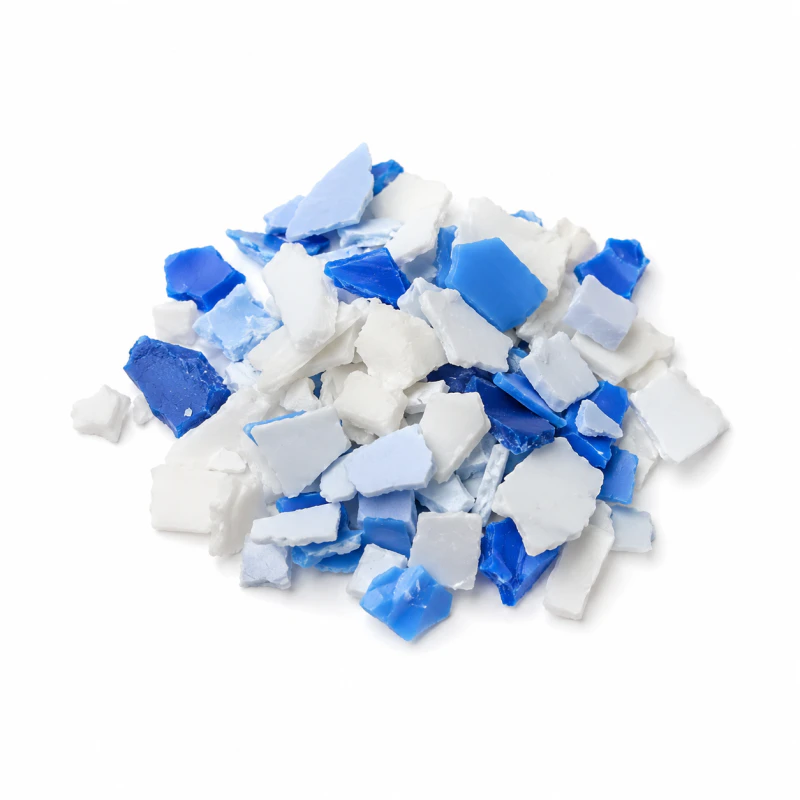
HDPE Flake Sorting Solution for Cleaner, More Consistent Recycled Material
An HDPE flake sorting solution helps plastic recyclers overcome the quality problems that often remain after shredding, washing, and preliminary separation. Recycled high-density polyethylene (HDPE) flakes may contain unwanted colors, mixed polymers, residual labels, and other contaminants that limit their suitability for downstream manufacturing. When these problems are not controlled, recyclers may face inconsistent product quality, additional reprocessing costs, and difficulty meeting customer specifications.
The challenge is not simply to install a sorting machine. It is to identify why the current recycling line is producing inconsistent flakes and determine which separation stages can address those problems. A plant producing natural HDPE flakes, for example, may need to remove colored material, while a facility processing mixed rigid-plastic waste may need to reduce PET, PP, PVC, or other detectable non-HDPE contamination. These applications require different sorting priorities and should not automatically use the same equipment configuration.
Our HDPE flake sorting solution is designed around the characteristics of the incoming material and the quality requirements of the final product. Depending on the application, the process may combine optical color sorting, near-infrared (NIR) polymer identification, screening, drying, and other suitable separation methods. The objective is to improve accepted-material quality while balancing HDPE recovery, processing capacity, and operating costs.
What HDPE Recycling Problems Need to Be Solved?
HDPE recycling plants often experience several quality problems at the same time. A color sorter may remove visibly different flakes but leave transparent or similarly colored non-HDPE plastics in the accepted stream. A polymer sorter may help identify certain incompatible plastics but may not address every appearance-related requirement. If the material is dusty, wet, or unevenly distributed, even suitable sorting equipment may struggle to achieve consistent results.
A practical solution begins by connecting each production problem with an appropriate separation method. This prevents a common investment mistake: choosing equipment based on a general product description without confirming whether it can detect the contaminants responsible for the plant's actual quality losses.
| Customer Pain Point | Impact on Recycling Operations | Solution Approach |
|---|---|---|
| Natural HDPE mixed with colored flakes | Color variation can make the output unsuitable for products that require a consistent appearance. | Configure optical color sorting to separate detectable unwanted colors according to the required output grade. |
| PET, PP, or PVC mixed into HDPE flakes | Incompatible polymers may affect downstream melting, extrusion, or finished-product consistency. | Evaluate NIR polymer identification or another suitable separation method for the specific contaminant materials. |
| High manual sorting workload | Labor-intensive inspection can become difficult to maintain as processing volume increases. | Use automated sorting for detectable target materials while retaining appropriate process inspection and quality control. |
| Unstable output quality between batches | Changes in feed composition can lead to inconsistent accepted material and repeated adjustments. | Review feed preparation, material distribution, sensor configuration, and sorting parameters as one integrated process. |
| Usable HDPE lost with rejected material | Aggressive rejection settings may remove contaminants but also discard valuable target flakes. | Evaluate purity and recovery together, and determine whether reject-stream inspection or a secondary sorting stage is justified. |
| Sorting performance falls at higher feed rates | Overlapping flakes and uneven feeding can reduce the opportunity to identify and separate individual particles. | Optimize screening, feeding, particle distribution, and operating capacity for the actual material. |
When Color Contamination Reduces the Value of HDPE Flakes
Natural and light-colored HDPE flakes are often subject to stricter appearance requirements than mixed-color recycled material. If blue, green, or other colored flakes remain in a stream intended for natural HDPE applications, the final product may show unwanted color variation. This can restrict the range of products for which the material is suitable or require the recycler to sell it into a less demanding application.
An optical color sorting stage can help separate flakes with detectable visible color differences. The sorting criteria should reflect the intended product rather than simply rejecting every colored particle. For example, a plant may need to recover a natural HDPE fraction, produce separate color categories, or remove only selected colors. Testing the actual flakes helps establish which separation strategy is practical and how much usable HDPE may be lost during rejection.
When Mixed Polymers Affect Recycled HDPE Quality
A different problem occurs when HDPE flakes contain PET, PP, PVC, or other incompatible polymers. These contaminants may have similar visible colors to the target HDPE, so a conventional color sorter cannot reliably distinguish them based on color alone. Depending on their type and concentration, unwanted polymers may interfere with downstream processing or affect the properties and consistency of recycled products.
Where polymer contamination is the main concern, a suitable NIR sorting system may help identify HDPE and distinguish it from detectable non-target plastics. However, not every material can be recognized under every operating condition. Black plastics, multilayer materials, surface contamination, particle overlap, and certain material compositions can create detection challenges. The proposed sensor configuration should therefore be checked against representative feedstock before the complete solution is specified.
When Existing Sorting Equipment Is Not Delivering the Expected Results
Adding another machine does not always solve a quality problem. If flakes enter the inspection area with excessive moisture, dust, fines, or overlapping particles, detection and separation may remain inconsistent. If the existing equipment is designed for color classification but the main contaminant is a different polymer, changing the color settings alone is unlikely to provide a reliable solution.
A process review helps identify whether the limitation comes from the sorting technology, material preparation, feeding conditions, or an unsuitable rejection strategy. This is particularly important for plants upgrading an existing recycling line, where the best solution may involve improving one process stage rather than replacing the entire system.
How We Build an HDPE Flake Sorting Solution Around Your Material
The recommended sorting process should follow the material's actual journey through the recycling line. Rather than specifying the same sequence for every project, the solution should identify the main contamination sources, establish the required output grade, and assign each separation task to a suitable process stage.
For many HDPE flake applications, the central decision is whether the plant primarily needs color separation, polymer separation, or both. Feed preparation and quality inspection then support these stages by helping create suitable operating conditions and verify the result.
| Solution Stage | What Happens | Problem Addressed |
|---|---|---|
| Feedstock assessment | Review representative HDPE flakes, target contaminants, color distribution, particle size, and current line conditions. | Avoids selecting equipment without understanding the actual separation requirement. |
| Material preparation | Use suitable screening, drying, dust removal, and controlled feeding where required. | Reduces feed-related problems that can interfere with individual particle detection. |
| Color separation | Apply optical color sorting when visible color differences are relevant to the target product specification. | Controls unwanted color variation in the accepted HDPE stream. |
| Polymer separation | Evaluate NIR identification or other suitable methods when specific non-HDPE polymers must be removed. | Reduces detectable incompatible polymers that color sorting alone may not distinguish. |
| Output verification | Inspect accepted and rejected samples and assess purity, recovery, and remaining contamination. | Shows whether the proposed process meets the intended quality target without unnecessary material loss. |
Not every HDPE recycling line needs all these stages. A relatively clean production-scrap stream may need only a targeted color separation stage, while mixed post-consumer flakes may require more extensive preparation and polymer identification. The purpose of solution design is to select the necessary combination based on material evidence, not to add equipment that does not address a defined production problem.
Choosing the Right Sorting Method for HDPE Flakes
The choice of sorting technology should be based on what needs to be separated. Optical color sorting evaluates visible appearance, while NIR technology evaluates spectral responses associated with material composition. These methods solve different problems and should not be treated as interchangeable.
When the incoming HDPE flakes contain both color variation and non-HDPE plastics, a combined configuration may be worth evaluating. The order of the sorting stages should depend on the contamination profile, feed preparation requirements, and the quality of the material entering each stage.
| Sorting Requirement | Potential Technology | Important Consideration |
|---|---|---|
| Natural HDPE versus colored HDPE | Optical color sorting | The target colors must be visually distinguishable under the intended sorting conditions. |
| HDPE versus detectable PET, PP, or PVC | Suitable NIR polymer identification | Confirm that the sensor can identify the actual contaminants, including their color and surface condition. |
| Color and polymer contamination together | A combination of color sorting and polymer identification, where justified | Assess the order of stages, additional operating costs, recovery, and final output quality. |
| Excessive fines or uneven particle sizes | Screening and feed preparation | Confirm the particle-size range supported by the selected sorting equipment. |
| Metal contamination | Suitable magnetic or metal separation equipment | Select the method according to the type of metal and the layout of the recycling line. |
Black HDPE flakes require particular attention. Conventional visible-light color sorting may have limited ability to distinguish dark particles, and standard NIR systems may also struggle with certain carbon-black plastics. If black material is present in significant quantities, the detection method should be verified with actual samples rather than assumed to work based on polymer type alone.
Solution Configurations for Different HDPE Recycling Challenges
Different recycling operations have different commercial priorities. Some need to upgrade mixed packaging flakes into a more consistent natural-color stream, while others focus on removing non-HDPE plastics before extrusion. The following examples illustrate how a solution can be matched to the production problem; the final equipment combination should be confirmed through material assessment and testing.
| Recycling Scenario | Main Production Problem | Solution Direction |
|---|---|---|
| Natural HDPE flakes for light-colored products | Colored flakes remain in the accepted stream and affect product appearance. | Prioritize visible color separation and assess the amount of natural HDPE recovered. |
| Mixed rigid packaging flakes | The feed contains multiple polymers with overlapping color characteristics. | Assess polymer identification alongside suitable feed preparation and any required color sorting. |
| Post-industrial HDPE scrap | Rejected parts or production offcuts contain unwanted colors or occasional mixed materials. | Use a targeted sorting stage if the material is sufficiently consistent and the contaminants are detectable. |
| HDPE flakes before extrusion or compounding | Residual contaminants create uncertainty in feedstock consistency and processing quality. | Define contaminant limits with the downstream processor and select the necessary purification stages. |
| Existing recycling line upgrade | The current process fails to remove a specific contaminant or creates excessive material loss. | Identify the limiting stage and integrate targeted sorting or feed-preparation improvements. |
How to Improve HDPE Purity Without Sacrificing Too Much Recovery
For recycling plant operators, high purity is only part of the objective. A sorting system that rejects a large quantity of material may reduce contamination but also discard usable HDPE. Conversely, a conservative rejection setting may preserve more target material while allowing unwanted flakes to remain. The correct operating strategy depends on the acceptable contamination level, the value of the recovered HDPE, and the requirements of the next processing stage.
A meaningful performance assessment should therefore consider accepted-material purity, target-material recovery, reject quantity, and effective throughput together. The incoming feed composition and test conditions must also be documented; otherwise, performance figures from different tests may not be directly comparable.
If the rejected stream contains a significant amount of recoverable HDPE, a secondary inspection or re-sorting stage may be worth evaluating. This should only be introduced when the expected material recovery justifies the additional equipment, handling, and operating cost. The aim is not to maximize rejection, but to produce an accepted stream that meets the intended quality specification with a commercially reasonable level of material loss.
What We Need to Design Your HDPE Flake Sorting Solution
A suitable solution starts with a clear understanding of the problem your plant needs to solve. The more accurately the incoming material and target product are defined, the easier it is to assess whether color sorting, NIR identification, supplementary separation, or changes to feed preparation are appropriate.
| Project Information | Why It Matters |
|---|---|
| Incoming material | Identify whether the feed consists of washed bottle flakes, mixed rigid-plastic flakes, or relatively uniform production scrap. |
| Main contaminants | Determine whether the priority is colored HDPE, PET, PP, PVC, black plastics, metals, or other unwanted material. |
| Required output | Establish the required color grade, acceptable polymer contamination, and intended downstream application. |
| Processing capacity | Match the proposed sorting process to the expected feed rate and the conditions required for reliable particle separation. |
| Existing production line | Identify available washing, drying, screening, conveying, and separation equipment to avoid unnecessary duplication. |
| Sample testing objectives | Verify contaminant removal, accepted-material purity, target recovery, and the operating conditions under which results are achieved. |
If possible, provide representative photographs or samples of both the incoming flakes and the material you want to obtain. Include examples of the contaminants that cause the greatest problems and describe whether the main concern is color consistency, polymer purity, material loss, or production capacity. These details provide a practical basis for evaluating a suitable configuration instead of relying on assumptions about the feedstock.
Frequently Asked Questions About HDPE Flake Sorting Solutions
The following questions address common concerns when selecting or upgrading an HDPE flake sorting process. Actual performance depends on material characteristics, equipment configuration, and the required output specification.
Can an HDPE flake sorting solution separate natural HDPE from colored flakes?
A suitable optical color sorter can separate natural or light-colored HDPE from detectable colored flakes when the visual differences are sufficient for the selected system. The achievable separation depends on the incoming color distribution, particle presentation, and the required output grade. Sample testing can help determine an appropriate sorting strategy and evaluate target-material recovery.
Can the solution remove PET, PP, and PVC from HDPE flakes?
Suitable NIR polymer identification may help separate detectable PET, PP, PVC, and other non-HDPE materials from the target stream. However, the system must be configured for the contaminants actually present, and not every particle is necessarily detectable under all conditions. A color sorter alone should not be relied upon to distinguish polymers that look similar.
Should I choose a color sorter or an NIR sorter?
Choose according to the main quality problem. Optical color sorting is appropriate when visible color differences are the primary concern, while NIR sorting is considered when polymer composition must be distinguished. If both requirements are important, a combined solution may be evaluated using representative feedstock and defined output targets.
Can black HDPE flakes be identified reliably?
Black plastics can be difficult for conventional visible-light color sorting, and some carbon-black materials can also limit the performance of standard NIR systems. Detection depends on the pigment, polymer composition, sensor design, and operating conditions. Black HDPE should be tested directly before selecting a technology or committing to a performance target.
Will adding another sorting stage improve the output?
An additional stage may improve material quality when it addresses a specific contaminant that the existing process does not remove effectively. However, it can also increase equipment cost, material handling, and potential target-material loss. The decision should be based on test results, the required output specification, and the balance between purity, recovery, and operating cost.
Can an HDPE flake sorter be added to an existing recycling line?
In many cases, an optical sorting stage can be integrated into an existing line, provided that the material is prepared appropriately and the available space, feeding arrangement, utilities, and outlet handling are suitable. The integration plan should account for upstream washing, drying, and screening as well as downstream storage or extrusion. The existing line should be reviewed before equipment selection.
How can I confirm whether a proposed solution is suitable for my material?
Start with representative incoming material and a clear definition of the required output. The evaluation should document the feed conditions, contaminants, accepted-material purity, target recovery, reject quantity, and test settings. If the plant has several distinct contamination problems, the assessment should establish which problems are addressed by each proposed sorting stage.
Get an HDPE Flake Sorting Solution for Your Specific Production Challenge
If your HDPE recycling line is struggling with colored flakes, mixed polymers, inconsistent output quality, or excessive rejection of usable material, the next step is to identify the cause and match it with an appropriate sorting process. A suitable solution may involve optical color sorting, NIR polymer identification, improved feed preparation, or a combination of stages selected for your actual feedstock.
Tell us what you are processing, which contaminants you need to remove, and what quality you need to achieve. Share your target capacity, the current sorting problem, and photographs or representative samples where available. Our team can use these details to discuss a suitable HDPE flake sorting configuration and the key performance factors that should be verified before equipment selection.
Discuss Your HDPE Sorting ChallengeRequest a Solution Assessment
The recommended configuration should be confirmed against actual material samples and project requirements. This helps establish a realistic balance between contaminant removal, product quality, target-material recovery, and processing capacity.