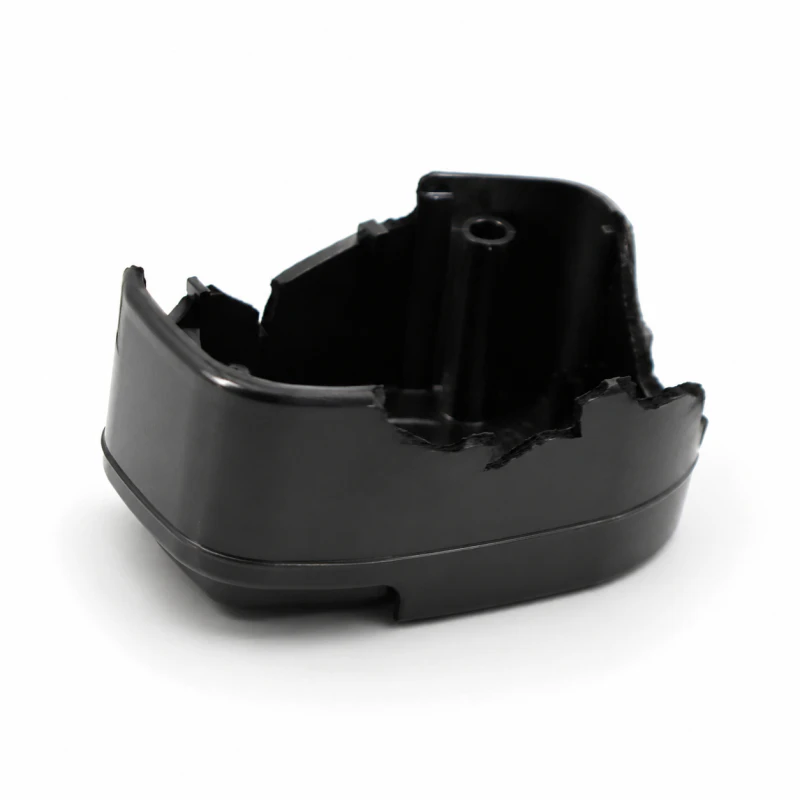
What Is a Black Plastic Sorting Solution?
A black plastic sorting solution is a recycling process designed to recover usable dark-colored plastics from mixed plastic waste, manufacturing scrap, and complex post-consumer material streams. Black plastics are widely used in automotive components, electrical and electronic housings, packaging, containers, and industrial products. However, many conventional near-infrared (NIR) sorting systems have difficulty identifying plastics containing carbon black because this pigment absorbs much of the near-infrared radiation needed for polymer recognition. As a result, black polypropylene (PP), black acrylonitrile butadiene styrene (ABS), and other dark polymer fractions may remain mixed with incompatible materials or be directed into residual waste. A dedicated solution addresses this challenge by matching the feed material with suitable detection technology, preparation equipment, and separation stages.
Rather than relying on a single machine to handle every material, an effective black plastic sorting line begins with an assessment of the waste stream. The source of the material, polymer composition, particle size, carbon-black content, surface contamination, and required output quality all influence the system design. Depending on these conditions, the line may combine shredding, screening, metal removal, conventional optical sorting, specialized material identification, and downstream quality control. The objective is to recover the target polymer while controlling unwanted plastics, metal fragments, rubber, labels, and other contaminants. For recyclers, this approach can improve the consistency and usability of recovered dark plastics and help turn a difficult residual fraction into a more valuable secondary raw material.
The most suitable configuration depends on the actual detection capability of the selected equipment. Conventional NIR may remain useful for identifying detectable non-black plastics in a mixed stream, while specialized sensing technologies may be evaluated for dark materials that standard NIR cannot reliably recognize. No single sensor should be assumed to identify every black polymer under all operating conditions. Representative material testing is therefore an important step before selecting equipment or setting production targets.
Why Is Black Plastic Difficult to Sort?
The main challenge in black plastic recycling is not simply the material's visible color. It is the interaction between pigments, polymer composition, surface condition, and the detection method used by the sorting system. Carbon black is commonly added to plastics to provide a dark appearance and other material properties, but it can absorb the radiation used by conventional NIR sensors. When the sensor cannot obtain a sufficiently clear polymer signature, the system may be unable to distinguish the target material from other black plastics. This makes it difficult to separate materials such as PP, ABS, high-impact polystyrene (HIPS), polyethylene (PE), and other polymers when they appear similar to the human eye.
Feed preparation creates another important challenge. Black plastic waste may arrive as bulky molded parts, shredded fragments, mixed rigid plastics, or material recovered from end-of-life vehicles and electronic equipment. These streams can contain metal inserts, rubber, foam, mineral fillers, coatings, labels, and residues from previous use. If the material is not adequately liberated and distributed, overlapping particles can conceal useful surfaces or cause a sensor to receive a mixed signal. Excessive dust, moisture, and inconsistent particle sizes can also affect the stability of the sorting process. A reliable solution must therefore address both material identification and the physical condition of the feed.
| Sorting challenge | Effect on recycling | Recommended process consideration |
|---|---|---|
| Carbon-black pigmentation | Conventional NIR may not reliably identify the polymer. | Evaluate specialized sensing methods using representative black plastic samples. |
| Similar-looking black polymers | Different resin types may enter the same recovered fraction. | Confirm polymer discrimination capability and define the required product specification. |
| Mixed particle sizes and overlapping material | Detection and physical separation become less consistent. | Use appropriate shredding, screening, spreading, and feeding equipment. |
| Metal, rubber, dust, or surface residues | Contaminants can interfere with sorting or reduce recovered material quality. | Introduce suitable contaminant removal and cleaning stages before or after optical sorting. |
| Variable feed composition | Sorting results can change as the proportion of different materials changes. | Assess feed variability and validate operating settings against different sample batches. |
How Does a Black Plastic Sorting Line Work?
A black plastic sorting line typically combines material preparation, detection, separation, and output inspection. The exact arrangement depends on whether the incoming waste consists of rigid packaging, automotive plastics, electronic housings, manufacturing rejects, or mixed shredded plastics. The purpose of each stage is to prepare the material for reliable identification, remove contaminants that can interfere with separation, and produce a recovered fraction suitable for the next recycling process. A line should be designed around the target polymer and the required output quality rather than treating all dark plastics as one interchangeable material category.
Material Preparation and Feed Distribution
Incoming material is first inspected to determine whether it requires shredding, screening, metal removal, or other preparation. Bulky products may need size reduction so that individual components can be presented to the sorting system, while already-shredded feed may require screening to remove fines and oversized pieces. Ferrous and non-ferrous metal removal can be particularly important for material recovered from electronic waste or end-of-life vehicles. Where washing is required, the process should also provide suitable drying and handling before sensor-based sorting. Proper preparation helps reduce the risk of overlapping particles and improves the consistency of the material stream.
After preparation, a conveyor or feeding system distributes the material across the available sorting width. Consistent presentation is important because the detection system must evaluate individual particles before the separation mechanism acts on them. Feed rate, belt loading, particle size, and spacing should be adjusted to match the selected machine. Excessive material depth can conceal particles, while an uneven feed may create gaps in utilization or reduce separation consistency. The ideal operating conditions should be established during material trials and then maintained through routine monitoring.
Material Identification and Target Selection
When the material passes through the detection zone, the selected sensor system collects information that can be used to classify particles. Conventional NIR technology identifies many polymers through their characteristic spectral response, but its effectiveness can be limited when carbon-black pigmentation absorbs the relevant radiation. For challenging dark plastics, the available alternatives depend on the equipment design and the material being processed. Specialized infrared approaches, hyperspectral methods, and other material-identification technologies may be considered where they are technically suitable. Their ability to distinguish the required black polymers must be confirmed with actual feed samples, particularly when the stream contains multiple engineering plastics, additives, coatings, or fillers.
The control system uses the configured sorting criteria to determine which particles should be recovered and which should be rejected. The target may be a specific polymer, a group of compatible plastics, or a contaminant fraction that must be removed from a product stream. In systems equipped with suitable high-speed air ejection, timed air jets direct selected particles toward a designated outlet. Other configurations may use a different separation mechanism according to the machine design. Accurate separation depends on detection performance, particle spacing, control timing, and the physical behavior of the material as it leaves the conveyor.
Product Recovery and Quality Control
Separated material is collected in designated outlets for further processing, storage, or inspection. Depending on the recycling line, the recovered fraction may proceed to washing, extrusion, compounding, or another material preparation stage. A secondary sorting pass can be considered when the first pass does not achieve the required balance between recovery and purity. This is especially relevant when the feed contains several similar dark polymers or when valuable target material is mixed with contaminants that are difficult to distinguish in a single operation. The final process should include sampling and quality checks so that the recovered fraction can be evaluated against the intended application.
Quality control should examine more than visual appearance. A uniformly black output does not necessarily consist of a single polymer, and a visually clean fraction may still contain incompatible resins, fillers, metals, or other unwanted components. Depending on the end use, quality assessment may include polymer identification, contamination analysis, melt-processing behavior, and other relevant material tests. Sorting equipment is one part of a recycling system; downstream processing and quality assurance remain necessary when the recovered material is intended for demanding manufacturing applications.
Which Black Plastics Can Be Recovered?
The range of recoverable black plastics depends on the sensor configuration, feed preparation, particle characteristics, and the separation criteria selected for the application. Common target materials include black PP from automotive components and rigid products, black ABS from electrical and electronic housings, and selected PE or PS fractions from packaging and industrial waste. Other engineering plastics may be present in electronic equipment, appliances, and vehicle components, but their identification requires a suitable system and validation against the actual resin mixture. A solution should not be specified solely on the basis of visible color because black appearance does not indicate polymer identity.
Mixed black plastic streams can also contain glass-fiber-reinforced materials, mineral-filled compounds, rubber-modified plastics, flame-retardant grades, and components with metallic coatings or inserts. These characteristics may affect both sensor response and the value of the recovered material. If a processor needs to distinguish between different ABS grades or separate one engineering plastic from another, the supplier must confirm that the selected detection method can make that distinction under realistic operating conditions. Where the sensor cannot reliably identify the required categories, additional processing or a more selective technology may be necessary.
| Target material | Typical source | Key sorting consideration |
|---|---|---|
| Black polypropylene (PP) | Automotive trim, molded components, containers, and industrial products | Distinguish the target PP fraction from other dark polymers and filled compounds. |
| Black ABS | Electronic housings, appliances, and automotive components | Check polymer identification capability and whether additional grade separation is required. |
| Black polyethylene (PE) | Rigid containers, industrial products, and selected packaging waste | Assess whether the stream contains compatible PE grades or mixed polymers. |
| Black PS and HIPS | Selected packaging, appliance parts, and electronic products | Validate separation from ABS and other similar-looking plastics. |
| Other dark engineering plastics | Automotive, electrical, electronic, and industrial equipment | Confirm sensor compatibility with the specific resin, additives, and compound formulation. |
These materials are potential targets rather than a guarantee that one machine can separate every listed polymer. The practical sorting range must be established through a representative sample test. When the incoming stream contains several black polymers with different recycling requirements, a staged process may be more appropriate than a single black-versus-non-black separation.
Recommended Process Configurations for Different Applications
Black plastic sorting requirements vary significantly by waste source. Packaging waste may contain labels, food residues, different container polymers, and lightweight pieces, whereas automotive and electronic waste may contain reinforced plastics, metals, rubber, foam, and mixed resin grades. Manufacturing scrap is often more consistent because the production process and resin specification are known, although colorants and additives can still affect detection. Selecting a process according to the feed source helps avoid unnecessary equipment and makes it easier to establish meaningful quality targets.
| Application | Typical feed condition | Potential process arrangement |
|---|---|---|
| Black plastic packaging | Mixed rigid containers, trays, caps, labels, and residual contamination | Screening and contaminant removal, suitable polymer identification, target recovery, and output inspection. |
| Automotive plastic recycling | Shredded dark plastics mixed with metals, rubber, foam, and reinforced components | Metal separation, size classification, feed preparation, specialized material sorting, and secondary cleaning where required. |
| Electrical and electronic waste | Black ABS, HIPS, other engineering plastics, metal fragments, and mixed compounds | Mechanical preparation, metal removal, material identification, and additional grade separation when justified. |
| Post-industrial plastic scrap | Rejected molded parts, sprues, offcuts, and production regrind | Size reduction where needed, screening, identification of incompatible material, and recovery for controlled reuse. |
| Mixed dark plastic flakes | Shredded particles with varying polymer types, sizes, and surface conditions | Particle-size control, consistent spreading, sensor-based separation, and a secondary pass if required. |
For relatively uniform production scrap, the process may require fewer separation stages than a mixed post-consumer stream. By contrast, automotive and electronic waste often need more extensive mechanical preparation because different materials are physically attached or mixed together. Black packaging streams should be evaluated for their actual polymer mix and contamination level rather than assumed to consist of one resin type. In all cases, the best configuration is the one that can consistently meet the intended output specification at the required line capacity.
Black Plastic Sorting Technology and Conventional NIR Sorting
Conventional NIR sorting is widely used in plastic recycling because many common polymers have identifiable near-infrared spectral responses. It can be suitable for detectable PET, PE, PP, and other plastic fractions when the material condition and sensor configuration are appropriate. However, carbon-black pigmentation can absorb the radiation required for conventional NIR identification, creating a significant limitation for some dark plastic waste. A sorting line that relies only on conventional NIR may therefore leave a portion of the black plastic stream unidentified or classify it as a residual fraction.
Specialized technologies may offer additional options, but they should be evaluated according to the material and separation task. Different infrared approaches, hyperspectral systems, and other material-analysis methods do not have identical capabilities, and performance depends on sensor design, pigment formulation, particle condition, and the polymers that must be distinguished. LIBS and other specialized analytical methods also have application-specific limitations and should not be assumed to provide universal identification of every black polymer. Material testing is the most reliable way to establish whether a proposed system can separate the target materials and what additional process stages may be needed.
| Evaluation factor | Conventional NIR sorting | Specialized black plastic sorting |
|---|---|---|
| Primary role | Identification of polymers with detectable NIR signatures | Addressing selected dark plastic streams that conventional NIR may not identify reliably |
| Carbon-black materials | Performance may be significantly limited by light absorption. | Suitability depends on the specific sensing technology and must be verified by testing. |
| Polymer discrimination | Effective for many detectable polymers under suitable feed conditions | Depends on the target resins, additives, fillers, and capabilities of the selected sensor. |
| Best selection method | Confirm polymer recognition, feed preparation, and output requirements. | Conduct application-specific trials with representative black plastic samples. |
In some facilities, conventional NIR and specialized black plastic sorting can complement each other. A conventional optical sorter may recover suitable light-colored or otherwise detectable polymers, while a dedicated process handles a concentrated dark fraction. This arrangement can reduce the amount of mixed material entering the specialized sorting stage. However, the sequence should be determined by the feed composition, the capabilities of each machine, and the required recovery and purity levels. A combined line should be validated as a complete process rather than selected solely because two technologies are available.
How to Select the Right Black Plastic Sorting Solution
The selection process should begin with a representative analysis of the incoming material. Identify the main polymers, the proportion of black and dark-colored pieces, the range of particle sizes, and the presence of metals, rubber, labels, coatings, moisture, or other contaminants. It is also important to establish whether the objective is to recover one specific polymer, remove black plastics from a mixed stream, or produce several separate material grades. These objectives require different sorting strategies, so defining the target product before choosing equipment helps prevent a mismatch between machine capabilities and production needs.
Next, assess the detection technology against the actual pigment and resin combination. A system that can detect one type of dark plastic should not automatically be assumed to distinguish every other black polymer. Ask the equipment supplier to test the materials that are most important to your operation, including difficult samples with representative additives and surface conditions. The trial should record the composition of the feed, the amount of target material recovered, the contaminants remaining in the product, and the quantity of target material lost to the reject stream. These results provide a more useful basis for equipment selection than a general claim about sorting accuracy.
Capacity and integration must also be considered together. The nominal throughput of a sorting machine does not necessarily represent the capacity achievable with every feedstock. Material density, particle size, particle spacing, contamination, and the selectivity of the sorting task can all affect operating performance. Confirm that the feeder, conveyor, sensor system, separation mechanism, and collection outlets can work together at the planned production rate. The design should also allow for routine access to sensor windows, air nozzles where fitted, dust-control components, and other maintenance points.
| Selection criterion | Questions to resolve | Why it matters |
|---|---|---|
| Feed composition | Which polymers, pigments, fillers, and contaminants are present? | Determines whether the selected sensing method can identify the target materials. |
| Target output | Is the goal to recover one polymer, separate several grades, or remove a contaminant fraction? | Defines the sorting criteria and whether multiple separation stages are required. |
| Throughput and particle size | What is the actual feed rate, size range, and particle presentation? | Helps determine equipment width, feeding arrangements, and realistic operating capacity. |
| Recovery and purity | How much target material must be recovered, and what contamination level is acceptable? | Establishes measurable acceptance criteria for material trials and production. |
| Plant integration | What conveyors, screens, metal separators, washing equipment, and downstream processes are already installed? | Helps ensure that the sorter operates as part of a balanced recycling line. |
| Operating support | What maintenance, operator training, spare parts, and technical support are available? | Supports stable operation and helps manage long-term operating costs. |
Before making a final investment decision, request a material test using samples that represent normal operating conditions rather than only clean, easy-to-sort pieces. Agree on how the feed and output will be sampled, how target recovery and product purity will be calculated, and how rejected material will be assessed. Where the intended output is destined for a demanding application, include the relevant downstream material-quality tests in the evaluation. This approach provides a clearer basis for comparing equipment options and planning a black plastic sorting line that meets practical production requirements.
Benefits of an Integrated Black Plastic Sorting Solution
An integrated black plastic sorting solution can help recycling facilities recover dark polymer fractions that might otherwise remain in mixed waste or be sent to a lower-value outlet. Separating compatible plastics can make downstream washing, extrusion, and compounding processes easier to manage, while reducing the amount of unwanted material entering the recovered product. For facilities handling automotive or electronic waste, better identification of selected black polymers may also create opportunities to recover materials from complex waste streams. The actual benefits depend on the proportion of recoverable material in the feed, the performance of the detection system, and the market requirements for the final recyclate.
Process integration is just as important as sensor selection. Appropriate screening, metal removal, feeding, and contaminant-control stages can improve the conditions under which the sorter operates. Consistent feed presentation can help reduce particle overlap, while regular inspection of the detection area and separation mechanism supports stable performance. Where the incoming material changes frequently, operating procedures should include periodic sampling and adjustments based on measured results rather than assumptions about feed composition.
From an operational perspective, a well-designed solution gives plant managers a clearer way to measure the performance of dark plastic recovery. Useful indicators include feed throughput, target recovery, product purity, reject composition, downtime, compressed-air consumption where applicable, and maintenance requirements. These measurements can help identify whether losses are caused by poor preparation, limitations in material detection, inadequate particle spacing, or the selected sorting criteria. With the process evaluated as a whole, facilities can make more informed decisions about equipment configuration, additional sorting passes, and future line improvements.
Frequently Asked Questions About Black Plastic Sorting
The following answers address common considerations when evaluating a black plastic sorting system for an industrial recycling operation. Actual equipment capability should always be confirmed against the feed material and the required output specification.
Can a conventional NIR sorter identify all black plastics?
No. Conventional NIR systems can identify many polymers when their spectral signals are detectable, but carbon-black pigmentation can absorb the near-infrared radiation used for polymer recognition. This can make some black plastics difficult or impossible for a particular NIR system to identify reliably. The limitation depends on the material formulation and sensor design, so it is important to evaluate the actual feed rather than assume that every dark-colored item will behave in the same way. Specialized sensing methods may provide additional options, but their performance must be confirmed through material testing.
Can one machine separate black PP from black ABS?
It depends on the sensor technology, the formulation of the plastics, and the operating conditions. PP and ABS have different polymer compositions, but black pigments, fillers, reinforcements, coatings, and contamination can influence the available sensor signals. A machine should only be specified for this separation if its detection system can distinguish the relevant materials under representative production conditions. A sample test should measure both the amount of each target polymer recovered and the amount of incompatible material remaining in the product.
Does black plastic sorting require shredding or washing first?
Not in every application, but many recycling streams benefit from suitable preparation before sorting. Bulky components may need shredding, while mixed flakes may require screening, metal removal, or cleaning to improve particle presentation and reduce contamination. Washing may be appropriate when residues or surface contamination affect downstream processing, but the material must be compatible with the selected sorting system and prepared to the required condition before detection. The necessary steps should be determined by the incoming material rather than applied identically to every black plastic stream.
Can black plastic sorting recover material from automotive and electronic waste?
It can be considered for selected dark polymer fractions from both sources, including certain PP and ABS materials. However, automotive and electronic waste can contain complex mixtures of metals, rubber, foam, reinforced plastics, coatings, and different resin grades. Mechanical preparation and contaminant removal may therefore be necessary before specialized material identification. The feasibility of separating specific polymers or grades depends on the sensor capability and the composition of the prepared feed, so representative testing is essential before committing to a particular process design.
How can the sorting performance be evaluated before purchase?
A representative material trial is the preferred way to evaluate whether a proposed system is suitable for a specific black plastic application. The test should use a sample that reflects the normal range of polymer types, pigments, particle sizes, and contaminants in the actual feed. Record the feed composition, target recovery, product purity, reject composition, and operating conditions so that the results can be interpreted consistently. If the required output quality is not achieved in one pass, the trial can help determine whether improved preparation, different sorting criteria, an additional pass, or another technology should be considered.
Develop a Black Plastic Sorting Solution for Your Material
Every black plastic recycling project has its own feed characteristics, target polymers, production requirements, and quality expectations. A suitable sorting solution should therefore be developed from the material outward, starting with an analysis of the waste stream and followed by technology selection, process configuration, and performance validation. Whether the objective is to recover black PP from rigid products, separate selected ABS fractions from electronic waste, or improve the recovery of dark plastics from a mixed recycling line, the system must be matched to the specific materials being processed.
Before selecting equipment, prepare information about the source of the material, estimated throughput, particle-size range, target polymer fractions, contamination level, and intended end use. Representative samples can then be used to evaluate detection capability and establish realistic recovery and purity expectations. This helps determine whether a dedicated black plastic sorter, a combination of optical sorting technologies, or a broader multi-stage recycling process is the most suitable option for the project.
With appropriate material preparation, validated detection technology, and systematic quality control, black plastic sorting can become a practical part of a more efficient recycling operation. The goal is not simply to separate dark-colored pieces, but to recover useful polymer fractions that meet the requirements of downstream processing and material buyers.