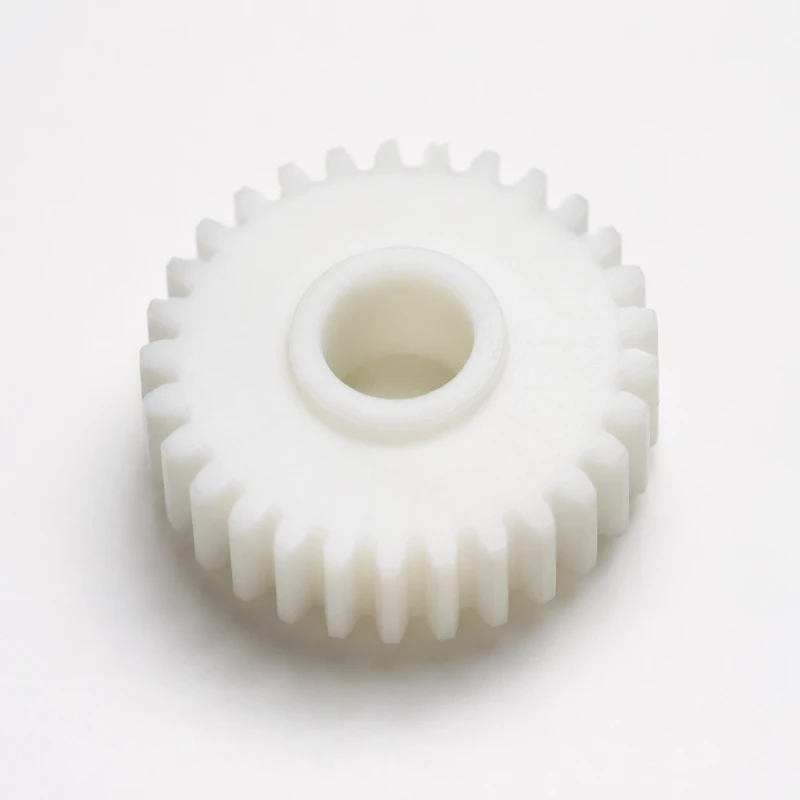
What Is a POM Sorting Machine?
A POM sorting machine is an automated industrial system designed to separate polyoxymethylene (often called acetal or polyacetal) from mixed plastic waste streams. This equipment is also referred to as an acetal sorting machine or a POM plastic sorter. Unlike simple metal or density separators, a POM sorter relies on near-infrared (NIR) spectroscopy and advanced machine vision to detect and identify the unique molecular fingerprint of polyoxymethylene. The machine operates by emitting focused NIR light onto a stream of material traveling on a high-speed conveyor belt. As the light interacts with each particle, the polyoxymethylene produces a specific reflected spectral signature, which the onboard computer system matches against a pre-loaded reference library. When a match is confirmed, the system triggers a bank of precisely timed air jets that eject the targeted POM particle into a separate collection chute. The ability to isolate acetal from a mix of other common plastics—such as polypropylene (PP), polyethylene (PE), or polyethylene terephthalate (PET)—gives recycling facilities and plastic processors a powerful tool for recovering high-value engineering plastics. Because the sorting mechanism is chemical-based rather than physical, the yield and purity of the output can exceed 99.5% in a single pass when handling clean, brightly colored material. The POM sorter thus represents a critical component in modern closed-loop recycling systems where consistency and quality control are paramount.
These systems have become indispensable in high-volume operations where manual sorting is impractical or inaccurate. A typical POM plastic sorter features a vibratory feeder that evenly distributes granules or flakes onto a belt, followed by a scanning tunnel equipped with sensor heads ranging from two to eight channels. The sensor heads combine NIR detectors with optional visible-light cameras that add an extra layer of recognition based on color or opacity. With belt speeds often reaching three meters per second and processing capacities from four hundred to two thousand five hundred kilograms per hour, these machines deliver a level of throughput that significantly reduces labor costs while boosting output quality. Since the detection technology depends on transparent or translucent surface properties, operators should note that heavily pigmented or black POM particles cannot be reliably distinguished using NIR alone. That said, for the large proportion of light and natural acetal materials—common in automotive parts, electronic connectors, and consumer goods—the POM sorter delivers exceptional results. Its ability to maintain consistent purity across long production runs makes it a cornerstone of modern plastic recovery lines, providing both economic and environmental value by diverting valuable engineering polymers from landfills or incineration.
How Does a POM Sorting Machine Sort Plastics?
Understanding the step‑by‑step operation of a POM sorting machine helps operators appreciate the technology behind the high purity and speed. The entire process from infeed to sorted output occurs in a matter of seconds, yet it involves a finely orchestrated sequence of detection, computation, and actuation. First, material feeding ensures that the plastic particles enter the sorting zone in a uniform, single‑layer stream. A vibratory feeder, often combined with a chute or a conveyor belt, spreads the granules or flakes so that no two particles overlap. Overlapping material would confuse the sensor because reflected light from one piece could mask the signal from another. Achieving this single‑layer distribution is critical for consistent detection. The layer is then guided under a sensor array that houses both an NIR module and, in many models, a visible-light camera. The NIR sensor scans each particle in rapid succession, emitting infrared wavelengths and capturing the reflected spectrum. Each polymer—POM, PA, ABS, PET, and others—reflects a unique spectral signature, allowing the system to differentiate acetal from its neighbors with high accuracy.
After detection, the real‑time data processing stage begins. An onboard computer compares each particle’s spectral reading against a reference library containing the fingerprint of polyoxymethylene, along with other common plastics if multi‑polymer sorting is enabled. This comparison happens in fractions of a second, enabling the machine to calculate the exact instant when each recognized particle will pass the ejection nozzles. That timing is crucial because the air jets must fire at precisely the right moment to intercept the target material while leaving non‑target particles undisturbed. The pneumatic ejection stage consists of a bank of high‑speed compressed air valves that open and close in milliseconds. When the computer confirms a POM particle, air jets propel it out of the main stream into a dedicated collection hopper. Finally, a quality control step may include a secondary inspection camera that scans the ejected fraction to verify purity. Feedback loops within the control software can then adjust sensor thresholds or ejection timing to maintain optimal performance even as feed composition changes. Some manufacturers add a reprocessing loop that sends borderline or uncertain particles back to the sorter for a second pass. This multi‑stage system ensures that even small variations in particle shape, color, or surface contamination do not significantly degrade sorting accuracy. As a result, a well‑configured POM sorter can achieve purity levels that meet strict specifications for re‑feeding injection molding or extrusion processes.
What Plastics Can a POM Sorting Machine Detect?
A POM sorting machine is engineered to detect and separate polyoxymethylene (including both homopolymer and copolymer acetal) from mixed plastic streams by exploiting its distinct NIR signature. However, the machine’s capabilities extend beyond a single polymer type. When configured with an expanded reference library and multiple detection channels, the same equipment can also identify other engineering plastics such as nylon (PA), ABS, polycarbonate (PC), and even commodity plastics like PP, PE, and PET. This multi‑polymer sorting ability makes the system versatile for operations that receive mixed waste from automotive shredding, electronics dismantling, or post‑industrial scrap. The detection mechanism works best with particles that have shiny, smooth surfaces and light colors—especially translucent or white shades—because these reflect NIR efficiently. For POM specifically, natural (uncolored) or lightly tinted acetal granules yield the highest detection rates and purity levels. When the machine encounters POM flakes heavily contaminated with metal shavings, paper labels, or oil residues, a pre‑cleaning step (such as washing or air classification) is recommended to avoid interfering with the spectral scan. Because the ejection nozzles operate on particles typically ranging from two to about fifty millimeters, fine dust fractions below two millimeters may pass through without being captured.
It is equally important to understand what the machine cannot detect. Black POM particles, or any plastic that contains carbon black pigment, absorb NIR light entirely rather than reflecting it. This absorption renders the sensor blind to the material’s molecular fingerprint, meaning black acetal will not be recognized and will remain in the reject stream. Darkly colored POM—such as deep navy, forest green, or dark brown—can also be challenging, although some machines with high‑gain sensors may still detect certain shades if the surface has enough residual reflectivity. Deeply opaque materials that are coated or heavily pigmented pose similar limitations. For such fractions, operators must rely on alternative sorting technologies, such as density‑based separation (sink‑float tanks or hydrocyclones) or electrostatic separators. Additionally, the machine’s detection accuracy for very small particles (under about two millimeters) is limited because the sensor’s focal plane and the air jet’s force may not reliably isolate the material. Therefore, when designing a recycling line that includes a POM sorter, it is prudent to incorporate a screening stage to remove fines and a color‑sorting stage for dark material if black POM is present in substantial quantity. By combining the strengths of NIR‑based detection with complementary methods, a facility can achieve a comprehensive separation solution that recovers more value from every incoming ton of mixed plastic waste.
POM Sorting Machine Specifications
The performance of a POM sorting machine is defined by several key specifications that determine its suitability for a given operation. Processing capacity is one of the most important factors: typical models handle between 400 and 2,500 kilograms per hour, depending on particle size, material density, and the number of detection channels. A wider sorting width—ranging from 600 mm to 2,400 mm—allows larger volumes to pass under the sensors simultaneously. The number of channels, or sensor heads, directly influences detection precision, with two to eight channels covering the width. Higher channel counts mean that smaller particles can be more accurately identified, reducing false ejections. Purity levels after a single pass can reach 99.5% or higher when feed material is clean and properly prepared. This high purity is critical for customers who intend to sell the sorted POM as a prime recycled resin for injection molding or extrusion. Power consumption varies by machine size, typical consuming between 3.5 kilowatts for compact units and 12 kilowatts for large industrial models. These figures include the conveyor drive, sensor electronics, and compressed air system. While energy costs are a minor factor in the overall operating budget, selecting an appropriately sized sorter avoids overconsumption that erodes profit margins.
Additional specifications include belt speed—often adjustable from 1.5 to 3.0 meters per second—which directly correlates with throughput. Higher speeds may reduce detection accuracy for very small particles, so the speed should be matched to the particle size distribution. The sensor type is another key differentiator: machines equipped with hyperspectral NIR cameras provide more detailed spectral data, enabling detection of polymer blends or copolymers that simpler sensors might miss. Many units also include a visible‑light camera for color‑based sorting, which helps separate POM of one color grade from another. The operating environment should also be considered: dust‑proof enclosures and easy‑access panels simplify cleaning and maintenance, especially in facilities processing dusty regrind materials. Some models offer an integrated dust extraction port that connects to a central vacuum system, keeping the sensor windows clean. Finally, software and user interface features—such as touch‑screen calibration, automatic material library updates, and remote monitoring—are increasingly common. These capabilities reduce the need for specialized technicians and allow less experienced operators to maintain high sorting efficiency. When comparing models, it is advisable to request a performance guarantee based on your specific material sample, because actual results can vary depending on contamination levels, moisture, and particle shape. Requesting a test run with your own plastic mix ensures the chosen sorter will meet the promised purity and throughput in real‑world conditions.
POM Sorting vs. Density-Based Sorting
When evaluating the best method for separating POM from mixed plastics, it is essential to compare POM sorting machines (NIR‑based) with density‑based approaches such as sink‑float tanks or hydrocyclones. The fundamental difference lies in the detection principle: NIR sorters rely on the chemical spectral fingerprint of the polymer, while density‑based methods depend on the weight difference between materials. POM has a density of approximately 1.41 to 1.43 g/cm³, which is higher than polyethylene (≈0.95 g/cm³) and polypropylene (≈0.91 g/cm³) but similar to other engineering plastics like PA 6 (1.13 g/cm³) or PC (1.20 g/cm³). This means that density‑based separation alone cannot always isolate POM from other polymers with overlapping densities, especially when dealing with recycled flake containing fillers or mineral reinforcements. In contrast, an NIR‑based sorter can identify the acetal molecular signature with high specificity, even when the particle density is similar to that of other materials. As a result, purity levels from a well‑configured POM sorter often reach 99.5% or better, compared to the moderate purity (typically 95–98%) from a single density separation step, which may require multiple passes or additional processing stages to match the same consistency.
Another key distinction is the handling of dark or black POM. Density‑based methods work equally well on all colors, including black, because they only measure weight—they are blind to color. This makes sink‑float systems an effective complement to NIR sorters when a significant portion of the input stream is black POM. On the other hand, density separation usually requires a water bath or heavy liquid medium, which brings its own drawbacks: high water consumption, the need for drying downstream, and potential contamination of the plastic with the separation medium. NIR sorters operate as a dry process, saving water and energy while avoiding the need for dewatering and drying equipment. The choice between the two technologies also depends on throughput speed: NIR sorters work at belt speeds up to 3 m/s and process material in real‑time, while density‑based systems often operate in batches or at slower flow rates, especially if fines clog the separation medium. For a pure POM recycling operation handling clean, light‑colored flakes, the NIR sorter provides a faster, cleaner, and more precise solution. However, for feedstock containing heavy contaminants (such as metals, rubber, or high‑density fillers) or large volumes of black POM, a combination of density‑based pre‑separation followed by NIR fine‑sorting often produces the best overall yield and purity. The decision should be guided by a thorough material analysis: measure the proportion of black/dark acetal in your input, the level of non‑plastic contamination, and your target specifications for the sorted output.
What Industries Use POM Sorters?
POM sorting machines are employed across a wide range of industries where precision recovery of engineering plastics is economically and environmentally beneficial. The automotive parts recycling sector is one of the largest users, as polyoxymethylene is widely used in fuel system components (such as fuel caps, canisters, and lines), door handles, seat belt components, gear shift housings, and interior clips. When vehicles are shredded for metal recovery, the non‑metallic residue—commonly called automotive shredder residue (ASR)—contains a mix of plastics, rubber, foam, and textiles. An NIR‑based sorter can isolate acetal from this complex stream, yielding a clean, high‑value recyclate that can be sold back to compounders for use in non‑critical automotive parts. Many automotive recyclers have found that recovering POM from ASR significantly improves profit margins while diverting material from landfills. Similarly, electronics waste processing facilities rely on POM sorters to separate acetal from connectors, switches, housings, and internal frames found in disassembled appliances, computers, and mobile phones. The engineering plastic content in e‑waste is often underestimated, and a precise sorter can increase recovery rates by 10–20%.
Industrial plastic regrinding operations also benefit from implementing POM sorter technology. These facilities process factory scrap—such as injection molding sprues, runners, and rejected parts—that often contains a mix of different polymers due to multi‑material molds or mis‑sorting at the source. Using a POM sorter to clean the regrind stream reduces the risk of contamination in new parts and maintains higher material value. Large‑scale mixed plastic recycling facilities (MRFs) that handle post‑consumer streams also adopt these machines to isolate valuable engineering plastics from commodity resins. In these plants, the POM sorter is typically placed after a primary trommel screen and a manual sorting station, but before a final wash line. Consumer goods recycling is another emerging application: POM is found in everyday items such as zippers, buttons, handles, kitchen utensils, and small appliance parts. By adding a POM sorting step, recyclers can extract material that commands a premium price compared to mixed‑plastic residues. Overall, any facility that processes a significant volume of polyoxymethylene—whether from new production scrap, post‑industrial waste, or post‑consumer recycling—can justify the investment in a dedicated POM sorter based on the improved purity and yield it delivers. The trend toward stricter quality standards in the recycled plastics market further drives adoption, as brand owners increasingly require certified resins with consistent properties for their products.
How to Choose the Right POM Sorting Machine
Selecting a POM sorter requires careful evaluation of your material characteristics, production goals, and operational constraints. The first step is to thoroughly assess your input material. Determine the average particle size (whether flake or granule), the color distribution, and the presence of black or darkly colored POM. If your feed contains more than 5–10% black acetal, you may need a machine with additional detection capabilities—such as a visible‑light camera for color contrast—or plan on incorporating a downstream density‑based separator for this fraction. For lighter colors, a standard NIR sorter with high sensitivity will suffice. The particle size range is equally important because sensors and air jets are optimized for a specific size window; very fine dust (<2 or="" very="" large="" chunks="">80 mm) may require pre‑screening or a different sizer model. Next, define your throughput requirements. Estimate your daily or hourly processing volume and select a machine with capacity that matches. For example, if you need 2 tons per hour, a 1,200‑mm‑wide sorter with four detection channels is a typical choice. For higher throughputs (3–5 tons per hour), consider a 2,400‑mm width with six or eight channels.
Another crucial consideration is the trade‑off between purity and recovery. If your final product must meet a 99.9% purity specification (e.g., for food packaging or premium technical applications), you may need to operate at lower belt speeds, use a second sorting stage, or accept a slightly lower overall recovery rate (where some of the acetal is mistakenly ejected with the reject stream). Use the specification table as a baseline—most models guarantee ≥99.5% purity after a single pass with optimized settings, but achieving 99.9% may require extra equipment or process changes. Space and integration also matter: measure the available floor area and ensure the sorter can be aligned with existing conveyor systems, dust collection ducts, and electrical panels. Some manufacturers offer compact units that reduce footprint but may have lower capacity, so balance space savings with throughput. Look for software features that simplify operation: easy‑to‑update material libraries, automatic calibration routines, and remote diagnostic capabilities reduce downtime and training requirements. Finally, review after‑sale support offered by the supplier. Factory training, availability of spare parts, and a responsive technical support team can make a significant difference in uptime. Many buyers also request a demonstration using their own material sample to verify performance before committing to a purchase. By systematically addressing these factors, you can select a POM sorter that not only meets today’s needs but also adapts to future changes in feed composition or quality demands.
FAQ
What is the difference between black and white POM sorting?
Black POM cannot be sorted by NIR‑based machines because the carbon black pigment absorbs infrared light instead of reflecting it. This fundamental limitation means that a standard POM sorter will treat black acetal particles as background material and allow them to pass through to the reject stream. In contrast, white or natural POM reflects NIR strongly, enabling the sensor to detect its unique spectral fingerprint and achieve high sorting purity, often exceeding 99.5% in a single pass. To handle black POM, recyclers need to employ alternative technologies such as density‑based separators (sink‑float tanks, hydrocyclones) or, if the black surface has sufficient visible‑light contrast, a color sorter using cameras that operate in the visible spectrum. Some advanced hybrid machines combine NIR and visible‑light cameras but still cannot overcome the infrared absorption of carbon black. Therefore, if your incoming material contains a significant percentage of black POM, plan for a two‑stage sorting process: use a density‑ or color‑based method to remove the dark fraction first, then feed the remaining light material through the NIR sorter for final polishing. This combination achieves both high recovery and high purity, albeit with increased equipment and operating costs. For dedicated recycling lines processing mostly natural or lightly colored acetal, a standalone NIR sorter delivers excellent results and a faster return on investment.
Can a POM sorting machine handle dirty or dusty material?
Yes, but performance may decrease if dust covers the sensor window or blocks the air nozzles. Most industrial POM sorters are designed with integrated dust removal systems—such as built‑in air knives or vacuum ports—that help keep the optical path clear. However, heavily contaminated feed containing fine dust (<1 mm), sticky residues (such as oil or glue), or fibrous materials (like fabrics or paper) can interfere with detection and cause false ejections. For best results, we recommend installing a pre‑screening step before the main sorter. A vibrating screen or a rotating trommel can remove most fines and light contaminants, reducing the load on the NIR sensor and prolonging the life of the air valves. If the dust is oily or contains metal particles, a wash step (even a simple cold water rinse) may be necessary to ensure clean detection surfaces. Some manufacturers offer optional sensor window wipers or compressed air blow‑off bars that automatically clean the lens at regular intervals. Even with such features, it is prudent to schedule daily visual checks of the sensor area and weekly calibration runs using a clean reference sample. By controlling dust and ensuring a consistent particle surface, operators can maintain the high purity and throughput that the POM sorter is capable of delivering. Neglecting material cleanliness is one of the most common reasons for performance degradation, so invest in pre‑cleaning equipment proportionate to your feed quality.
How often does the sensor need calibration?
For most modern POM sorting machines, daily auto‑calibration is sufficient to maintain accurate detection. The automated routine typically runs each time the machine starts, using a reference tile or a small sample of known POM to self‑adjust the sensor sensitivity and zero point. In addition, a full manual calibration—during which a technician places a set of reference materials under the sensor and adjusts thresholds—is recommended every one to three months, depending on operating hours and feed variability. Facilities that process highly variable material (e.g., frequent changes in polymer mix, color, or contamination levels) may need manual calibration more often, perhaps every two weeks. The exact schedule should be defined in consultation with the machine supplier and based on historical data from your own production. Many advanced sorters now include continuous self‑monitoring: if the detection accuracy drops below a preset threshold, the system can alert operators or automatically trigger a recalibration routine. Keep in mind that calibration frequency also depends on environmental factors such as temperature, humidity, and ambient light levels. In dusty environments, sensor windows may need to be cleaned more frequently, which indirectly affects calibration stability. Maintaining a log of calibration dates and purity trends helps identify when intervention is required. As a general rule, if you notice a drop in sorted product purity or an increase in false ejections, a calibration check is the first troubleshooting step. Following these guidelines ensures that your POM sorter operates at peak efficiency throughout its service life.
What is the typical payback period for a POM sorting machine?
Payback periods for a POM sorting machine generally range from 12 to 18 months, depending on throughput, material value, and labor savings. A key driver of fast payback is the premium price that high‑purity recycled POM commands in the market—often 1.5 to 2 times the price of mixed plastic residue. Additionally, replacing manual sorting operators with an automated system eliminates labor costs, reduces error, and increases throughput. For a facility processing 10 tons of mixed plastic per day with 20% POM content, the revenue from recovered acetal can generate significant cash flow. On the cost side, a mid‑range POM sorter (1,200 mm width, 4 channels) may cost between $120,000 and $180,000, including installation and basic spare parts. Electricity consumption adds a few thousand dollars per year, and maintenance (mainly air valve replacement and sensor cleaning) is modest if the machine is kept in good condition. In many cases, the increased yield and purity alone cover the machine cost within the first year, especially if the facility previously sold mixed residue at low commodity prices or paid for disposal. To calculate your specific payback, estimate your current revenue from POM recovery (if applicable), then add the labor savings from eliminating manual sorting. Factor in the expected increase in selling price due to higher purity. A detailed ROI should also account for potential downtime, training time, and any need for pre‑cleaning equipment. Most suppliers offer free payback calculators based on your typical feed composition and output price assumptions. In short, a POM sorter is one of the most attractive investments in the plastics recycling industry because it quickly recovers high‑value material that was previously lost or undervalued.