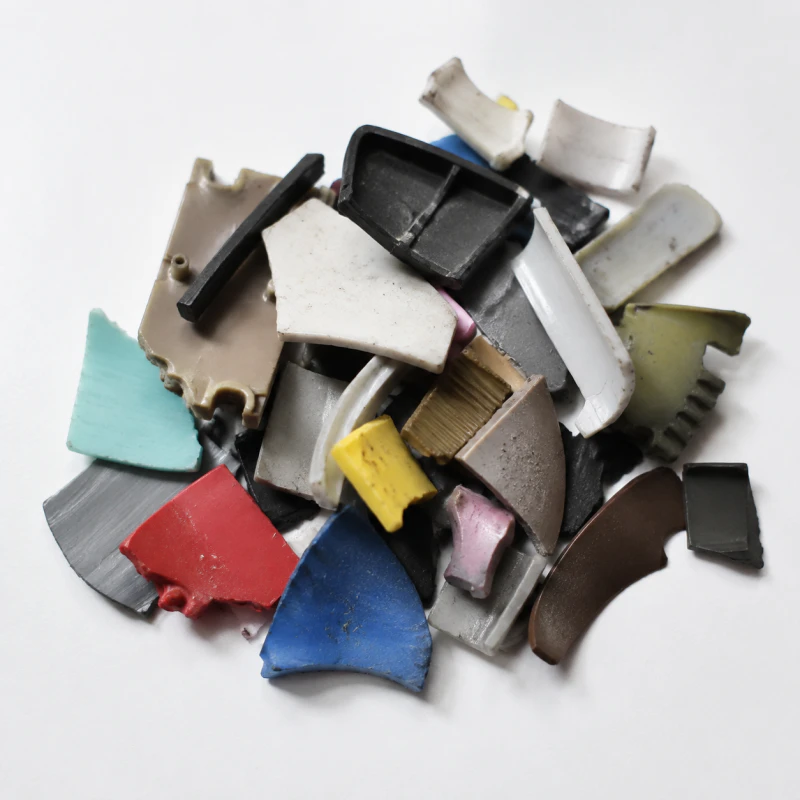
What Is a Scrap Plastic Sorting Machine?
A scrap plastic sorting machine is an automated industrial system designed to separate mixed post-consumer or post-industrial plastic waste by material type, color, or other physical properties. Also known as a plastic scrap sorter, it relies on near-infrared (NIR) sensors, color cameras, or laser scanners to scan individual particles or flakes on a moving conveyor belt. High-speed air ejectors then divert targeted materials into designated chutes, enabling precise recovery of valuable plastics from complex waste streams. This level of automation is critical for modern recycling facilities, where the ability to rapidly and accurately isolate polymers like PET, HDPE, or PP determines both the economic viability of the operation and the quality of the output material. Without such a sorter, manual picking would be slow, labor-intensive, and prone to error, particularly when dealing with high-volume streams of mixed-colored bottle flakes or shredded rigid containers.
Beyond its basic function of separating plastics, a scrap plastic sorting machine acts as the brain of an advanced resource recovery line. It integrates seamlessly with upstream equipment such as shredders, washers, and dryers, and downstream with granulators or extrusion lines. The real intelligence lies in the sensor fusion technology: while NIR identifies the polymer's chemical fingerprint, color cameras simultaneously evaluate visual attributes like transparency or dye content. Some top-tier models even use hyperspectral imaging to distinguish between different grades of the same polymer, such as food-grade versus non-food-grade PET. This capability is especially valuable in meeting the stringent quality requirements of end-users who demand contaminant-free regrind. By replacing outdated hand-sorting methods with a reliable, high-speed sensor-based system, a plastic scrap sorter helps recycling companies increase their throughput, reduce operational costs, and produce a more valuable commodity that commands higher prices in secondary markets.
Core Working Principle of a Plastic Scrap Sorter
The system first detects the chemical signature or color of each particle via sensor heads. A computer processor instantly compares readings against a programmed library. If a match occurs, a jet of compressed air fires to redirect that particle, achieving separation at speeds up to 3 meters per second. This split-second decision-making relies on advanced algorithms that filter out background noise from dust or humidity, ensuring that only true positives trigger ejection. The sensors, often mounted in a sealed optical chamber, use light sources in the near-infrared spectrum (typically 900–1700 nm) to capture reflectance patterns unique to each polymer type. Meanwhile, visible-light cameras handle color-based sorting, which is essential for applications like removing off-color flakes from a PET stream destined for clear bottle production.
The ejection mechanism is just as critical as the detection unit. High-speed solenoid valves, capable of cycling thousands of times per minute, open a precise burst of compressed air through strategically placed nozzles. Each nozzle covers a narrow lane of the conveyor, so multiple nozzles work together to cover the full sorting width. The air jet must be timed with millisecond accuracy to hit the target particle as it passes the ejection zone. If the timing is off, either a good particle is wasted or a contaminant slips through. Modern sorters use self-diagnostic software that monitors air pressure, valve response time, and sensor calibration continuously. Any drift in performance triggers an alert, allowing operators to recalibrate before sorting purity drops. This level of automation and feedback makes the plastic scrap sorter a reliable workhorse in any recycling line.
How Does a Scrap Plastic Sorter Sort Plastics?
The sorting process follows a clean, high‑speed workflow that begins with feed preparation. Scrap plastic is pre‑shredded, washed, and dried to ensure consistent particle size. This step is often underestimated, but it directly impacts sorting accuracy: irregularly sized flakes can cause false sensor readings or become entangled, leading to bridging on the conveyor. A good pre-processing system produces a uniform feed of 10–30 mm flakes, which allows the sensor to scan a flat, stable surface. After cleaning and drying, the material enters a vibration feeder that disperses it evenly across a single- or multi-lane conveyor belt. The belt speed, typically adjustable between 1 and 3 m/s, is set to match the throughput target—slower speeds improve detection accuracy for challenging materials like heavily pigmented or thin-walled flakes.
Once on the belt, detection begins in earnest. NIR sensors identify polymer types such as PET, PP, and PE, while color cameras detect dye variations or translucency. The sensing head often incorporates a white light source for color analysis and a separate NIR lamp for chemical recognition. These signals travel to an on-board computer that matches spectral data to a predefined "accept" or "reject" list. The computer runs proprietary pattern-recognition software that can be trained to identify even subtle differences, such as between PP copolymer and homopolymer grades. Following detection, high-speed solenoid valves activate air nozzles to blow undesired particles into a reject bin. The final step is collection: sorted fractions fall into separate containers for baling or further processing. Because the entire operation is dry—no water is used—the sorted materials emerge ready for immediate sale or further conversion.
What Plastics Can a Scrap Plastic Sorter Detect?
A scrap plastic sorter can detect and separate a wide range of resin types commonly found in post-consumer and industrial waste. The most frequently targeted polymers include polyethylene terephthalate (PET), high-density polyethylene (HDPE), polypropylene (PP), low-density polyethylene (LDPE), polystyrene (PS), and polyvinyl chloride (PVC). Each of these resins has a distinct NIR absorption fingerprint, allowing the sensor to differentiate them even when they appear visually similar. For example, a clear PET bottle flake and a clear PVC flake might look identical to the human eye, but the NIR sensor instantly recognizes the chemical difference. In addition to commodity resins, specialized sorters can also identify engineering plastics like acrylonitrile butadiene styrene (ABS), nylon (PA), and polycarbonate (PC), which are common in automotive shredder residue or electronic waste recycling.
However, certain materials pose challenges. Items that are difficult or impossible to sort reliably include black-colored plastics (they absorb NIR light), multi-layer laminates with no pure resin layer, and very small flakes (<2 mm) that lack sufficient sensor resolution. Black pigments, particularly carbon black, absorb infrared light across a broad spectrum, making it nearly impossible for NIR sensors to identify the polymer beneath. For these applications, some manufacturers offer laser-based or X-ray sensors that rely on density or atomic number rather than optical reflectance. Similarly, composite materials like juice boxes or toothpaste tubes, which consist of multiple polymer layers bonded together, confuse the sensor because the visible surface layer may not represent the bulk composition. Despite these limitations, modern sorters continue to improve—multisensor fusion and deep learning algorithms are extending detection capabilities into previously difficult domains.
Scrap Plastic Sorter Specifications
The specifications of a scrap plastic sorter vary by model, but common parameters include throughput, sorting width, number of channels, achievable purity, and power consumption. Below is a representative table for three industrial models:
| Model | Throughput (t/h) | Sorting Width (mm) | Number of Channels | Purity (%) | Power Consumption (kW) |
|---|---|---|---|---|---|
| SP‑1200 | 2–3 | 1200 | 1 | ≥98 | 6.0 |
| SP‑1800 | 4–6 | 1800 | 2 | ≥98 | 8.5 |
| SP‑2400 | 8–10 | 2400 | 3 | ≥99 | 12.0 |
When selecting a model, you must align your throughput requirements with the available sorting width. The SP‑1200, for instance, is ideal for small-to-medium recycling lines handling up to 3 metric tons per hour. Its single-channel design keeps compressed air consumption low and simplifies maintenance. The mid-range SP‑1800 doubles the sorting width and adds a second channel, allowing it to process up to 6 t/h while maintaining the same high purity level. For large-scale operations, the SP‑2400 offers the widest belt at 2400 mm and three independent sorting channels, achieving both high throughput and a purity guarantee of 99 percent. Note that power consumption scales with width and channel count, from 6 kW for the smallest model to 12 kW for the largest. You should also consider auxiliary equipment like an air compressor and dust extraction, which add to the total energy footprint.
Scrap Plastic Sorting vs. Density‑Based Sorting
When evaluating separation technologies, it is useful to compare sensor-based scrap plastic sorting with traditional density‑based methods like sink‑float tanks. The following table highlights the key differences:
| Factor | Scrap Plastic Sorting (Sensor‑Based) | Density‑Based Sorting (Sink‑Float) |
|---|---|---|
| Principle | Optical / NIR identification | Buoyancy in liquid medium |
| Purity achievable | ≥98% | 85–95% |
| Material limitation | Cannot sort black or opaque materials | Cannot separate polymers with similar density (e.g., PP & PE) |
| Water use | Dry process (no water) | High water consumption |
| Ideal for | Mixed bottle flakes, post‑consumer rigid scrap | Light film / heavy contamination separation |
Choose a scrap plastic sorter when you need high‑resin purity with dry processing; density‑based sorting works best for simple light/heavy splits. Sensor-based sorting is fundamentally a dry, non-destructive process that does not generate wastewater or require costly chemical treatments. In contrast, sink-float systems rely on large water tanks where denser plastics (like PVC or PET) sink while lighter ones (like PP or PE) float. This method works well for separating mixed materials with large density differences, such as removing heavy dirt, stones, or metal from film. However, it struggles when polymers have overlapping densities—PP and PE, for example, both float in water and cannot be separated by density alone. Moreover, sink-float systems produce slurry that must be treated, and water consumption can reach hundreds of liters per ton of input. For high-value recycling streams where contaminant levels must be below 2 percent, a scrap plastic sorter offers clear advantages in both purity and environmental footprint.
What Industries Use Scrap Plastic Sorters?
Plastic recycling plants are the most obvious adopters, using these sorters to upgrade mixed post-consumer bales into clean flake commodities. When a recycling facility receives a bale of mixed bottles—some clear PET, some green PET, some opaque HDPE—a scrap plastic sorter can separate them into individual polymer streams with minimal manual intervention. This capability is essential for producing high-grade feedstocks that meet the stringent specifications of bottle-to-bottle recycling or fiber-grade flake for carpet manufacturing. Beyond traditional recyclers, material recovery facilities (MRFs) integrate scrap plastic sorters into their plastics processing line to capture additional value from the mixed waste stream before it heads to landfill or energy recovery. By deploying a sorter at the MRF, operators can extract a clean plastic fraction that commands a premium in the secondary market, improving the facility's overall profitability.
Plastic compounding and masterbatch producers also benefit from scrap plastic sorters by removing off-spec pellets during production, ensuring consistent color and melt flow properties in their final compound. In the automotive sector, shredder residue recyclers use sorters to isolate PP and ABS from shredded car parts, recovering valuable engineering plastics that can be reprocessed into new interior components or exterior trim. Packaging manufacturers are another key segment: they reclaim internal scrap, such as containers with misprinted labels or damaged preforms, by running them through a sorter before regrinding. Finally, construction and demolition waste sorters rely on these machines to recover PVC from pipe and siding scrap, turning what would be landfilled material into a saleable resource. Across all these industries, the common thread is the desire to maximize resource recovery while minimizing labor costs and contamination risks.
How to Choose the Right Scrap Plastic Sorter
When selecting a scrap plastic sorter, consider these decision points that directly impact performance and ROI. First, analyze your typical feed composition. If your stream includes black plastics, look for NIR+laser or X‑ray options that can see through carbon black pigments. Second, evaluate the desired purity versus yield: higher purity often means lower throughput, so you must assess your end‑user quality requirements. For example, a PET recycler producing food-grade flake might need >99.5 percent purity, which may require a two-pass configuration. Third, match the particle size range of your feed: flake sorters require uniform size (10–30 mm), while larger pieces demand a different sorter width or a different sensor type like line-scan cameras suitable for objects up to 200 mm.
You also need to consider space and power constraints. Multi-lane models require more floor space and compressed‑air infrastructure—a single-lane unit may only need a small compressor, while a three-lane sorter demands a dedicated utility hookup. Additionally, integration with existing equipment is crucial: ensure the sorter can be placed after your washer and before your granulator or extruder. The mechanical interface must allow for smooth material flow without bottlenecks. Finally, request a detailed on-site trial with your actual material stream before finalizing the purchase. Combine these observations with the specification and comparison tables above to match your operation’s volume and material profile, and you will be well positioned to select a machine that delivers both high purity and a strong return on investment.
FAQ
What is the typical purity I can expect from a scrap plastic sorter?
Most industrial scrap plastic sorters achieve a purity of 98 to 99.5 percent after a single pass. The exact number depends on the complexity of the feed, sorter calibration, and the presence of black or heavily contaminated particles. For example, a clean stream of clear PET bottle flakes might reach 99.5% in one pass, while a mixed stream of HDPE, PP, and PVC from a curbside collection might struggle to exceed 98% without optimization. For higher‑value applications, many operators run a second pass to reach ≥99.8% purity. This second pass typically involves a second sorter configured with different parameters—tighter air-jet timing and a narrower accept window—to remove the last fraction of contaminants. It is worth noting that purity is not the same as yield: a higher purity setting may reject a small percentage of good material, so you must find a balance that satisfies your customer's specifications while keeping reject losses acceptable.
Can a scrap plastic sorter handle flexible films?
Yes, but only if the films are presented as relatively large, flat pieces or shredded flakes. Thin, tangled films often cause bridging on the conveyor or disrupt air‑ejection accuracy. For best results, films should be pre‑shredded to 5–15 mm flakes and kept free of severe wrinkling. In practice, many facilities that sort post-consumer film use a dedicated film sorter with a specialized belt surface and higher air pressure nozzles. The belt may be wider to accommodate the floppy nature of films, and the vibration feeder uses gentle g-forces to avoid clumping. Even with these adaptations, film sorting remains more challenging than rigid flake sorting because the material can fold over on itself during detection, creating a false reading. Still, with proper pre-processing and a sorter designed for flexible materials, it is possible to achieve 95–98% purity on a mixed film stream containing LDPE, LLDPE, and small amounts of PP.
Does the sorter require compressed air to operate?
Yes, compressed air is the primary energy input for material ejection. A standard scrap plastic sorter needs 6–8 bar (87–116 psi) of clean, dry compressed air. The air consumption varies by channel count – roughly 1–3 m³/min for a single‑lane unit. If your facility already has a compressed air system, check that it can supply sufficient volume without dropping below the minimum pressure during peak operation. Many sorters include an internal air receiver tank to smooth out fluctuations. Additionally, the quality of the compressed air matters: moisture and oil can clog solenoid valves or degrade sensor performance, so it is essential to install a dryer and filter upstream. Some operators also add a dedicated air cooler to reduce temperature-related condensation. For off-grid installations, you might consider a standalone rotary-screw compressor rated for continuous duty; a small single-lane sorter might run fine on a 5-horsepower unit, while larger models could demand 20 horsepower or more.
How often do the sensor windows need cleaning?
Under normal operation, optical windows should be cleaned at least once per shift. Dust and plastic fines can accumulate on the glass, reducing detection accuracy. Most modern sorters include an air‑knife self‑cleaning system that blows a high-velocity stream of air across the windows to prevent buildup. However, in dusty environments—such as processing heavily contaminated post-consumer waste—manual wiping is still recommended at the start of each shift or after every 8 hours of operation. Some facilities use a weekly deep-clean schedule that involves removing the window assembly and soaking it in a mild detergent solution. It is also wise to inspect the sensor housing for scratches or pitting from abrasive fines; if the glass becomes etched, it should be replaced to maintain optical clarity. By keeping the sensor windows clean, you prolong the lifespan of the detection system and maintain consistent sorting performance throughout the day.