Meat Sorting Machine
Sausage Sorting Machine
Fish Fillet Sorting Machine
Shrimp Sorting Machine
What is Meat and Seafood Sorting
Meat and seafood sorting refers to the advanced process of separating and grading various cuts of meat and seafood products based on their color, size, shape, texture, and other optical characteristics using high-precision color sorters. This technology ensures consistent quality by removing defective pieces, bones, shells, or discolored portions while maintaining product integrity. In the highly regulated food industry, meat and seafood sorting has become critical for meeting safety standards and consumer expectations.
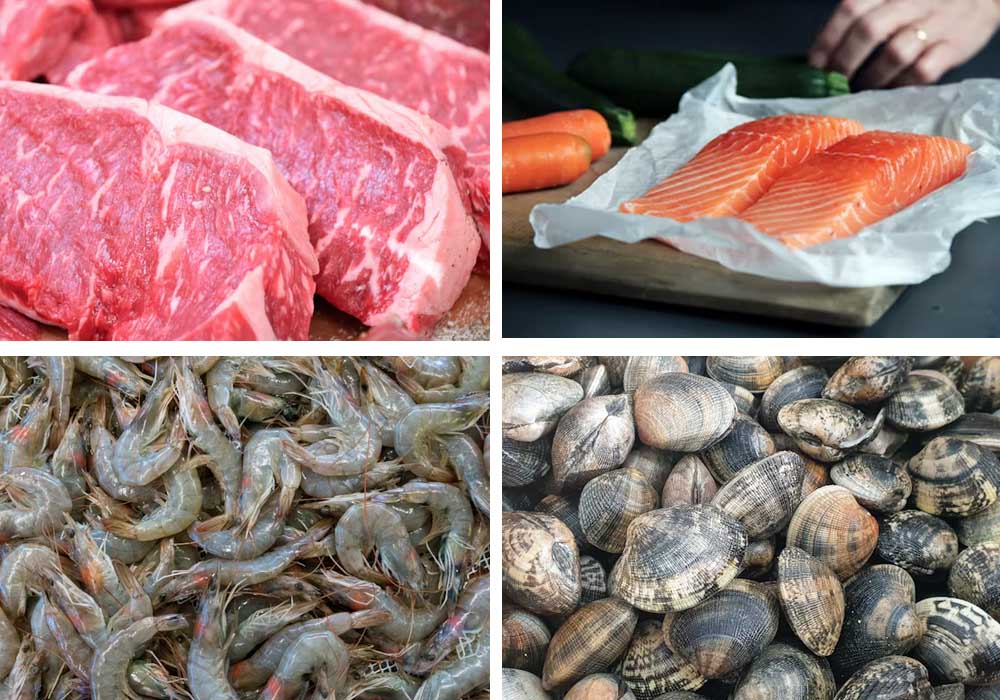
Modern sorting solutions handle diverse protein products including beef, pork, poultry, fish fillets, shrimp, and shellfish. These systems help processors maintain quality control, improve yield, and enhance food safety throughout production. Whether it's removing cartilage from chicken breasts or sorting shrimp by size and color, automated optical sorting provides unprecedented accuracy in protein processing that manual inspection cannot achieve.
Product Quality Grade Classification
How Meat and Seafood Sorting Works
Meat and seafood sorting machines employ high-resolution CCD cameras and near-infrared (NIR) technology to analyze each product piece as it moves through the processing line. The system captures detailed color and structural information, identifying variations in fat content, marbling, freshness indicators, and physical defects. When an undesirable piece is detected, precision air nozzles instantly remove it from the production stream without slowing throughput.
The sorting process begins with evenly distributing product on the inspection belt, with specialized lighting systems enhancing visual characteristics. Advanced image processing algorithms analyze multiple parameters simultaneously, making split-second decisions about each piece's quality. This technology can distinguish between muscle tissue and connective tissue, detect parasites in fish, and identify shell fragments in seafood with remarkable accuracy.
Detection Capability Matrix
| Product Category | Defect Types Detected | Min. Defect Size | Detection Rate | Sensor Technology | Typical Throughput |
|---|---|---|---|---|---|
| 🥩 Red Meat | Blood clots · Bruises · Bone fragments · Cartilage · Connective tissue · Discoloration | ≥ 1.0 mm | ≥ 99.5% | RGB + NIR + X-ray (optional) | 3-8 tons/hour |
| 🍗 Poultry | Cartilage · Bone chips · Feather remnants · Skin blemishes · Bile stains · Bruising | ≥ 0.8 mm | ≥ 99.3% | RGB + UV fluorescence | 2-6 tons/hour |
| 🐟 Fish Fillets | Pin bones · Parasites · Blood spots · Bruising · Skin remnants · Gap defects | ≥ 0.5 mm | ≥ 99.0% | RGB + NIR + Laser speckle | 1-4 tons/hour |
| 🦐 Shrimp & Shellfish | Shell fragments · Melanosis (black spot) · Intact shell pieces · Foreign matter · Color defects | ≥ 0.3 mm | ≥ 99.7% | RGB + NIR + X-ray | 0.5-3 tons/hour |
| 🐚 Bivalves & Mollusks | Shell pieces · Pearl fragments · Sand · Intact organisms · Dead or gaping product | ≥ 1.5 mm | ≥ 98.5% | RGB + X-ray + Weight cell | 1-5 tons/hour |
Core Features and Benefits of Meat and Seafood Sorting
Modern meat and seafood sorters deliver unparalleled processing speeds while maintaining exceptional accuracy in defect detection and removal. These systems can process thousands of pieces per hour, far exceeding manual capabilities while maintaining consistent standards. Customizable sorting parameters allow adaptation for different products - from grading steak tenderness to sorting shrimp by size - making these systems versatile solutions for diverse protein processing needs.
Beyond quality control, these sorters enhance food safety by removing physical hazards and potential contaminants. They improve yield by precisely trimming fat caps or portioning products, directly impacting profitability. Automated sorting reduces labor costs while increasing throughput and provides valuable data analytics for process optimization and quality assurance documentation.
Technical Specifications of Meat and Seafood Sorting Machines
High-performance meat and seafood sorters feature multi-spectral imaging systems capable of detecting defects as small as 1mm. Processing capacities range from 1 to 10 tons per hour depending on product type, with ejection accuracy exceeding 99%. Advanced models incorporate AI-driven learning algorithms that improve detection capabilities over time, adapting to seasonal variations in raw materials.
These systems typically include stainless steel construction for food safety compliance, with IP69K-rated components for wet processing environments. User-friendly interfaces allow easy adjustment of sorting parameters, while cloud connectivity enables remote monitoring and data analysis. Many systems offer dual-lane processing and can be integrated with existing production lines for seamless operation.
Applications of Meat and Seafood Sorting Technology
Meat and seafood sorting technology serves diverse sectors including commercial slaughterhouses, fish processing plants, and prepared foods manufacturers. It's particularly valuable for premium products like sushi-grade fish, where appearance and texture are critical, and for processed meats where consistency impacts product performance. The technology also plays a vital role in meeting regulatory requirements for foreign material detection in protein products.
Beyond basic quality control, advanced sorting systems are used for portion control, yield optimization, and value-added processing like marbling scoring for beef. The technology handles everything from whole muscle cuts to ground meat applications and delicate seafood items with equal precision, making it indispensable for modern protein processing.
| Industry Sector | Products Processed | Sorting Objectives | Typical Yield Impact | Key Quality Metrics | Regulatory Standards |
|---|---|---|---|---|---|
| Beef Processing | Primal cuts · Steaks · Ground beef · Trim | Marbling scoring · Bone fragment removal · Fat/lean ratio control · Discoloration rejection | +4-6% | USDA marbling score · Fat % · Color (L*a*b*) · Texture | USDA FSIS · EU Reg. 853/2004 · BRC Food |
| Pork Processing | Loins · Bellies · Hams · Trim | PSE/DFD detection · Bone fragment removal · Fat cap trimming · Blood spot removal | +3-5% | pH correlation · Color score · Water holding capacity | USDA FSIS · CFIA · Global Red Meat Standard |
| Poultry Processing | Breasts · Thighs · Wings · Deboned meat | Cartilage detection · Bone chip removal · Bruise and bile stain rejection · Size grading | +5-8% | Cartilage ppm · Bruise % · Color uniformity · Drip loss | USDA FSIS · EU Reg. 543/2008 · IFS Food |
| Fish & Seafood | Fillets · Whole fish · Shrimp · Scallops · Crab meat | Pin bone removal · Parasite detection · Melanosis rejection · Shell fragment removal | +3-7% | Parasite count · Bone fragment ppm · Color (SalmoFan™) · Texture integrity | FDA Seafood HACCP · EU Reg. 853/2004 · MSC/ASC Chain of Custody |
| Prepared & Processed Meats | Sausages · Bacon · Deli meats · Marinated products | Color consistency · Foreign material removal · Shape uniformity · Portion weight control | +2-4% | Color uniformity · Weight accuracy · Surface appearance · Slice integrity | USDA FSIS · BRC Food · FSSC 22000 · Retail Codes of Practice |
| Pet Food Ingredients | Meat meals · Poultry by-product · Fish meal · Organ meats | Foreign material removal · Metal detection · Bone fragment control · Species verification | +1-3% | Ash content · Protein % · Foreign matter ppm · Particle size distribution | AAFCO · FEDIAF · EU Reg. 1069/2009 · GMP+ Feed Safety |
Buying Guide
When selecting a meat or seafood sorter, consider your primary product types and their specific quality parameters. Processing capacity should match your production volume, while machine flexibility becomes crucial if handling multiple product categories. Look for food-grade materials, easy sanitation features, and hygienic design suitable for protein processing environments.
Advanced features like multi-spectral imaging and AI-enhanced detection algorithms provide superior performance for challenging applications. Consider integration requirements with existing equipment and availability of local technical support. Many manufacturers offer product-specific testing to demonstrate a machine's capabilities with your actual materials before purchase.
Maintenance Guide
Regular sanitation is paramount for meat and seafood sorters to prevent microbial growth and maintain food safety standards. Daily cleaning of optical components, food contact surfaces, and ejection systems is essential. Periodic calibration ensures sorting accuracy remains consistent, while scheduled inspections of mechanical components prevent unexpected downtime.
Professional servicing at recommended intervals helps maintain optimal performance and extends equipment lifespan. Keeping thorough maintenance records supports food safety audits and helps predict component replacement needs. Proper shutdown procedures for extended non-use periods protect sensitive electronics and mechanical systems in high-moisture environments.