What is a Coffee Bean Sorting Machine?
A coffee bean sorting machine is an advanced optical sorting system engineered specifically for the coffee processing industry. It combines high-resolution CCD cameras, near-infrared (NIR) sensors, and AI-powered recognition to instantly classify coffee beans based on color uniformity, size consistency, surface texture, and overall quality. This automated system efficiently removes defective beans, foreign materials, discolored beans, and other contaminants from the production stream, ensuring only the finest beans proceed to roasting or packaging.
Designed for continuous operation in demanding processing environments, these machines dramatically outperform traditional manual sorting methods. They deliver consistent quality control without operator fatigue, processing thousands of beans per minute while maintaining rigorous quality standards. The technology is widely used across the coffee value chain—from green coffee processing stations removing foreign materials to roasteries ensuring color consistency in final products—making them indispensable for specialty coffee producers, organic certification programs, and large-scale industrial operations.
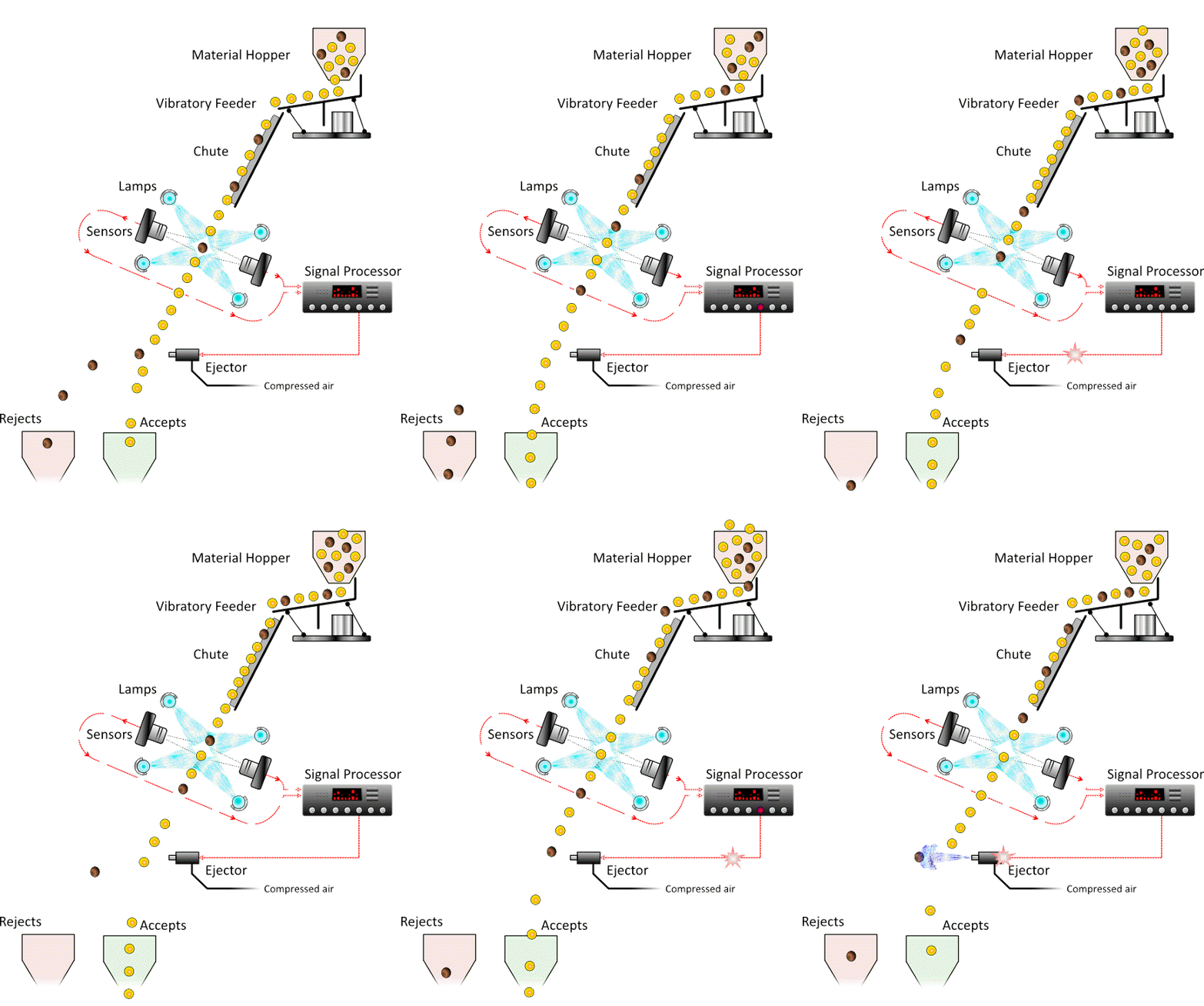
How a Coffee Bean Sorting Machine Works
Core Features and Advantages
Multi-Spectral Vision
CCD + NIR sensors detect surface defects and internal flaws invisible to the human eye.
High-Throughput Processing
Processes 500kg to 5 tons per hour with over 99% efficiency for defect detection.
AI-Powered Recognition
Machine learning algorithms continuously improve through operational data analysis.
Customizable Profiles
Adjustable sensitivity settings for different bean varieties and quality parameters.
Coffee bean sorting machines deliver exceptional value through their combination of speed and precision. The optical inspection system captures detailed information about every bean, analyzing color uniformity, size consistency, and surface integrity. NIR sensors extend detection to internal qualities, identifying defects such as mold, insect damage, and discoloration that would otherwise go unnoticed. The non-contact sorting method preserves bean integrity while eliminating cross-contamination risks common in manual sorting.
The machines excel in accuracy, capable of detecting defects as small as 0.2mm with over 99% efficiency. Their high-throughput design enables processing capacities ranging from 500kg to 5 tons per hour, adaptable to different production scales. Energy-efficient models with automatic calibration reduce operational costs, while touchscreen interfaces simplify operation. By automating the sorting process, they significantly reduce waste and labor costs while maintaining rigorous quality control. The technology directly enhances coffee quality grades, allowing producers to command premium prices in specialty markets.
Technical Specifications
Standard industrial coffee bean sorting machines operate at 220-440V with power consumption between 2-5kW depending on throughput. They feature stainless steel construction for food safety, with sorting accuracy typically exceeding 99% for major defects. Modern units include IoT connectivity for remote monitoring and data logging of sorting statistics.
The optical systems utilize true-color CCD cameras with resolutions up to 2560x1920 pixels, combined with NIR sensors at 900-1700nm wavelengths for internal defect detection. Ejection systems employ high-speed solenoid valves with response times under 5 milliseconds. Advanced models incorporate AI-powered defect recognition that continuously improves through operational data analysis. Optional configurations include multi-channel designs for higher throughput and specialized sorting algorithms for different coffee varieties.
Applications
Coffee bean sorting machines serve across the entire coffee value chain. In green coffee processing stations, they remove foreign materials and defective beans before export or roasting. Roasteries rely on them to ensure color consistency and remove quakers (under-ripe beans) that would compromise flavor profiles. They're indispensable for organic coffee certification processes where pesticide residues might discolor beans or leave visible marks.
Specialty coffee producers use these machines to achieve the uniform bean appearance required for premium grades and direct-trade relationships. Recycling facilities also employ them to reclaim usable beans from production waste streams. The technology has proven adaptable for sorting other agricultural products like cocoa beans, nuts, and larger seeds with minimal adjustments, making them versatile investments for diversified agricultural operations.
🛒 Purchasing Guide
When selecting a coffee bean sorting machine, consider your daily throughput requirements and available facility space. Look for machines with adjustable sensitivity settings to accommodate different bean varieties and processing conditions. For specialty coffee producers, seek units with customizable sorting profiles for unique quality parameters and the ability to save multiple recipes.
Evaluate the machine's NIR capability if you need to detect internal defects that aren't visible on the surface. Prioritize models with self-cleaning mechanisms and easy-access maintenance points to minimize downtime. Check for IoT connectivity if you want remote monitoring capabilities and data logging for quality documentation. Consider the total cost of ownership including energy consumption, compressed air usage, and spare parts availability. Request demonstrations using your actual beans rather than standard samples to properly assess performance.
🔧 Maintenance Guide
Regular maintenance is essential for optimal coffee bean sorter performance. Clean optical lenses and sensors daily using approved food-grade cleaning solutions and lint-free materials to prevent dust buildup that affects accuracy. Inspect air nozzles for obstructions and verify vibration feeder amplitude regularly.
Calibrate sensors weekly using manufacturer-provided test samples to maintain sorting precision. Replace worn belt components every 6-12 months depending on usage hours. Maintain proper compressed air filtration to prevent moisture damage to ejection systems. Always follow the manufacturer's lubrication schedule for moving parts. Schedule professional servicing at least annually to check alignment of optical systems and ensure all components are within factory specifications. Keep detailed maintenance records to track performance trends and anticipate component replacement needs.